

Sustainable local skincare means buying from small or local makers who use short, traceable ingredient lists, water-free or concentrated formulas, and clear, honest packaging claims. The fastest way to check a product is to read its ingredient list, favor water-free formats, and verify any “eco” claim before trusting it. Local, water-free products like whipped tallow body butter or an outdoor sun balm are good examples of what this looks like in practice.
TL;DR:
- Check the full ingredient list first; if it exceeds ten ingredients, ask what each one does, and verify sourcing details with the maker.
- Treat environmental claims cautiously: federal rules do not define organic for cosmetics as a whole, and broad claims need specifics.
- Check whether your local facility accepts a package before relying on its recyclable label; glass and refill systems are practical alternatives, while access varies.
- Expect small batch products to cost more and sell out between runs; compare the price with sourcing transparency, ingredient simplicity, and stated restock timing.
What “sustainable” and “local” actually mean for skincare shoppers
These words get used loosely, so it helps to know their real limits. The FDA has no formal definition of “organic” for cosmetics. USDA organic certification only applies to qualifying agricultural ingredients and specific labeling categories, not to finished skincare products as a whole.
Environmental claims face similar limits. The FTC Green Guides call for environmental claims to be clear and qualified. A broad “eco-friendly” label without specifics is hard to back up and can mislead shoppers.
“Local” is more concrete. It usually means a brand can tell you where ingredients came from and where the product was made, often in small batches close to home. That kind of traceability is something you can actually verify.
- “Organic” on a cosmetic label does not carry a single federal definition the way it does for food.
- “Eco-friendly” needs specifics behind it, not just the phrase itself.
- “Local” should mean traceable sourcing and nearby, small-batch production.
Shopper checklist: how to evaluate sustainable local skincare brands and products
A good evaluation takes a few minutes and follows the same order every time.
- Read the full INCI (ingredient) list before anything else.
- Favor short lists over long ones. Fewer ingredients usually means less filler.
- Check if the formula is water-free or concentrated. These typically need less packaging and less preservative.
- Look at the packaging. Note if it is glass, refillable, or made with recycled content.
- Check if recycling claims apply in your area. Recyclability depends on your local facility.
- Ask the brand where the ingredients come from. A brand that can answer clearly is a good sign.
- For animal-based ingredients like tallow, ask how it was rendered and sourced.
- Compare price to what you are getting. Small-batch production costs more, and that is often fair.
Pro Tip: Keep a mental “rule of ten”: if a product has more than ten ingredients, ask why each one is there.
Small-batch makers will not always match big-brand prices. A short ingredient list and transparent sourcing usually cost more to produce than a mass-market lotion with cheap fillers. Availability can also shift, since small-batch runs sell out and restock on their own schedule. That tradeoff is often worth it if the product performs and the brand is straightforward about what is in it.
Packaging and waste: practical choices that reduce environmental impact
Packaging is often the biggest sustainability factor in skincare, bigger than most people realize. Containers and packaging made up 82.2 million tons of US waste in 2018, and many plastic types still have low recycling rates. Choosing a water-free or concentrated product can shrink both the container size and the shipping weight behind it.
Recyclable, recycled, and compostable claims all need a second look. The FTC Green Guides ask marketers to qualify these claims clearly, since recycling access varies widely by location. A “recyclable” jar means little if your local facility will not take it.
- Glass containers are widely recyclable and do not degrade with reuse.
- Refill systems cut new packaging waste with every repeat purchase.
- Concentrated, water-free formulas need smaller containers and less fuel to ship.
- Vague claims like “eco-friendly” deserve a follow-up question before you buy.
Why choose local small-batch makers: buyer benefits and reasonable expectations
Buying from a local, small-batch maker changes what you can know about a product. You can usually trace where ingredients came from and how the product was made.
- Traceability is easier when a maker sources from known, nearby suppliers.
- Small-batch runs tend to have shorter, simpler ingredient lists with minimal dilution.
- Using local byproducts, like rendered animal fats, can support a more circular, lower-waste supply chain compared to importing exotic oils.
- Prices run higher than mass-market lotions, and stock can sell out between batches.
These tradeoffs are reasonable once you know what you are paying for: fewer middlemen, clearer sourcing, and a formula built without filler ingredients added just to cut costs.
Publisher perspective: how Moose’s Tallow practices sustainable local skincare
We started this brand after a health scare pushed Brian Smith to read his own lotion label. It listed 52 ingredients, and the first one was water. That moment shaped everything we make now: water-free formulas with short, honest ingredient lists.
Every product starts with properly rendered local beef suet tallow. We also build formulas around fractionated coconut oil, beeswax, vitamin E (tocopherols), jojoba, castor, and egg yolk infused oil. Each ingredient earns its place. None of them are filler.
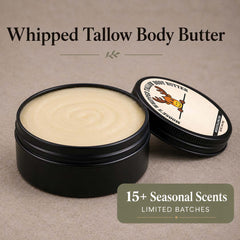
- Our Whipped Tallow Body Butter uses a water-free, tallow-based formula for daily skin-barrier support.
- Our Tallow & Zinc Outdoor Sun Balm pairs tallow with mineral sun protection for outdoor use.
- Every product page lists full ingredients, so you can check sourcing and dilution yourself.
If you want to see how we apply these ideas, our guide on how to apply tallow skincare walks through everyday use.
Benefits of water-free skincare formulations for sustainability and skin health
Water-free formulas solve two problems at once: waste and dilution. Most lotions list water as the first ingredient, which means you are paying mostly for filler. Removing water lets a formula concentrate on ingredients that actually support your skin barrier.
On the sustainability side, water-free products often need fewer preservatives, since water is what allows bacteria and mold to grow in the first place. Fewer preservatives mean a simpler ingredient list, which is easier for you to read and trust.
Water-free formulas also tend to use less packaging. A concentrated balm or butter takes up less volume than a diluted lotion, so containers can be smaller and lighter to ship. That lowers the overall footprint of getting a product from a small maker to your door.
For skin, a water-free formula can deliver a higher concentration of nourishing fats and oils per application. That is part of why we build every product we make around this approach. It keeps the focus on skin-barrier support rather than stretching a formula with water and emulsifiers.
Spheroidal cellulose powders are one example of newer, biodegradable ingredients the industry is testing as alternatives to microplastic texturizers. Recent research found these powders can improve texture and hydration in cosmetic creams while avoiding synthetic microplastics, a direction that fits well with water-free, ingredient-conscious formulas.
Role and benefits of tallow as a sustainable, skin-identical ingredient
Beef suet tallow has a fatty-acid profile close to the oils your own skin produces. That similarity is why it tends to absorb cleanly instead of sitting on the surface.
Tallow is also a byproduct of beef production, not a crop grown and shipped from somewhere far away. Using it for skincare puts an existing resource to work rather than requiring new land or imported exotic oils. For a local maker, that often means a shorter supply chain and a more traceable source.
In our formulas, tallow is never diluted into the background. We keep dilution minimal so tallow remains the dominant ingredient doing the work, not a token amount mixed with synthetic fillers. That is the difference between a formula built around tallow and one that lists it near the bottom of a long INCI panel.
Properly rendered tallow also has a long shelf life and a stable texture at room temperature, which makes it practical for balms, butters, and salves without needing synthetic stabilizers. For shoppers checking ingredient transparency, tallow’s simplicity, one recognizable animal fat instead of a chain of chemical names, is part of what makes it easy to evaluate.
Impact of local sourcing on environmental footprint and community support
Sourcing locally changes more than just the ingredient list. It changes the distance ingredients travel and who benefits from the sale.
When a maker renders tallow from local beef suet instead of importing specialty oils, the supply chain gets shorter. Fewer shipping steps generally means a smaller transportation footprint behind each jar. It also means a maker can usually answer basic sourcing questions directly, since the supply chain involves fewer intermediaries.
Local sourcing also keeps more of each purchase within the community where a brand operates. Small-batch makers handmaking products in one location, rather than outsourcing to large contract manufacturers, tend to rely on local suppliers and local labor. That is part of why we make every product by hand in Lebanon, Pennsylvania, using locally rendered tallow rather than imported raw materials.
None of this makes a product perfect on environmental impact. But for shoppers trying to compare options, local sourcing is one of the more verifiable claims a brand can make, since you can ask directly where the ingredients and labor come from and expect a real answer.
Comparison of carrier oils used in sustainable skincare and rationale for fractionated coconut oil preference
Carrier oils do the job of thinning a thick base ingredient like tallow into something easier to spread and absorb. Not all carrier oils perform the same way, and that difference matters for shelf life and stability.
Many natural skincare brands use olive, avocado, almond, or grapeseed oil as carriers. These oils oxidize relatively quickly once exposed to air, which can shorten a product’s usable life and change its texture over time. Shea butter is often used as a thickener rather than a true carrier oil, but it carries similar stability limits.
Fractionated coconut oil works differently. It has had its long-chain fatty acids removed, which makes it far more resistant to oxidation. That resistance translates into a longer shelf life, a lighter texture, and easier absorption into skin without feeling greasy.

We use fractionated coconut oil as our preferred carrier for exactly these reasons: stability, oxidation resistance, easy absorption, and reliable shelf life. We do not formulate with olive, emu, avocado, almond, shea butter, grapeseed, or other vegetable oils. For a water-free, tallow-based formula, a stable carrier oil matters more than it does in a water-heavy lotion, since there is no water to dilute the effects of an oil that turns rancid early.
Handmade small-batch production: sustainability and quality implications
Handmade, small-batch production changes both what goes into a product and how much waste is created making it. Large-scale manufacturing often runs on bulk ingredients and long production lines designed for volume, not for a short ingredient list.
Small-batch makers typically mix smaller quantities, which makes it easier to use fresh, simple ingredients without needing stabilizers meant for products sitting in a warehouse for months. It also means a maker can adjust a formula quickly if an ingredient source changes, rather than reformulating an entire production run.
On the quality side, small batches tend to get more attention per unit. There is less room for a bad batch to go unnoticed before it reaches a customer. That is part of why we handmake every product in small batches rather than outsourcing to a large contract manufacturer.
The tradeoff is scale. Small-batch production cannot match the speed or price point of mass manufacturing, and popular products can sell out between runs. For shoppers who care about ingredient transparency and freshness, that tradeoff usually favors the small-batch maker, especially when the brand is upfront about restock timing and batch sizes.

Short expert view: credible trends to watch in sustainable skincare
Packaging is shifting toward refillable systems and biodegradable materials instead of single-use plastic. Shoppers are also asking harder questions about what is actually in a formula, not just what the label promises.
The clearest long-term shift is toward water-free, concentrated products. Buying them supports less packaging and fewer synthetic fillers, which matters more than any single “green” claim on a label.
— Brian Smith
Where Moose’s Tallow fits if you want this checklist done for you
If the checklist above sounds like what you want but you would rather skip the research, our catalog is built around it already. Every formula starts water-free, with a short ingredient list led by properly rendered local beef suet tallow and stabilized with fractionated coconut oil instead of vegetable oils that oxidize faster.
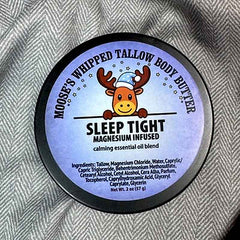
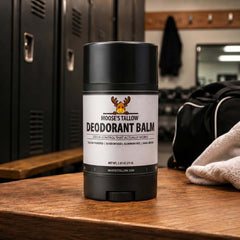
Our Whipped Tallow Body Butter and Tallow & Zinc Outdoor Sun Balm are two straightforward places to start, depending on whether you want daily skin-barrier support or outdoor coverage. You can browse the full lineup, including Whipped Body Butters, Sleep Tight, Deodorant, and more, and check ingredients directly on each product page. We back every order with a guarantee, so you can try a product risk-free and see how it fits your routine.
FAQ
What is an affordable clean skincare brand?
An affordable clean skincare brand is one that uses a short, transparent ingredient list without charging a premium for marketing alone. Look for brands that publish full INCI lists and explain where ingredients come from. Price should reflect ingredient quality and batch size, not just packaging design.
What is the 4-2-4 rule in skincare?
Definitions of this rule vary across sources, and there is no single agreed standard. Generally, it refers to simplifying a routine into a smaller number of core steps rather than layering many products. The safest approach is to focus on a short ingredient list and a routine that fits your skin’s actual needs.
What are some sustainable products?
Sustainable skincare products typically include water-free or concentrated formulas, refillable containers, and items made from byproducts like rendered animal fats instead of imported exotic oils. A whipped tallow body butter is one example, since it skips water entirely and uses a locally sourced base ingredient.
Which is the No. 1 skin care brand?
There is no single, universally recognized “No. 1” skincare brand, since rankings depend on sales, reviews, or category. For sustainable, local, water-free skincare specifically, the better question is which brand can show traceable sourcing and a short, honest ingredient list.
How do I check if a brand’s eco claims are true?
Ask the brand for specifics behind any “eco-friendly” or “recyclable” claim, since broad claims are hard to verify on their own. Check whether packaging claims match what your local recycling facility actually accepts. A brand that answers sourcing questions directly is generally more trustworthy than one that relies on vague language.
Sources
- Organic cosmetics | FDA
- FTC Green Guides
- Containers and packaging product specific data | EPA
- Effect of Addition of Spheroidal Cellulose Powders on Physicochemical and Functional Properties of Cosmetic Emulsions - PubMed
0 comentarios