

TL;DR:
- Las marcas pequeñas de cuidado de la piel suelen evitar las etiquetas de FPS por los altos costos de las pruebas y los obstáculos regulatorios.
- El óxido de zinc no nano ofrece una protección eficaz de amplio espectro, pero las afirmaciones de FPS requieren pruebas clínicas.
- La transparencia, los porcentajes claros de zinc y una buena guía de aplicación generan más confianza que una etiqueta de FPS.
La mayoría de la gente supone que si un producto protege tu piel del sol, debe llevar un número de FPS. Esa suposición es comprensible, pero pasa por alto mucho de lo que en realidad ocurre tras bambalinas para los pequeños fabricantes de cuidado natural de la piel. La verdad es que muchos bálsamos con mucho zinc y fórmulas a base de sebo ofrecen una protección UV real y significativa sin imprimir nunca un valor de FPS en la etiqueta. Las razones de esa decisión tienen que ver con el costo, la regulación y el compromiso de ser honestos sobre lo que una marca de lotes pequeños puede hacer de forma realista.
Puntos clave
| Punto | Detalles |
|---|---|
| Las pruebas de FPS son costosas | Las pruebas clínicas de FPS requieren miles de dólares y largos tiempos de aprobación, algo que la mayoría de las marcas pequeñas no puede pagar. |
| Las regulaciones limitan las afirmaciones | Las marcas artesanales se arriesgan a regulaciones de medicamentos más estrictas si indican el FPS, por lo que muchas prefieren quedarse en la categoría cosmética. |
| El zinc no nano es eficaz | Las fórmulas con mucho zinc no nano ofrecen una protección solar importante, aunque no puedan afirmar oficialmente un número de FPS. |
| Las marcas se enfocan en la transparencia | Las marcas pequeñas y naturales priorizan listas de ingredientes claras y la educación del consumidor en lugar de una protección con FPS en la etiqueta. |
El costo real de las pruebas de FPS para las marcas pequeñas
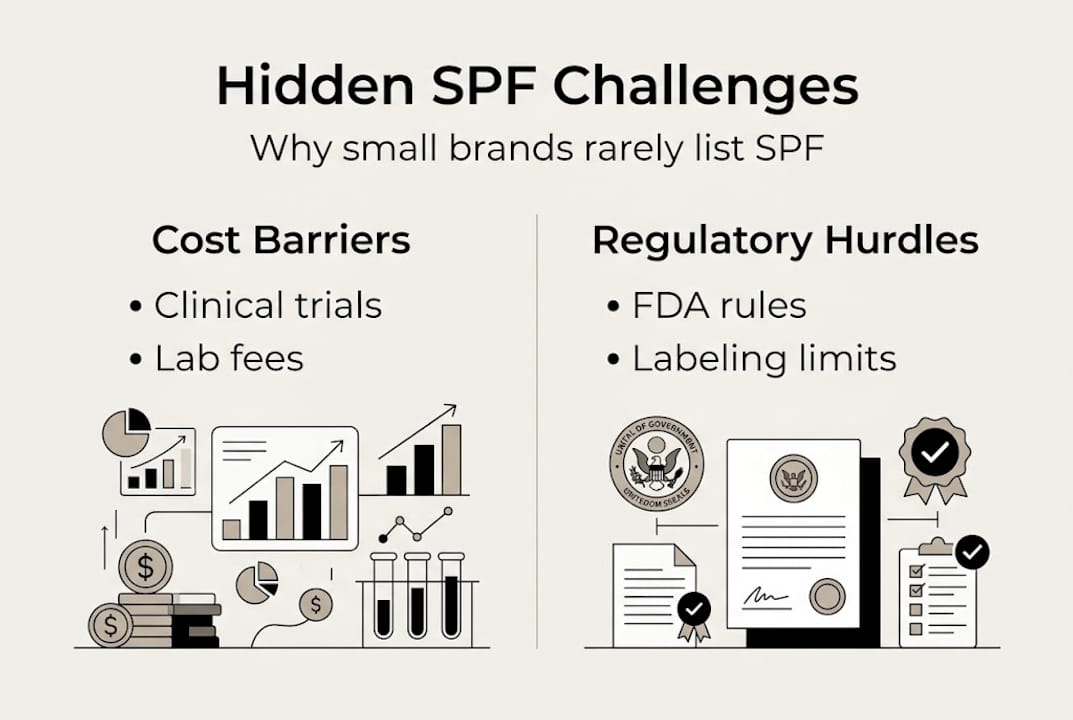
Las pruebas de FPS no son un simple análisis de laboratorio. Requieren ensayos clínicos realizados en voluntarios humanos, siguiendo protocolos estrictos fijados por los organismos reguladores. El proceso consiste en aplicar una cantidad medida de producto a los participantes, exponerlos a luz UV y medir el tiempo que tarda la piel en enrojecer frente a la piel sin protección. Ese proceso lleva de semanas a meses, y las pruebas clínicas de FPS cuestan miles de dólares antes incluso de contar las pruebas repetidas, las reformulaciones o los trámites regulatorios.
Para una marca grande que produce millones de unidades, esa inversión se reparte y casi no se nota. Para un fabricante de lotes pequeños que produce unos pocos cientos de frascos a la vez, puede ser un compromiso que rompe el presupuesto. Aquí tienes una comparación aproximada:
| Tamaño de la marca | Costo estimado de las pruebas de FPS | Unidades para recuperar el costo |
|---|---|---|
| Marca grande | $10,000 a $50,000+ | Repartido entre millones de unidades |
| Marca pequeña | $5,000 a $20,000+ | Debe recuperarse entre cientos |
| Fabricante indie | El mismo costo, sin descuento | A menudo no es viable económicamente |
La mayoría de los fabricantes de lotes pequeños no asumen la validación de mercado y los costos del FPS hasta que han demostrado una demanda constante. Es una decisión práctica de negocio, no un reflejo de la calidad del producto.
Consejo: Si estás evaluando un producto solar de una marca pequeña, fíjate en el porcentaje de óxido de zinc que aparece en los ingredientes en lugar de esperar un número de FPS. Una concentración de óxido de zinc del 25 al 30 por ciento es un buen indicador de cobertura de amplio espectro.
Barreras regulatorias: cuando el protector solar se convierte en ‘medicamento’
El costo es solo una parte del panorama. Las regulaciones presentan otro reto abrumador para los pequeños fabricantes que quieren indicar el FPS.
En Estados Unidos, cualquier producto que afirme proteger contra las quemaduras solares o reducir la exposición a los rayos UV se clasifica legalmente como un medicamento de venta libre ante la FDA. Esa clasificación activa un conjunto de requisitos de fabricación completamente distinto. En concreto, las marcas deben producir en instalaciones que cumplan las normas de Buenas Prácticas de Manufactura diseñadas para productos farmacéuticos. Las marcas artesanales a menudo no pueden cumplir estos requisitos de GMP para medicamentos porque sus instalaciones están hechas para cosméticos, no para medicamentos.
Esto es lo que significa en la práctica:
- Las afirmaciones de FPS convierten legalmente a un producto en medicamento de venta libre, no en cosmético
- Las instalaciones con GMP para medicamentos requieren equipo especializado, documentación y auditorías
- Las cocinas pequeñas y los talleres artesanales simplemente no califican
- Las marcas que fabrican en el extranjero a veces pueden acceder a instalaciones certificadas, pero eso suele comprometer los valores de origen y la transparencia
La comparación entre el estatus de cosmético y el de medicamento importa mucho:
| Categoría | Carga regulatoria | ¿Se permite afirmar FPS? |
|---|---|---|
| Cosmético | Menor, manejable para marcas pequeñas | No |
| Medicamento de venta libre | Alta, requiere una instalación GMP para medicamentos | Sí |
Muchas marcas que se preocupan de verdad por lo que cuenta como cuidado natural de la piel eligen quedarse en la categoría cosmética a propósito. Eso las mantiene honestas, mantiene limpio su abastecimiento y mantiene sus fórmulas libres de las concesiones que llegan al crecer para cumplir con las restricciones de GMP e ingredientes.
Por qué el zinc no nano y los bálsamos con mucho zinc omiten el FPS
Además de las presiones regulatorias y de costos, la elección de ingredientes moldea las decisiones de las marcas pequeñas sobre la etiqueta de FPS.

El óxido de zinc no nano es el ingrediente bloqueador de rayos UV preferido en la mayoría de las fórmulas de cuidado natural y limpio de la piel. Se queda sobre la piel y desvía físicamente tanto los rayos UVA como los UVB sin absorberse en el torrente sanguíneo. La EWG y la FDA respaldan ampliamente la seguridad del zinc, pero plantean dudas sobre las partículas de zinc de tamaño nano, que son lo bastante pequeñas para penetrar la piel. El zinc no nano evita por completo esa preocupación.
Esto es lo que debes saber sobre el zinc en los productos solares naturales:
- El óxido de zinc no nano ofrece cobertura UV de amplio espectro
- Un mayor porcentaje de zinc suele significar una protección más fuerte
- El zinc debe estar bien distribuido para funcionar correctamente, por eso importan ingredientes como la lecitina
- La cera de abejas ayuda a que la fórmula dure más sobre la piel, mejorando su resistencia durante el uso al aire libre
- Sin pruebas clínicas, una marca no puede afirmar legalmente un número de FPS, ni siquiera con un 30 por ciento de zinc
Nuestro artículo sobre ingredientes de protector solar mineral profundiza en cómo se compara el zinc con los filtros químicos. Y si quieres saber qué evitar, nuestra guía sobre ingredientes que debes evitar cubre los más comunes en los protectores solares convencionales.
Consejo: Cuando apliques un bálsamo con mucho zinc, usa suficiente para cubrir por completo la zona expuesta. Una capa fina no basta. Vuelve a aplicar cada 90 minutos durante la actividad al aire libre, igual que harías con cualquier producto solar.
Cómo se adaptan las marcas indie: soluciones y transparencia
Ante estos obstáculos, ¿cómo se ganan la confianza las marcas pequeñas e informan a sus clientes? Así lo hacen las mejores:
- Indican con claridad el porcentaje de óxido de zinc para que los consumidores puedan evaluar el potencial de protección por su cuenta.
- Explican la fórmula, incluidos los ingredientes de apoyo como la lecitina para la dispersión y la cera de abejas para la duración.
- Educan sobre la aplicación correcta porque incluso la mejor fórmula falla si se aplica muy fina o no se vuelve a aplicar.
- Son transparentes sobre las limitaciones y animan a combinar con otros hábitos de protección como sombreros y sombra.
- Evitan afirmaciones vagas que podrían hacer creer a los consumidores que un producto ofrece más de lo que realmente da.
Las marcas indie a veces fabrican en el extranjero para acceder a instalaciones certificadas, pero muchas eligen seguir siendo pequeñas y omitir las afirmaciones de FPS antes que comprometer sus valores. Esa decisión merece más reconocimiento del que suele recibir.
“Un porcentaje de zinc que puedes ver y verificar es más honesto que un número de FPS generado en un laboratorio que nunca visitarás.”
La transparencia en torno a la fabricación en lotes pequeños es una de las señales más claras de que una marca opera con integridad.
Una mirada más de cerca: por qué el FPS no siempre es la mejor medida para las marcas naturales
Aquí va una idea que vale la pena considerar: la obsesión con los números de FPS podría en realidad ir en contra de las decisiones informadas del consumidor.
El FPS mide una sola cosa, el enrojecimiento por los rayos UVB, en condiciones controladas de laboratorio. No dice nada sobre la protección UVA, la seguridad de los ingredientes ni cómo se comporta realmente una fórmula sobre la piel a lo largo de un día real. Un producto con un 30 por ciento de óxido de zinc no nano, lecitina para una cobertura uniforme y cera de abejas para la durabilidad puede ofrecer una protección más práctica que un protector solar químico con etiqueta de FPS 50 y una lista de ingredientes que plantea dudas legítimas de salud.
Creemos que la educación del consumidor y la transparencia de los ingredientes valen más que un número en una etiqueta. Mereces entender consejos de cuidado natural seguro de la piel y tomar decisiones según lo que de verdad hay en la fórmula, no solo lo que dice el marketing.
Descubre una protección solar segura con fórmulas artesanales
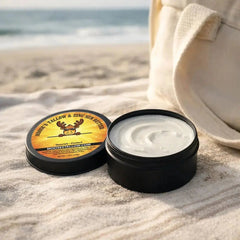
Si buscas productos con protección solar que prioricen la transparencia y los ingredientes de calidad, nuestro Tallow Zinc Sun Butter Balm está formulado con un 30 por ciento de óxido de zinc no nano, lecitina para una dispersión uniforme y cera de abejas para una cobertura duradera. No afirmamos un número de FPS, pero sí te decimos exactamente qué contiene y por qué. Cada ingrediente se gana su lugar. Explora toda nuestra gama de cuidado de la piel totalmente natural y encuentra fórmulas hechas con un trabajo honesto y nada que no necesites.
Preguntas frecuentes
¿Por qué las marcas pequeñas no pueden pagar las pruebas de FPS?
Las pruebas de FPS cuestan miles de dólares en ensayos clínicos y laboratorios especializados, lo que las vuelve inalcanzables para la mayoría de las marcas indie que producen en lotes pequeños.
¿Un bálsamo con mucho zinc protege tanto como los productos con FPS en la etiqueta?
El zinc no nano ofrece una protección UV de amplio espectro eficaz, pero sin pruebas clínicas no se puede afirmar ni imprimir legalmente un número exacto de FPS en la etiqueta.
¿Qué mantiene a un bálsamo como ‘cosmético’ en lugar de ‘medicamento de venta libre’?
Un producto de cuidado de la piel permanece en la categoría cosmética al evitar afirmaciones de FPS y promesas propias de un medicamento, lo que esquiva los requisitos de GMP de medicamentos de la FDA que las instalaciones de lotes pequeños no pueden cumplir.
¿Pueden las marcas pequeñas indicar el FPS si fabrican en el extranjero?
Algunas marcas fabrican en el extranjero para acceder a instalaciones certificadas de GMP de medicamentos, pero este enfoque suele generar dudas sobre los valores de origen, el costo y la transparencia de los ingredientes.


0 comentarios