

Best dry skin remedies for winter 2026
The most effective dry skin remedies in 2026 combine occlusive moisturizers applied to damp skin, barrier-friendly ingredients, and a few honest lifestyle changes. Cold air and indoor heating strip your skin’s natural oils faster than most people realize. The fix is not complicated, but it does require consistency and the right ingredients.
Here is what works:
- Apply moisturizer to damp skin. Pat dry after your shower, then apply immediately. Occlusive balms seal moisture in before it evaporates.
- Choose thick formulas over thin lotions. Ointments and balms outperform watery lotions in cold, dry air.
- Look for humectants, emollients, and occlusives. Each plays a different role in keeping skin hydrated.
- Skip fragrances and harsh exfoliants. These weaken your skin barrier when it is already stressed.
- Run a humidifier indoors. Heated air is dry air. A humidifier puts moisture back into your environment.
- Drink water and eat fats. Hydration and nutrition support your skin from the inside.
- Keep showers short and warm, not hot. Hot water strips oils. Lukewarm water preserves them.
How to build an effective moisturizing routine
Timing matters more than most people think. Applying moisturizer within a few minutes of bathing is one of the most effective habits you can build for dry skin. The skin is still slightly damp, and a good occlusive or emollient locks that moisture in before it escapes.
Ingredient categories to know:
- Humectants draw water into the skin. Glycerin and hyaluronic acid are common examples. They pull moisture from the air or deeper skin layers.
- Emollients fill the gaps between skin cells and soften texture. Jojoba and castor oil fall into this category.
- Occlusives form a physical barrier on the skin’s surface to prevent water loss. Beeswax and tallow are strong occlusives.
What to look for in a winter formula:
- Thick, scoopable texture rather than a pump bottle
- Minimal ingredient list with no synthetic fragrance
- Ingredients that match your skin’s natural lipids
- No alcohol high on the ingredient list
What to avoid:
- Fragrances and botanical extracts that irritate sensitive skin
- Retinoids in winter unless prescribed and tolerated
- Harsh exfoliating acids used too frequently
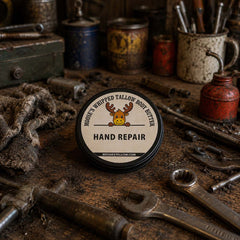
Apply a rich moisturizer right after washing your hands, too. Hand washing strips the skin repeatedly throughout the day, and a quick application after each wash makes a real difference by February.
Pro Tip: If your hands crack in winter, apply a thick ointment at night and wear cotton gloves to sleep. The gloves hold the moisture against your skin for hours.
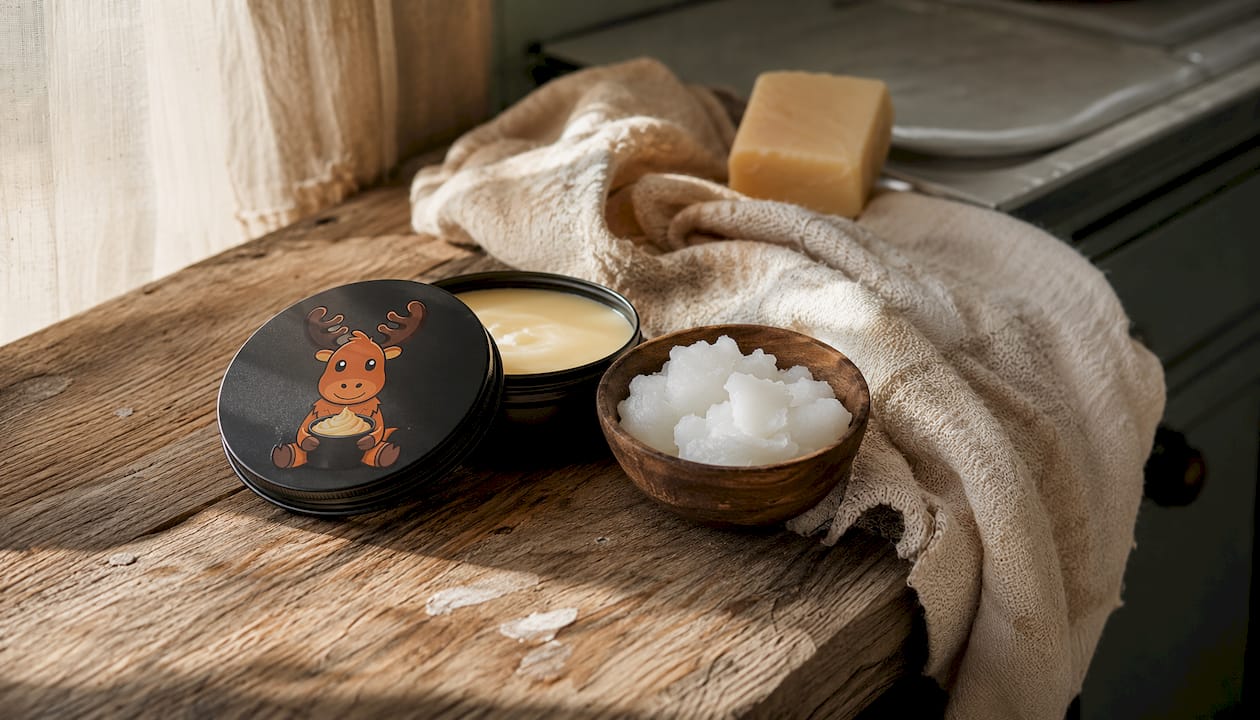
Lifestyle habits that protect your skin barrier
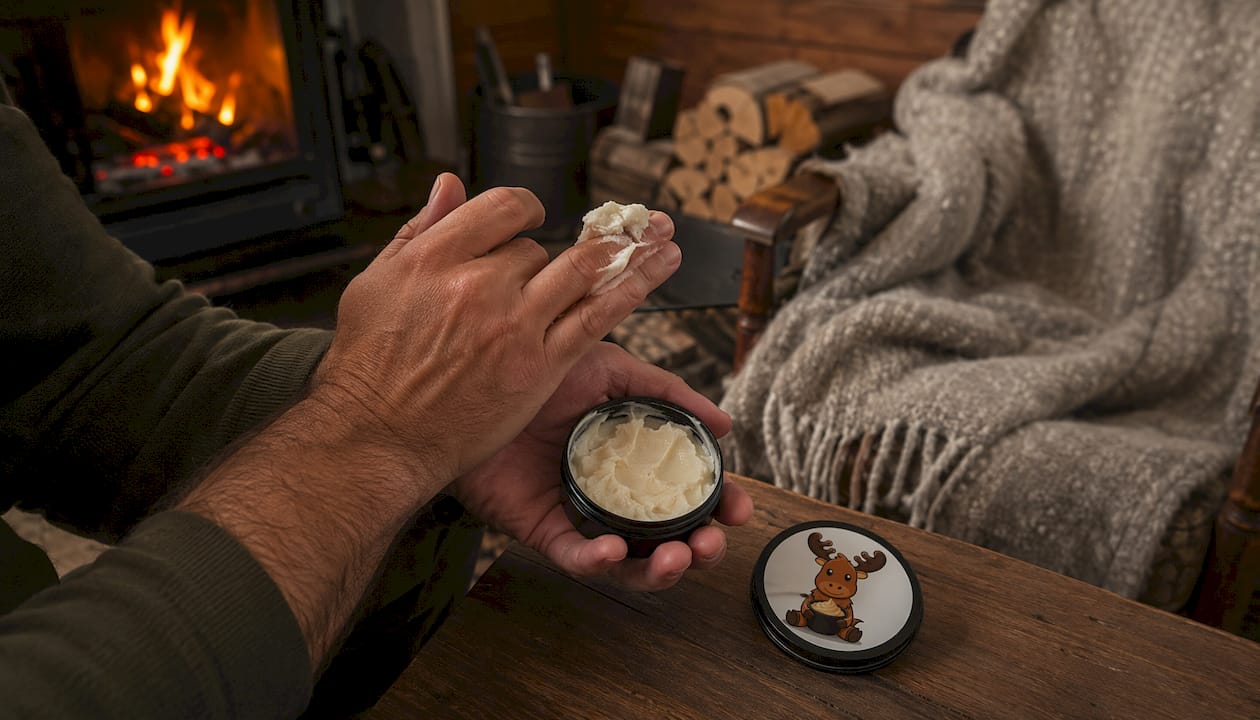
Keep showers short and cool
Hot showers strip oils from the skin’s surface. Dermatologists recommend keeping showers short with lukewarm water. Scrubbing hard with a washcloth makes it worse. Pat dry gently instead of rubbing.
Use a humidifier
Indoor heating pulls humidity out of the air. A humidifier in your bedroom or main living space helps your skin hold onto moisture overnight and throughout the day. This is one of the simplest adjustments you can make in winter.
Wear protective clothing
Gloves, scarves, and long sleeves are not just for warmth. They physically protect your skin from cold wind and dry air, both of which accelerate moisture loss. For people with chronically dry hands, cotton-lined gloves worn after moisturizing at night can prevent cracking.
Eat for your skin
Dietary fats support the skin’s lipid barrier from the inside. Foods rich in omega fatty acids, like fatty fish and eggs, contribute to barrier health. Staying well hydrated helps too, though water alone will not fix severely dry skin without topical support.
Switch your soap
Heavily scented soaps and body washes with sulfates break down the skin’s natural oils. Fragrance-free, gentle cleansers preserve the barrier. You do not need anything fancy. Simple and unscented is the right call in winter.
How to choose the right moisturizer for your skin type
Not all moisturizers work the same way, and the format matters as much as the ingredients.
Ointments and balms are the most occlusive. They sit on the skin and prevent water from leaving. They work best for very dry or cracked skin, especially on hands, feet, and lips. The trade-off is a heavier feel.
Creams are a middle ground. They contain more oil than lotion but less than an ointment. Most people with dry skin do well with a cream in winter.
Lotions are the lightest option. They contain a high percentage of water, which evaporates quickly in dry air. For winter dry skin, lotions often fall short.
Pro Tip: If you can scoop it out with your hand rather than pump it, it is probably occlusive enough for winter use.
Here is a quick comparison of moisturizing ingredient functions:
| Ingredient type | Function | Best for |
|---|---|---|
| Humectant (glycerin) | Draws water into skin | All skin types |
| Emollient (jojoba, castor) | Softens and smooths texture | Dry, sensitive skin |
| Occlusive (beeswax, tallow) | Seals moisture in | Very dry, cracked skin |
| Vitamin E (tocopherols) | Antioxidant, supports barrier | Dry, aging skin |
| Fractionated coconut oil | Carrier, stable, absorbs easily | All skin types |
For sensitive skin: Fewer ingredients is better. Long ingredient lists increase the chance of a reaction. Look for honest ingredient lists with no synthetic fragrance, no dyes, and no unnecessary fillers.
For oily or combination skin: Even oily skin can get dry in winter. Use a lighter emollient rather than a heavy ointment. Focus on the dry patches rather than applying heavily all over.
Animal-derived fats like tallow and washed ghee have been used for centuries to nourish dry skin. Their fatty acid profiles closely mirror the skin’s own oils, which supports absorption and barrier function. Traditional Ayurvedic skincare has long relied on ghee for exactly this reason.
When should you see a dermatologist?
Most dry skin responds to consistent moisturizing and lifestyle changes within a week or two. But some symptoms point to something more serious.
See a dermatologist if you notice:
- Skin that cracks and bleeds despite regular moisturizing
- Persistent redness, swelling, or oozing
- Intense itching that disrupts sleep
- Dry patches that do not respond to any over-the-counter product
- Symptoms that appear suddenly without an obvious cause
These signs can indicate conditions like atopic dermatitis, psoriasis, or contact dermatitis, none of which resolve with standard moisturizing alone. A dermatologist can identify the underlying cause and recommend prescription options when needed. Trying to manage a medical skin condition with cosmetic products delays real relief.
Dry skin that is simply seasonal and mild does not require a clinic visit. But if your skin is painful, bleeding, or spreading, do not wait it out.
Moose’s Tallow’s approach to natural, minimal-ingredient skincare
Moose’s Tallow was built on a simple frustration. Founder Brian “Moose” Smith flipped over a lotion bottle and counted 52 ingredients. The first was water. He wanted something real.
Every Moose’s Tallow product is built on properly rendered local beef suet tallow. Tallow’s fatty acid profile sits close to your skin’s own oils, so it absorbs without sitting on the surface or clogging pores. There are no synthetic fillers, no water to dilute the formula, and no ingredients added just to extend the list.
The full ingredient lineup includes:
- Beef suet tallow as the base
- Fractionated coconut oil as the preferred carrier oil
- Beeswax for occlusive barrier support
- Vitamin E (tocopherols) for antioxidant protection
- Jojoba and castor oil as emollients
- Egg yolk infused oil for additional nourishment
Pro Tip: Fractionated coconut oil is the preferred carrier oil at Moose’s Tallow because it resists oxidation, absorbs easily, and stays stable on the shelf far longer than most vegetable oils.
Ingredient transparency is not a marketing phrase here. You can evaluate every ingredient and know exactly what it does. No fillers, no guessing. That matters especially for people with sensitive or reactive skin who have been burned by long ingredient lists before.
Minimally processed animal fats like tallow closely mimic skin lipids, supporting barrier repair without the synthetic additives common in many commercial formulas.
What causes dry skin in winter?
Winter dryness has two main drivers: cold outdoor air and dry indoor heat. Cold air holds less moisture than warm air, so your skin loses water faster when you step outside. Then you come indoors, and the heating system pulls even more humidity out of the environment. Your skin’s natural oil layer, called the lipid barrier, gets depleted from both sides.
Occlusive products that seal moisture in are more effective than water-heavy lotions in this environment because they stop evaporation rather than just adding water that will evaporate anyway. Hot showers compound the problem by stripping the oils that remain. For people in dry climates like the Rocky Mountain region, this cycle can start as early as October and last through March.
Age also plays a role. Skin produces fewer natural oils as you get older, which means the lipid barrier is thinner to begin with and depletes faster in cold weather.
Product recommendations for winter 2026
The clearest trend in 2026 skin hydration is a shift toward fewer, more intentional ingredients. Water-first formulas are losing ground to oil-based and water-free products that actually seal the barrier.
What to look for this winter:
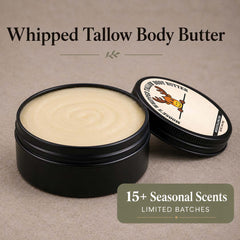
- Water-free balms and ointments. These deliver concentrated barrier support without the dilution of water-based formulas. Moose’s Tallow’s Whipped Tallow Body Butter fits this category, built on tallow and fractionated coconut oil with no water or synthetic fillers.
- Lip balms with occlusive bases. Lips have no oil glands and dry out fast in winter. A beeswax and tallow base holds moisture far longer than a petroleum-only formula. Moose’s Tallow’s tallow lip balm uses exactly this approach.
- Vitamin E-enriched formulas. Tocopherols support the skin barrier and offer antioxidant protection. Look for them near the top of the ingredient list, not buried at the bottom as a token addition.
- Emerging ingredient: egg yolk infused oil. Rich in fatty acids and fat-soluble vitamins, egg yolk oil is gaining attention as a nourishing addition to barrier-focused formulas. Moose’s Tallow already uses it.
- Fractionated coconut oil as a carrier. Unlike many vegetable oils that go rancid quickly, fractionated coconut oil stays stable, absorbs cleanly, and does not leave a heavy residue. It is the preferred carrier oil for a reason.
For a curated selection of winter-ready options, Moose’s Tallow’s natural winter skincare collection covers body, lip, and hand care with the same minimal-ingredient philosophy throughout.
Risks and side effects of common dry skin remedies
Most dry skin remedies are safe when used as directed, but a few common mistakes can make dryness worse.
Heavy ointments in warm weather can clog pores and cause heat rash or breakouts. What works in January may be too much in July. Adjust your formula with the season.
Overusing exfoliants strips the barrier further. Many people assume flaky skin needs scrubbing. It usually needs moisture and protection, not abrasion. Limit exfoliation to once a week at most in winter, and skip it entirely if your skin is already irritated.
Fragrance sensitivity is more common than most people realize. A product that smells pleasant can still trigger redness, itching, or contact dermatitis in sensitive skin. Fragrance-free is the safer default, especially in winter when the barrier is already compromised.
Retinoids increase cell turnover and can cause peeling and sensitivity. Using them aggressively in winter, when the barrier is already stressed, often leads to more irritation than benefit. If you use a retinoid, pair it with a strong occlusive and consider reducing frequency in the coldest months.
Alcohol-based products evaporate quickly and pull moisture out of the skin. Check hand sanitizers and toners for high alcohol content, and use a moisturizer immediately after if you cannot avoid them.
Moose’s Tallow: water-free skincare for dry winter skin
Dry skin in winter needs real barrier support, not a formula that is mostly water and fragrance. Moose’s Tallow makes small-batch, water-free skincare built on properly rendered local beef suet tallow, with every ingredient chosen on purpose.
The Whipped Tallow Body Butter and the tallow lip balm are the two products most people reach for first in winter. Both are water-free, both use fractionated coconut oil as the carrier, and both carry a 60-day guarantee. No fillers, no synthetic fragrance, no guessing about what is in the jar.
If you are ready to stop reapplying lotion every hour and start using something that actually holds, browse the full winter skincare collection and find what fits your skin.
FAQ
What is the fastest way to relieve very dry skin?
Apply a thick, occlusive moisturizer to damp skin immediately after bathing. Consistent use of humectant and occlusive formulas can visibly improve very dry skin within 3 to 7 days.
What do traditional Indian skincare practices use for dry skin?
Traditional Ayurvedic skincare uses washed ghee to nourish dry skin. Ghee is rinsed multiple times to create a lighter texture that absorbs more easily and supports the skin barrier with vitamins and fatty acids.
Are water-free products better for dry skin in winter?
Water-free formulas tend to outperform water-heavy lotions in winter because they seal the barrier without the evaporation that dilutes thinner products. Moose’s Tallow’s entire line is water-free for exactly this reason.
When should dry skin be seen by a doctor?
See a dermatologist if your skin cracks and bleeds, does not respond to consistent moisturizing, or shows signs of redness, swelling, or intense itching. These symptoms can indicate atopic dermatitis or another condition that needs professional care.
Which ingredients should you avoid in winter skincare?
Avoid fragrances, high-concentration alcohol, harsh exfoliating acids, and retinoids unless your skin tolerates them well. These can weaken the skin barrier when it is already stressed by cold, dry air.
Key Takeaways
The most effective dry skin remedies in 2026 combine occlusive, water-free formulas applied to damp skin with simple lifestyle habits that protect the barrier all winter long.
| Point | Details |
|---|---|
| Apply to damp skin | Moisturize within minutes of bathing to lock in moisture before it evaporates. |
| Choose occlusives over lotions | Thick balms and ointments seal the barrier; water-heavy lotions evaporate too quickly in winter. |
| Avoid fragrance and harsh exfoliants | These weaken the skin barrier when it is already stressed by cold, dry air. |
| Consistent use matters | Very dry skin can improve visibly within 3 to 7 days with the right formula used consistently. |
| Moose’s Tallow approach | Water-free, tallow-based formulas with minimal, intentional ingredients support the skin barrier without fillers or synthetic fragrance. |


0 comments