


Razor burn on the neck is a surface friction injury. It shows up as red, stinging skin within minutes of shaving. The first move matters most: stop shaving, apply a cool compress, and skip anything with alcohol or fragrance.
Most cases calm down in 24 to 72 hours with basic care.
First-hour checklist:
- Stop shaving the area immediately
- Press a cool, damp washcloth against your neck for a few minutes
- Wash gently with lukewarm water and a mild cleanser
- Pat dry, then apply a plain, fragrance-free moisturizer
If redness spreads, gets warmer, or lasts past four days, treat that as a signal to check in with a doctor.
Key Takeaways
Razor burn on the neck heals fastest when you stop shaving, cool the skin, and rebuild the barrier with a water-free balm instead of a water-heavy lotion.
| Point | Details |
|---|---|
| Stop shaving immediately | Any pass over inflamed neck skin restarts the friction damage. |
| Cool and cleanse first | Use a cool compress, then a mild, fragrance-free cleanser and pat dry. |
| Map your hair growth | Shave each neck patch with its own grain instead of one long stroke. |
| Watch for infection signs | Spreading redness, pus, fever, or no improvement after four days needs a doctor. |
| Rebuild the barrier | A water-free tallow balm from Moose’s Tallow holds moisture longer than water-based lotions. |
Why Does the Neck Get Razor Burn So Easily?
Your neck skin is thinner than your cheek or jaw, and it moves constantly when you swallow, turn, or tilt your head. Fewer oil glands live there too, so it dries out faster and has less natural cushioning against a blade.
Hair on the neck rarely grows in one tidy direction. It often swirls, doubling back on itself in patches, and shaving against that grain is one of the biggest drivers of irritation and later ingrown hairs. When neck skin folds and moves under the razor, the blade skips instead of gliding, so most people compensate with more passes and more pressure. That combination is exactly what tears up the surface.
A few habits make it worse:
- Shaving dry, without any lubricant to reduce drag
- Pressing hard instead of letting the blade do the work
- Running the same patch of skin three or four times
- Using a dull blade that tugs instead of cutting cleanly
- Reaching for an aggressive five-blade cartridge on skin that clearly can’t tolerate it
Product choice plays a role too. Thin, water-heavy gels and lotions dry out fast and leave the surface exposed again within minutes. Dull blades and heavy pressure are the most common mechanical causes, and razor burn is different from razor bumps. Razor burn is the diffuse sting you feel right after shaving. Razor bumps are ingrown hairs that show up as small, distinct bumps a day or two later, and they need different handling entirely.
Pro Tip: Run a fingertip lightly over your freshly shaved neck. If you feel small bumps rather than an even, smooth surface, you’re likely dealing with ingrown hairs, not razor burn, and the treatment approach changes.
What Should You Do Right Now to Calm It?
Follow these steps in order, and don’t skip ahead to a shave until your skin looks normal again.
- Stop shaving the area. Any pass over inflamed skin restarts the damage.
- Cool it down. Hold a cool, damp washcloth against your neck for five to ten minutes. Repeat two or three times over the first few hours.
- Clean gently. Use lukewarm water and a mild, fragrance-free cleanser. Skip scrubbing.
- Pat dry, never rub. Rubbing restarts friction on skin that’s already compromised.
- Moisturize while skin is slightly damp. A plain, bland emollient locks in moisture better than one applied to bone-dry skin.
- Skip alcohol-based aftershaves entirely. They sting and dry the surface further, which slows recovery.
- Consider a thin layer of 1% hydrocortisone for a day or two if swelling is bothering you, but avoid it on any broken skin and don’t use it long term.
Cool compresses paired with fragrance-free moisturizers are the backbone of recovery, and most uncomplicated cases clear within a day or two. Avoid strong chemical exfoliants (glycolic acid, retinoids) until the redness is completely gone.
Pro Tip: Loosen your collar or swap to a soft cotton shirt while your neck heals. Fabric rubbing against irritated skin all day undoes the good your evening routine just did.
How Do You Shave Your Neck Without Triggering Razor Burn Again?
A better shave starts before the blade ever touches your skin. Warm water softens hair and opens pores, so shave right after a hot shower, or hold a warm towel against your neck for a minute first. Apply your shaving product and give it about 30 seconds to soak in before your first stroke.
Map your growth pattern once, and reuse it every time:
- Run your fingertips lightly over dry, unshaved skin in short strokes.
- Note where the hair feels smooth in one direction and rough against it. That’s your grain map.
- Shave each patch separately, following that patch’s own grain, rather than dragging the razor in one long motion across the whole neck.
Mapping growth direction once and reusing that map eliminates most accidental against-the-grain passes going forward.
On tools: replace blades before they start tugging, not after. If your neck keeps reacting no matter how careful your technique, work down the aggressiveness ladder. Many people with reactive necks do better moving from a five-blade cartridge to a two- or three-blade version, or switching to a foil electric shaver or a zero-length trimmer for stubborn spots.
Technique that actually matters:
- Use short strokes, not long ones
- Apply light pressure only. Let the blade cut, don’t force it
- Stretch the skin taut with your free hand
- Rinse the blade after every couple of strokes
- Do one light pass per patch, and only re-lather for a second pass if truly needed
Finish with a cool rinse, pat dry, and apply a concentrated, water-free balm while skin is still slightly damp. A tallow-based balm sits on the surface longer than a water-based lotion, since it has nothing to evaporate.
Pro Tip: Shave at night instead of the morning rush. You’ll have time to go slower, and your skin gets hours to settle before a collar or backpack strap rubs against it.
When Does Razor Burn Need a Doctor Instead of a Balm?
Most razor burn settles on its own. A few signs mean it’s time to stop self-treating and get it checked:
- Redness that keeps spreading instead of shrinking
- Pain or swelling that gets worse, not better
- The area feels warm or hot to the touch
- Pus, yellow crusting, or red streaks radiating outward
- Fever alongside the skin irritation
- No real improvement after three or four days
Those symptoms point toward infection, not simple friction irritation, and infection needs a clinician, not a moisturizer. It’s also worth ruling out razor bumps at this stage, since ingrown hairs can look similar but respond to different care. A doctor will typically check for signs of bacterial infection, may prescribe a topical or oral antibiotic if needed, and can advise on gentler hair removal methods if your neck keeps reacting no matter what you try.
How Moose’s Tallow Products Fit Into Neck Aftercare
Concentrated, water-free balms give your skin barrier something to hold onto that a water-heavy lotion can’t. Once water evaporates, protection is gone. Tallow doesn’t carry that problem.
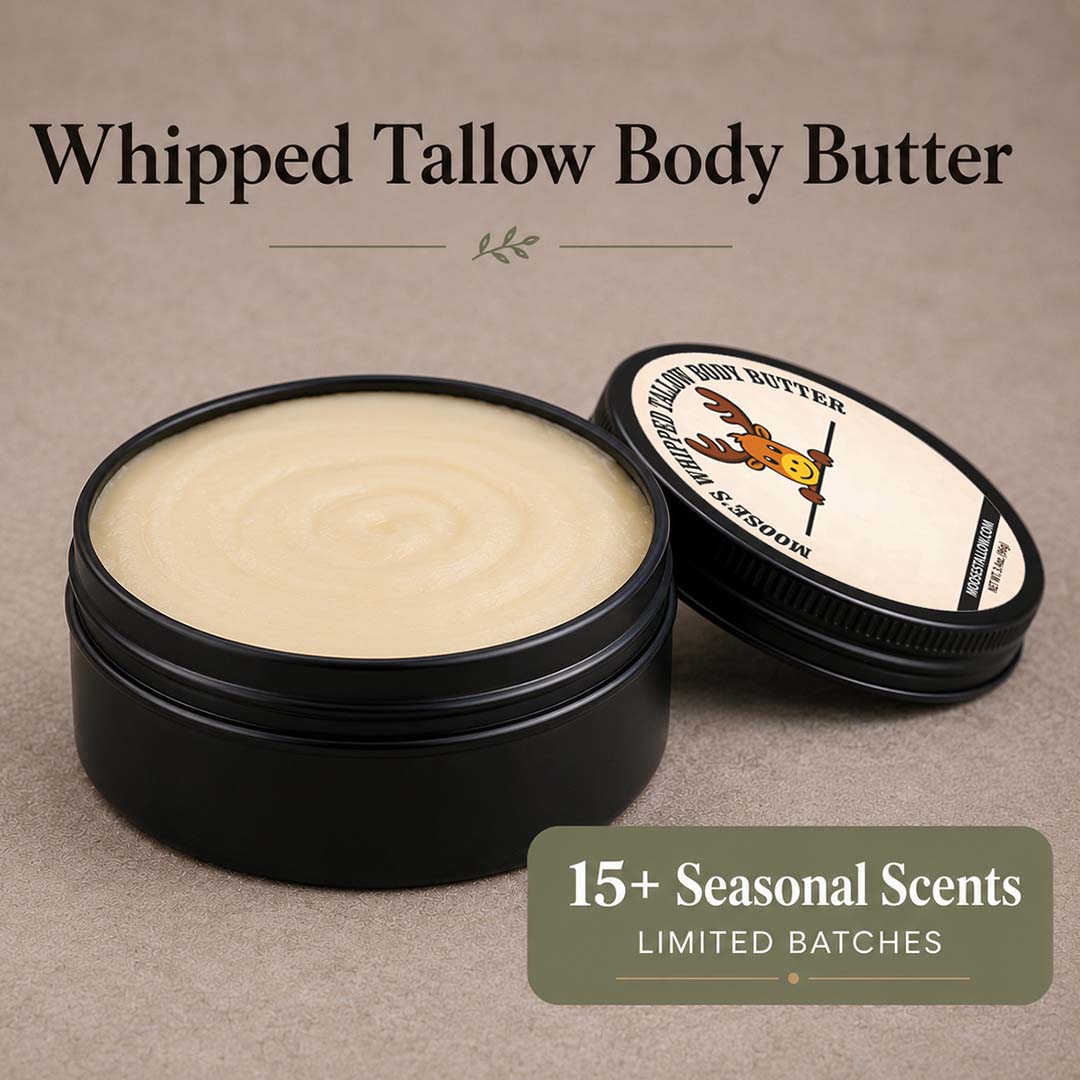
Every Moose’s Tallow product starts with properly rendered local beef suet tallow, chosen because its fatty-acid makeup sits close to your own skin’s oils. We pair it with fractionated coconut oil as our carrier oil of choice, picked for its stability and clean absorption, plus beeswax, vitamin E, jojoba, castor, and egg yolk infused oil. No olive oil, no shea butter, no grapeseed. Just ingredients chosen on purpose.
How to apply after a shave:
- Use a small amount on slightly damp, unbroken skin
- Never rub balm into skin that’s cracked or bleeding
- Apply after your shave, and again before bed for lasting barrier support
Match the product to the need:
- Beef Tallow Lip Balm for dry, chapped lips
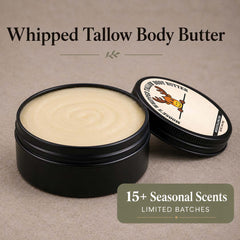
- Whipped Tallow Body Butter for larger areas overnight
- Beef Tallow Hand Cream for dry, cracked hands
- Tallow & Zinc Outdoor Sun Balm for sun-exposed skin
- Aluminum-Free Natural Deodorant for daily, water-free protection elsewhere on the body
- Coconut After Sun Body Butter for soothing warm-weather skin
- Natural Tallow Baby Butter with calendula and chamomile for the most sensitive skin
- Fresh Strawberry Sugar Scrub for gentle exfoliation, never on actively irritated skin
Every batch is handmade in small runs and backed by a 30-day guarantee. If you’re new to tallow skincare, patch test on your forearm first. Our post on applying tallow balm for skin relief walks through the basics in more detail.
What Most Shaving Advice Gets Wrong About Necks
Most shaving guides treat the neck like an extension of the jaw. It isn’t. The jaw has one dominant grain and thicker skin. The neck has patches running in different directions across skin that’s thinner and constantly moving. Advice built for the jaw, applied to the neck, is a big reason razor burn keeps coming back for so many people.
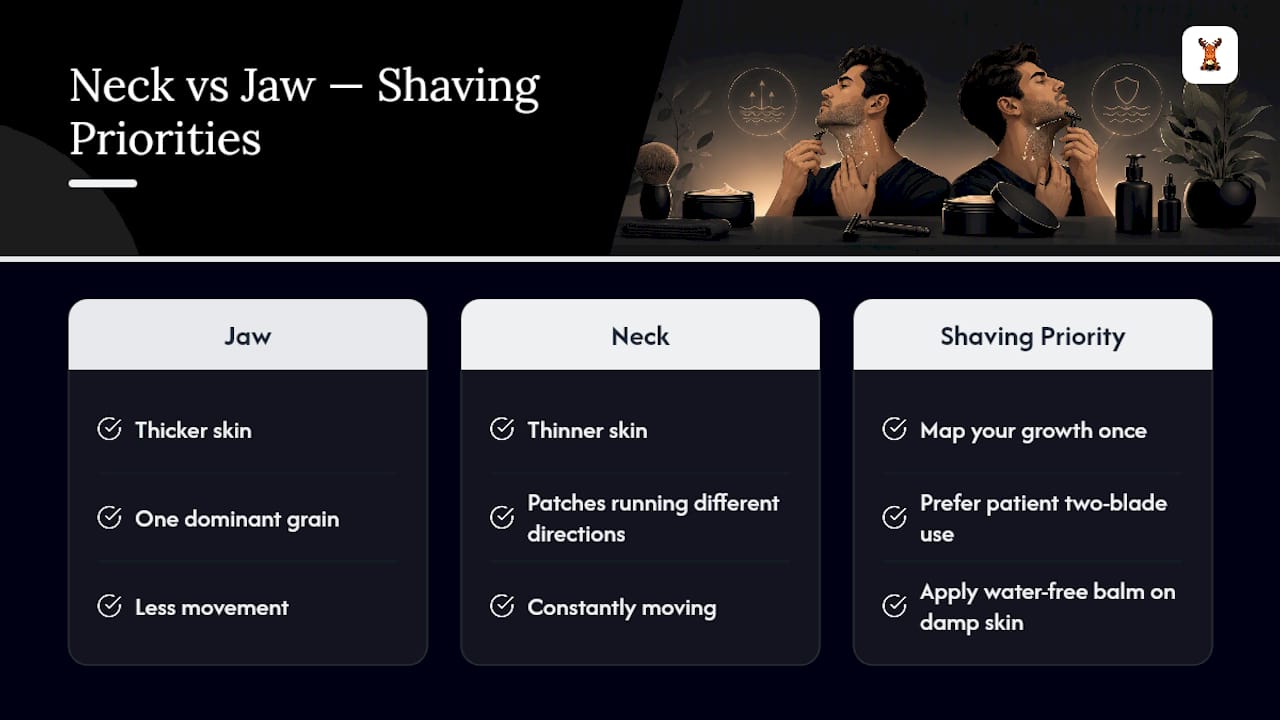
The technique that actually works is unglamorous: map your own growth pattern once, respect it every time, and stop treating more blades as automatically better. A five-blade cartridge dragging across neck skin at the wrong angle causes more harm than a simple two-blade razor used with patience.
Aftercare gets underrated too. People spend real effort on technique, then finish with a splash of alcohol-based aftershave that undoes the work by drying out skin that needed the opposite. A concentrated, water-free balm applied while skin is still damp does more for next week’s shave than any fancy blade ever will.
Prioritize the map, then the tool, then the aftercare. In that order.
Get Your Neck’s Aftercare Routine Right With Moose’s Tallow
Water-based aftershaves promise quick relief and then evaporate, leaving your neck exposed again within the hour. Moose’s Tallow takes a different approach: a concentrated, water-free balm built on properly rendered beef suet tallow that stays on the skin and keeps supporting your barrier long after a splash-on product has dried up and disappeared.
Every formula is handmade in small batches, with fractionated coconut oil as the stable carrier oil, plus beeswax, vitamin E, jojoba, castor, and egg yolk infused oil. Nothing filler, nothing you can’t pronounce. If your neck reacts to shaving often, start with the Whipped Tallow Body Butter for nightly barrier support, and patch test it on your forearm first. Every order carries a 30-day guarantee, so you can try it on your own skin without risk.
Sources
- Razor Burn — Cleveland Clinic
- How to get rid of razor burn — Healthline
- Razor Burn Treatment: Effective Remedies and Solutions — WebMD
- A gentle guide to neck shaving — Philips
FAQ
How Long Does Razor Burn on the Neck Last?
Uncomplicated razor burn typically improves within 24 to 72 hours with cool compresses, gentle cleansing, and a fragrance-free moisturizer. If it lingers past three or four days, that’s a sign to check with a doctor.
Is It Razor Burn or Something Else Like HPV?
Razor burn is a diffuse, stinging, red patch that appears within minutes of shaving. It’s not related to HPV. If you notice distinct wart-like or unusual growths rather than general redness, that needs a separate medical evaluation.
What Does a Bad Case of Razor Burn Look Like?
Severe razor burn shows widespread redness, visible swelling, and skin that feels hot or raw to the touch. If you also see pus, red streaks, or fever, that points to infection rather than simple irritation.
Does Petroleum Jelly Help Razor Burn?
A bland, fragrance-free emollient applied to slightly damp skin can help calm the surface and lock in moisture. A concentrated, water-free balm offers longer-lasting barrier support than a thin layer of petroleum jelly alone.
Is Razor Burn the Same as Razor Bumps?
No. Razor burn is surface irritation that appears right after shaving, while razor bumps are ingrown hairs that show up as small, distinct bumps a day or two later and need different care.


0 comments