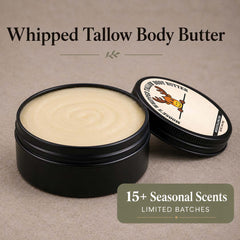
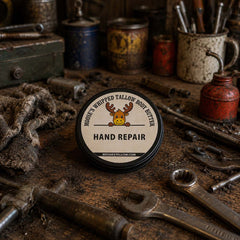
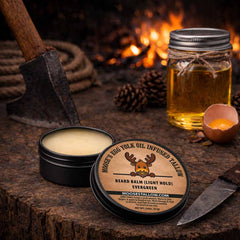
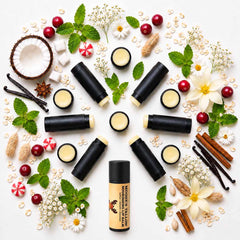


A water-free, beef suet tallow–based tattoo aftercare balm is the clearest choice for protecting new ink. It supports the skin barrier, absorbs cleanly, and skips the fillers that cause irritation. Moose’s Tallow’s Beef Tallow Lip Balm for Dry & Chapped Lips is a US-made, small-batch option built on exactly that foundation.
Here is what to know before you buy:
- Choose a water-free balm with beef suet tallow as the first ingredient.
- Look for fractionated coconut oil as the carrier. It absorbs easily and resists oxidation.
- Skip anything with fragrance, dyes, or a long list of botanical extracts.
- The American Academy of Dermatology recommends fragrance-free, dye-free moisturizers for tattooed skin.
- The Cleveland Clinic advises washing gently twice daily and keeping the area moisturized.
- Moose’s Tallow ships across the US. Products run at varying prices, making them accessible for different budgets.
Pro Tip: Buy unscented, not just “fragrance-free” labeled. Some products use masking agents that still irritate healing skin. Read the full ingredient list, not just the front label.
Key Takeaways
A water-free, beef suet tallow balm with fractionated coconut oil and no fragrance is the most straightforward choice for protecting and maintaining a new tattoo through every healing stage.
| Point | Details |
|---|---|
| Choose water-free formulas | Tallow-based, water-free balms support the skin barrier without evaporating or clogging pores. |
| Avoid fragrance and dyes | Scented products are a leading cause of contact dermatitis on healing tattoos; always choose fragrance-free. |
| Apply several times daily | Wash gently twice daily, pat dry, and apply a thin layer of balm for the first 2–4 weeks. |
| Follow the healing timeline | Active moisturizing runs through day 14; switch to lighter maintenance after surface skin looks healed. |
| Moose’s Tallow recommendation | The Beef Tallow Lip Balm is a minimal-ingredient, US-made option built on tallow and fractionated coconut oil. |
Why does a tattoo aftercare balm help your skin?
A new tattoo disrupts the top layers of skin. The surface needs gentle moisture and a breathable barrier while it recovers. A well-formulated balm supports the skin barrier without sealing it shut.
Balms differ from heavy petroleum films and high-water lotions in a few meaningful ways. Petroleum-only products can trap too much moisture and clog pores over time. Water-based lotions evaporate quickly, leaving skin dry again within hours. A tallow-based balm sits in the middle: it provides lasting moisture without a greasy, occlusive film.
Fragrance and dyes are the most common culprits behind contact dermatitis on healing tattoos. Case reports show that scented vehicles, not the ink itself, often trigger allergic reactions that cause delayed healing and premature fading. Keeping the formula simple is not a marketing angle. It is a practical way to lower irritation risk.
- Balm strengths: long-lasting moisture, skin-barrier support, no water to evaporate
- Petroleum films: high occlusion, useful briefly, not ideal for daily long-term use
- Water-based lotions: light and fast-absorbing, better suited to the maintenance phase
Pro Tip: Apply a thin layer, not a thick coat. A pea-sized amount for a palm-sized tattoo is enough. Over-applying traps excess moisture and can soften scabs prematurely.
What should you look for in a tattoo aftercare balm?
Read the ingredient list before anything else. The position of each ingredient tells you how much of it is actually in the product. Water listed first means the formula is mostly water.
Ingredients to look for:
- Beef suet tallow — fatty-acid profile close to your skin’s own oils; absorbs cleanly
- Fractionated coconut oil — stable, oxidation-resistant, absorbs easily, long shelf life; preferred over plant oils prone to going rancid
- Beeswax — provides structure and a light breathable seal
- Vitamin E (tocopherols) — supports skin comfort and formula stability
- Jojoba and castor — lightweight texture support
- Egg yolk infused oil — adds richness without heaviness
Ingredients to avoid:
- Fragrance or parfum in any form
- Artificial dyes or colorants
- Petroleum jelly as a long-term daily routine product
- Seed oils prone to oxidation (grapeseed, sunflower, and similar)
- Unnecessary botanical extracts during the healing phase
Experts note that many mass-market aftercare products include botanicals and fragrance derivatives that raise contact dermatitis risk. A short, transparent ingredient list lowers that risk. The AAD specifically advises against petroleum-only products for long-term tattoo maintenance.
Label signals worth trusting: water-free or low-water formula, clear allergen disclosure, small-batch or traceability note, and a satisfaction guarantee.
Pro Tip: “Unscented” and “fragrance-free” are not the same. “Unscented” can still contain masking fragrance. “Fragrance-free” means no fragrance compounds added. For healing skin, fragrance-free is the safer choice.
How do you use a tattoo balm, step by step?
Follow your artist’s bandage instructions first. After that, a simple routine covers most of what healing skin needs.
- Remove the bandage as directed by your artist (typically 2–24 hours).
- Wash gently with mild, fragrance-free soap. Use lukewarm water. Pat dry with a clean cloth.
- Apply a thin layer of balm with clean hands. Cover the tattoo lightly.
- Repeat twice daily for the first two weeks. Some people apply a third time if skin feels tight.
- Avoid soaking in pools, hot tubs, or baths during initial healing. The Cleveland Clinic specifically flags this as a risk to healing skin.
- After surface healing, shift to lighter maintenance as needed.
A small clinical study found that applying a dermo-cosmetic product twice daily for 14 days reduced redness and supported skin repair quality. Consistent application matters more than the amount you use.
Healing timeline
| Phase | Days | What to expect | What to do |
|---|---|---|---|
| Covering and cleaning | Day 0–3 | Redness, mild swelling, weeping | Follow artist bandage instructions; wash gently |
| Active moisturizing | Day 3–14 | Scabbing, tightness, early flaking | Apply balm 2–3 times daily; do not pick scabs |
| Surface flaking | Week 2–4 | Top-layer skin sheds; color may look dull | Keep moisturizing; avoid sun exposure |
| Maintenance | Week 4+ | Surface skin looks healed | Switch to lighter use as needed; add SPF once healed |
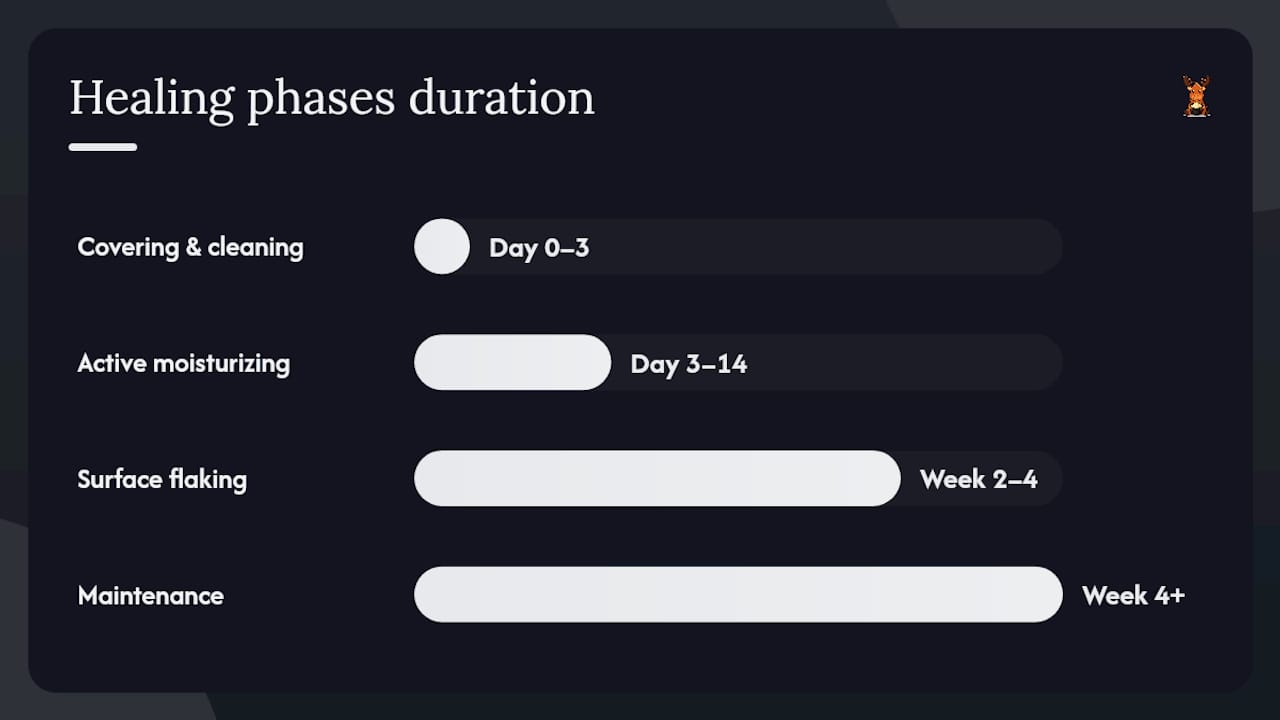
Research on skin barrier restoration supports consistent moisturization through the first two weeks as a key factor in how well the surface recovers.
Pro Tip: Sleep in loose, breathable clothing over a fresh tattoo. Tight fabric rubs and sticks to healing skin. A clean cotton sheet between you and the tattoo works well for the first few nights.
How do you spot a reaction or infection?
Most discomfort in the first few days is normal. Redness, mild swelling, and some itching are expected. The signs below are different.
Contact dermatitis (product reaction):
- Sudden spreading redness after applying a new product
- Persistent itching that does not improve after stopping the product
- Small blisters or a rash pattern that follows where the product was applied
Stop the product immediately. See a clinician if the reaction spreads or does not clear within a day or two.
Signs of infection (seek medical care):
- Increasing pain after the first 48 hours
- Spreading warmth or heat around the tattoo
- Foul odor or unusual drainage
- Fever
Quick red-flag checklist:
- New rash after starting a product: stop the product
- Worsening pain after day 2: contact a clinician
- Spreading redness or heat: seek care
- Fever: seek care
Scented products and unknown botanical blends are the most common triggers for product-related reactions. Keep the formula simple during healing.
Why tallow-based balms work — and what makes Moose’s Tallow different
Beef suet tallow has a fatty-acid profile that mirrors your skin’s own lipids. That similarity is why it absorbs without sitting on top of the skin. It does not clog pores the way a heavy petroleum film can, and it does not evaporate the way a water-based lotion does.
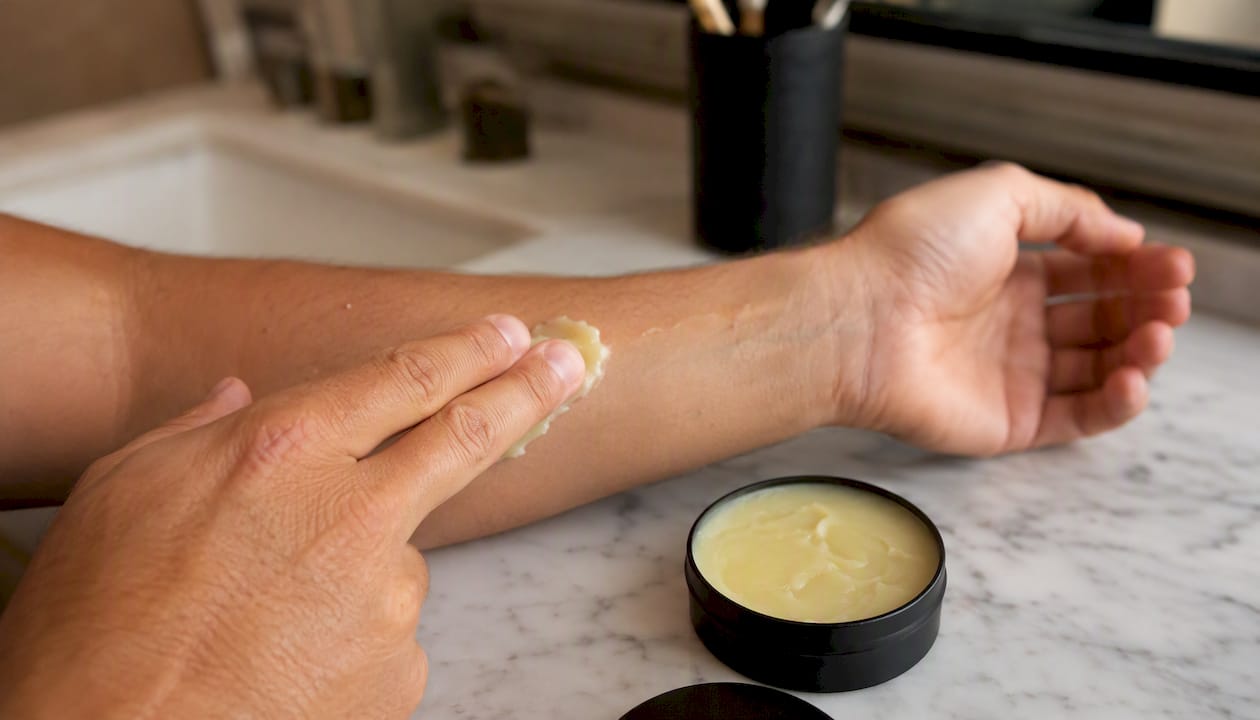
Moose’s Tallow builds every product on properly rendered local beef suet tallow. The formulas are water-free. Every ingredient is chosen on purpose.
What goes into a Moose’s Tallow balm:
- Beef suet tallow — the base; locally sourced, properly rendered
- Fractionated coconut oil — stable carrier that resists oxidation and absorbs cleanly
- Beeswax — light structure and breathable seal
- Vitamin E (tocopherols) — formula and skin support
- Jojoba and castor — texture and absorption
- Egg yolk infused oil — richness without heaviness
Water-free formulas also reduce microbial risks tied to dilution. Fewer ingredients means fewer opportunities for irritation.
Trust signals:
- Short, transparent ingredient lists on every label
- Small-batch production in Lebanon, PA
- 60-day satisfaction guarantee
- Real customer reviews
Moose’s Tallow compares its balm options openly, so you can see exactly what is in each product and why.
[author_bio]
Balms vs. ointments vs. lotions: which one fits your stage?
The right product depends on where you are in the healing process.
Balm (water-free, tallow or wax base): Best for the active healing phase and ongoing dry-skin maintenance. Supports the skin barrier without sealing it shut. Absorbs without leaving a heavy residue. The fractionated coconut oil and tallow combination is preferred for stability and clean absorption.
Ointment (petrolatum-heavy): Some artists recommend a petrolatum-based ointment for the first 24–48 hours as a high-barrier film. It works briefly. Long-term daily use can clog pores and, per the AAD, is not ideal for tattoo maintenance.
Lotion (water-based): Once surface skin looks fully healed and scabs have dropped, a fragrance-free, water-based lotion works for light daily maintenance. It is not the right choice during active healing because it evaporates too quickly to provide consistent barrier support.
- Days 0–14: tallow balm, applied 2–3 times daily
- Days 1–2 only (if artist recommends): petrolatum ointment as a short-term film
- Week 4+: fragrance-free lotion for light maintenance, or continue with balm
What Brian Smith thinks about tattoo aftercare
The tattoo aftercare category is full of products with long ingredient lists and bold claims. Most of that complexity is unnecessary. Healing skin does not need 20 botanicals. It needs moisture, barrier support, and nothing that causes a reaction.
When I started Moose’s Tallow, the goal was simple: fewer ingredients, real performance, nothing to hide. That philosophy fits tattoo aftercare well. A new tattoo is essentially a fragile skin surface. It does not need a chemistry experiment. It needs clean, stable moisture and time.
The minimal ingredients approach is not a trend. It is the honest answer to what healing skin actually needs. Tallow is always the star. Everything else supports it.
The 60-day guarantee exists because we stand behind what we make. If it does not work for you, we want to know.
Moose’s Tallow is a clear choice for tattoo aftercare
If you want a balm that checks every box on the checklist above, the Beef Tallow Lip Balm for Dry & Chapped Lips from Moose’s Tallow is a practical starting point. It is water-free, built on properly rendered beef suet tallow, and formulated with fractionated coconut oil, beeswax, and vitamin E. No fragrance. No dyes. No filler.
Products run at varying prices, making them accessible for different budgets. Small-batch, handmade in Lebanon, PA, and shipped across the US. Every order is backed by a 60-day satisfaction guarantee. Browse the full featured collection if you want to see the complete lineup.
Sources
These pages offer general guidance on tattoo aftercare practices and informed the routine and safety advice in this guide.
- Tattoo Aftercare Tips From a Dermatologist
- Caring for tattooed skin
- Scented lotions may cause scaring and premature fading of tattoos - PMC
- Study assessing 5% dexpanthenol formulations and TEWL in tattoo aftercare
This article is general information, not a substitute for advice from a qualified doctor. Consult a qualified healthcare professional about your own circumstances before acting on anything here.
FAQ
Is a tattoo balm good for new tattoos?
Yes. A fragrance-free, water-free balm supports the skin barrier during the active healing phase without the irritation risk that comes from scented or heavily diluted products.
What is the best balm for tattoo aftercare?
A tallow-based, water-free balm with fractionated coconut oil and no added fragrance fits the criteria dermatologists recommend. Moose’s Tallow’s Beef Tallow Lip Balm meets those criteria and is available across the US.
How long should you use a tattoo balm after getting tattooed?
Apply balm consistently through the first few weeks. After surface skin looks healed and scabs have dropped, you can shift to lighter maintenance as needed.
Does a tattoo heal better dry or moisturized?
Moisturized. Consistent, appropriate moisturization supports skin barrier restoration during the first two weeks, and the Cleveland Clinic advises keeping the area moisturized as part of standard aftercare.


0 comments