

Stop the rubbing first. Pull off tight or sweaty clothing, rinse the area with lukewarm water, and pat it fully dry. Then smooth on a water-free barrier balm or plain petroleum jelly and switch into loose clothing. That sequence handles most chafed skin relief in under a minute.
- Stop: remove the source of friction right away.
- Clean: lukewarm water only, no scrubbing.
- Dry: pat, don’t rub, and let air finish the job.
- Protect: apply a water-free balm and choose loose fabric.
Pro Tip: Keep a small tin of barrier balm in your bag or gym kit. The two seconds it takes to reapply beats the ten minutes of misery from ignoring a hot spot.
If the skin stays red, swells, or starts weeping after a few days, treat that as your cue to see a provider.
Key Takeaways
Chafed skin relief comes down to stopping friction fast, cleaning and drying the skin, then protecting it with a water-free barrier balm.
| Point | Details |
|---|---|
| Act in the first minute | Stop the rubbing, remove wet or tight clothing, and clean the area with lukewarm water. |
| Dry before you protect | Pat skin fully dry since trapped moisture raises friction and slows healing. |
| Choose water-free barriers | Water-free balms and petroleum jelly resist breakdown under sweat better than lotions. |
| Prevent, don’t just treat | Moisture-wicking fabric, seamless gear, and pre-activity balm cut chafing before it starts. |
| Watch for infection signs | Spreading redness, pus, or fever means it’s time to see a provider. |
| Try a tallow-based option | Moose’s Tallow balms use beef suet tallow and fractionated coconut oil for a lasting, water-free barrier. |
What Causes Chafed Skin and Where It Shows Up
Chafing happens when skin rubs against skin or fabric long enough to break down the top layer of the skin barrier. Cleveland Clinic describes it as localized irritation from repeated friction, and it tends to show up wherever skin folds, seams press, or moisture builds up.
Common trouble spots include:
- Inner thighs, especially during running or hot weather
- The groin and inner buttocks
- Armpits, where sweat and fabric meet
- Nipples, particularly during long runs or cycling
- Anywhere a bra band, waistband, or seam rubs repeatedly
Symptoms start small: a stinging or burning sensation, mild redness, a feeling like the skin is raw. Left alone, it can progress to broken skin, small blisters, or swelling. Catching it early is what keeps a mild irritation from turning into an open sore.
How Do You Treat Chafed Skin Right Away?
Chafed skin responds well to a short, ordered routine. Skip a step and you slow down your own recovery.
- Stop the friction. Change out of the clothing or gear causing the rub, or pause the activity. There’s no healing while the rubbing continues.
- Clean gently. Use lukewarm water and a mild, unscented soap. Cleveland Clinic recommends avoiding harsh scrubbing, which only adds more mechanical stress to skin that’s already inflamed.
- Dry completely. Pat the area dry with a clean towel. Trapped moisture raises friction, so a damp patch of skin chafes again faster than a dry one.
- Apply a barrier. A water-free balm or plain petroleum jelly protects the raw surface while it heals. Water-free matters here because balms built mostly on water break down fast once sweat and movement hit them, while an oil-and-wax formula keeps its slip far longer.
- Cover if needed. A breathable bandage protects a raw patch from clothing contact. Save powders for prevention on dry, intact skin, and save lubricants for skin that’s already irritated.
- Skip the fragrance. Cleveland Clinic is direct about this: no perfumed lotions, no medicated creams with active ingredients, nothing but a bland, simple ointment until the skin barrier reforms.
If a spot keeps flaring up in the same place week after week, that’s not bad luck. It’s a signal that your gear, fabric, or technique needs a second look, not just another round of balm.
How to Prevent Chafed Skin Before It Starts
Prevention beats treatment every time, and most of it comes down to two things: keeping skin dry and keeping friction low.
- Pick moisture-wicking fabrics. Cotton holds sweat against the skin, and dried sweat leaves behind salt that acts like fine sandpaper with every stride. Switch to synthetic or wool-blend athletic wear for anything longer than a short walk.
- Change wet clothes fast. A soaked shirt or shorts after a workout is doing your skin no favors. Swap into something dry as soon as you reasonably can.
- Go seamless where it counts. Snug, seamless base layers reduce the seam-on-skin contact that causes a surprising share of chafing, especially at the thigh and underarm.
- Apply a barrier before you move. A thin layer of water-free balm on known hot spots, applied before a run, hike, or long shift on your feet, prevents the friction from ever building up. Cleveland Clinic Health Essentials frames this as one of the most reliable prevention habits.
- Reapply after sweat or swimming. Heavy sweating and water exposure wear down any barrier product, so a midday touch-up matters for long activities.
- Use tape or compression shorts for repeat offenders. Persistent hot spots often need mechanical backup, not just more lubricant. Check tags and seams on gear that keeps causing trouble.
When Should You See a Doctor for Chafing?
Most chafing heals on its own within a few days of consistent home care. Watch for signs that it’s turned into something more serious.
- Redness that keeps spreading rather than fading
- Warmth, swelling, or increasing pain around the area
- Pus, discharge, or a foul smell
- Fever alongside skin irritation
- No real improvement after several days of gentle cleaning and barrier care
A provider may recommend bandaging, a prescription ointment, or an evaluation to rule out a fungal or bacterial infection setting in on top of the original irritation. None of that is a sign you did something wrong. Broken skin is an open door, and sometimes it needs more than a balm to close it back up.
Why a Water-Free Tallow Balm Holds Up Better on the Skin
Most lotions are mostly water. That’s fine for a quick moisturizing pass, but it’s a poor match for a chafing hot spot that’s about to face an hour of sweat and movement. A water-based product breaks down fast under those conditions, while a water-free, lipid-rich balm keeps its glide far longer.

That’s the whole idea behind Moose’s Tallow. Every product starts with properly rendered beef suet tallow, a fat with a structure close to your skin’s own oils. We build around it with fractionated coconut oil as the carrier, chosen for its stability and resistance to oxidation, plus beeswax for a protective seal and vitamin E (tocopherols) to support the formula. No olive oil, no shea butter, no avocado oil filling out the label. Every ingredient earns its spot.
To use it on a hot spot: clean the skin, dry it fully, then smooth on a thin, even layer. Reapply after heavy sweat or a swim. Applied before activity, the same balm works as prevention, not just recovery.
Pro Tip: A little goes further than you’d think. Tallow balms spread thin and still hold their barrier, so resist the urge to pile it on.
Read more on how tallow’s fatty-acid profile supports the skin barrier and how to apply a tallow balm for lasting relief.
Rebuilding Your Skin Barrier After Chafing Heals
Getting past the raw stage isn’t the finish line. Skin that’s been chafed needs time and consistent care to fully rebuild its barrier, and skipping that step is exactly why the same spot flares up again a week later.
Keep the area moisturized daily for at least a week or two after visible healing, even once it looks fine. Skin that looks recovered on the surface can still be thinner and more friction-sensitive underneath. A water-free balm applied nightly gives the area a steady layer of support without adding the water content that can leave skin feeling tight as it evaporates.
Ease back into whatever activity caused the chafing in the first place. Jumping straight back to your full mileage or your full workday on your feet, without adjusting gear or fabric, just resets the friction cycle. Give the skin a week of lighter activity where possible.
Watch the area for a change in texture, thickening, or repeated discoloration. That’s often a sign the same mechanical stress is still happening, just quietly, and it’s worth addressing the actual cause: gear, fit, or a fabric swap. Long-term skin resilience comes from removing the friction source, not just from a stronger cream.
Home Remedies That Actually Help, and Ones to Skip
Plenty of home remedy advice for chafing sounds reasonable but doesn’t hold up on raw skin. Others are genuinely solid.
What works: plain petroleum jelly, a water-free balm, cool compresses for the first sting, and loose breathable clothing while the area heals. Cornstarch-based powders can help keep dry, intact skin from friction, though they’re not meant for skin that’s already broken.
What to skip: apple cider vinegar, lemon juice, essential oils applied directly, or any “natural” remedy involving acids or strong fragrance. Raw or irritated skin has a compromised barrier, and anything acidic or heavily scented tends to sting rather than soothe. Cleveland Clinic is consistent on this point: bland and simple wins over active and “natural-sounding” when skin is already inflamed.
Aloe vera gel gets recommended often, and a plain, minimally processed version can feel cooling on mild irritation. But it’s water-based, so its relief is short-lived compared to an oil-and-wax barrier, and heavily fragranced aloe products carry the same risk as any other perfumed treatment. If you want a natural remedy that actually holds up under movement and sweat, look for one built on fat and wax rather than water and gel.
What to Use if Chafed Skin Gets Infected
A small percentage of chafing cases cross the line from irritation into infection, usually because broken skin gave bacteria or fungus an opening.
For a suspected bacterial infection, signs of spreading redness, warmth, and pus call for a provider’s evaluation rather than a home fix. They may recommend a topical antibiotic ointment or, for more involved cases, an oral antibiotic. Don’t reach for random antibiotic creams from the medicine cabinet as a substitute for that evaluation, especially once pus or fever is involved.
Fungal infections show up differently, often as a persistent, itchy, sometimes scaly rash in warm folds like the groin or underarms, and they tend to need an antifungal rather than an antibacterial product. That distinction matters because using the wrong type of treatment can let the actual problem drag on for weeks.
Whichever it turns out to be, the same rule applies once infection is suspected: stop applying fragranced or heavily processed products to the area. Stick to gentle cleansing and let a provider direct the medicated treatment. Once the infection clears and the skin closes back up, a plain barrier balm can resume its normal job of protecting the area from repeat friction while it fully rebuilds.
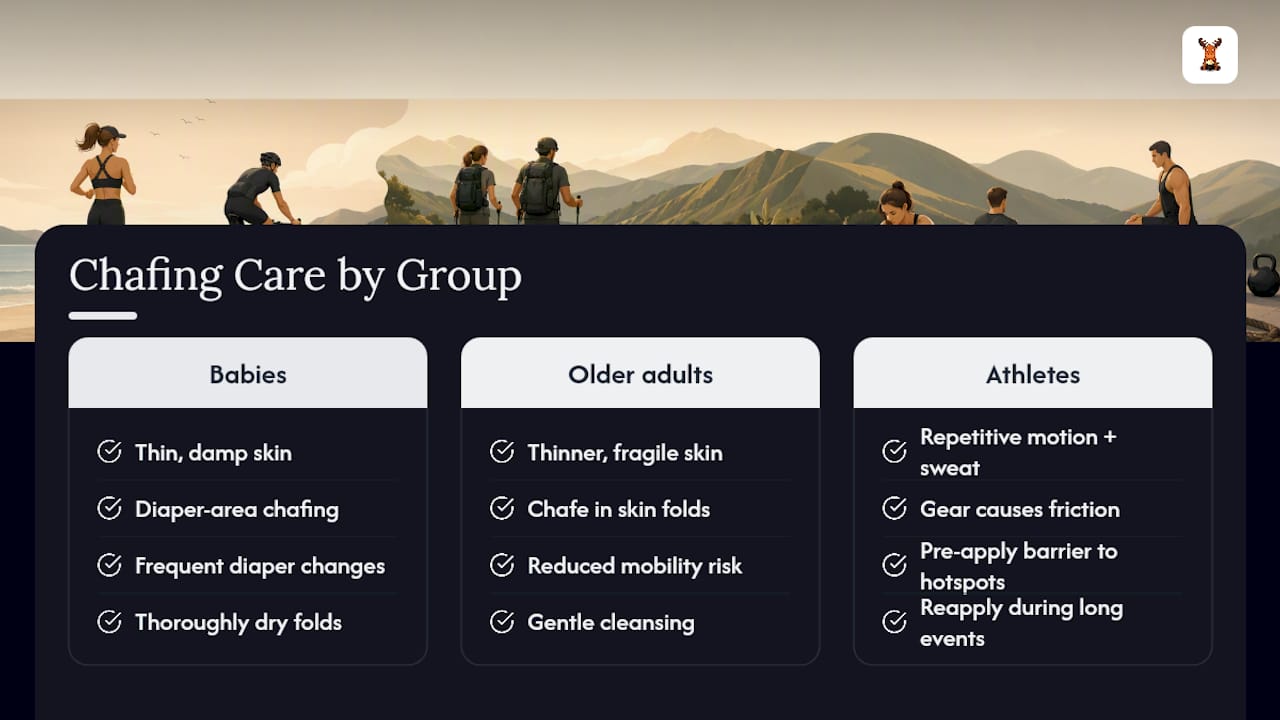
Chafing Care for Babies, Older Adults, and Athletes
Chafing doesn’t look the same across every age and activity level, and the care shouldn’t either.
Babies chafe easily in diaper areas and skin folds because their skin is thinner and stays damp longer between changes. Frequent diaper changes, thorough drying, and a simple, fragrance-free barrier applied at each change go a long way. Skip anything with essential oils or strong scent on infant skin, and check with a pediatrician if redness doesn’t ease within a couple of days.
Older adults often deal with chafing in skin folds, particularly with reduced mobility or longer periods sitting or lying down. Skin also thins with age, making it more prone to tearing under friction. Gentle cleansing, careful drying between folds, and a bland barrier applied consistently matter more here than in younger, more resilient skin. Caregivers should check fold areas daily, since reduced sensation can mean irritation goes unnoticed longer.
Athletes face a different problem: hours of repetitive motion, heavy sweat, and gear that rubs the same spot thousands of times per session. Research on skin-barrier disruption in endurance athletes points to prolonged mechanical loading and moisture as the core drivers, which means prevention has to happen before the activity starts, not after the burn sets in. Pre-applying a barrier to known hot spots and reapplying during long events matters more for this group than for anyone else on this list.
A Founder’s Note on Keeping It Simple
I started this brand after flipping over a lotion bottle and counting 52 ingredients, water listed first. That stuck with me. Skin doesn’t need a long list. It needs the right fats, chosen on purpose, nothing there as filler.
That’s why every Moose’s Tallow product starts with real beef suet tallow, rendered locally, in small batches here in Lebanon, PA. Water-free by design, backed by a 30-day guarantee. If you’re dealing with chafing that keeps coming back, a simple barrier balm built on ingredients your skin already recognizes is worth trying.
— Brian Smith
Barrier Balms Built for Chafing Prevention and Relief
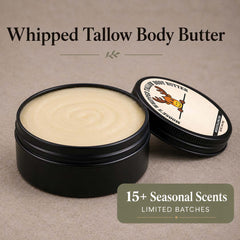
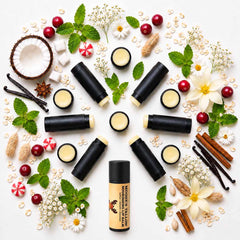
Moose’s Tallow makes the barrier step of chafing care simple: one balm, a short ingredient list, no water to break down mid-activity. For thighs, groin, and other larger friction zones, the Whipped Tallow Body Butter spreads thin and holds up through a long run or a hot commute. For nipples, seam lines, and other small, targeted spots, the Beef Tallow Lip Balm doubles as a precise, portable barrier stick.
Headed outdoors, the Tallow & Zinc Outdoor Sun Balm covers sun-exposed hot spots that chafe during hikes or long days outside. And if your hands take the daily wear from gear straps, gloves, or repetitive friction on the job, the Beef Tallow Hand Cream handles that without the greasy film thinner lotions leave behind.
Every product is handmade in small batches, built on real beef suet tallow and fractionated coconut oil, and backed by a 30-day guarantee. Browse the full lineup on the Moose’s Tallow collection page and pick the size that fits your next long run, hike, or shift on your feet.
Sources
- Chafing Causes, Treatment & Prevention - Cleveland Clinic
- 8 Tips To Prevent Chafing - Cleveland Clinic Health Essentials
- Chafing - MedlinePlus
- Skin barrier dysfunction in endurance athletes (narrative review)
FAQ
What Heals Chafed Skin the Fastest?
Removing the source of friction, cleaning gently, drying fully, and applying a water-free barrier balm or petroleum jelly gives chafed skin the best chance to heal quickly.
What Cures Chafing Fast?
There’s no instant cure, but stopping the rubbing and keeping the area clean, dry, and protected with a bland barrier balm speeds recovery more than any single product.
What Can I Do to Soothe Chafed Skin?
A cool compress can ease the initial sting, followed by gentle cleaning, thorough drying, and a plain, fragrance-free barrier like a water-free tallow balm or petroleum jelly.
Is Aquaphor or Vaseline Better for Chafing?
Both are petroleum-based barrier ointments recommended for chafed skin, and either works well; a water-free, lipid-rich balm offers similar barrier support with a shorter, more transparent ingredient list.
How Do I Know if Chafed Skin Is Infected?
Spreading redness, warmth, swelling, pus, a foul smell, or fever alongside the irritation are signs to see a healthcare provider rather than continuing home care.


0 comentarios