


Seal the fissure with a thick occlusive like petrolatum, cover it if it’s deep, and moisturize within 20 seconds of every handwash. That combination stops water loss fast and gives torn skin a chance to close. If a crack won’t stop bleeding, keeps spreading redness, or gets worse after a few days of consistent care, stop treating it yourself and see a clinician.
Knuckles specifically? The skin over the joint has its own problem: it has to stretch every time you make a fist. See cracked knuckles: why the skin splits and what really helps.
TL;DR:
- Combining petrolatum with a thick occlusive layer and timely moisturization within 20 seconds of washing significantly speeds up fissure healing and prevents worsening.
- Hydrocolloid patches and gloves enhance moisture retention and protect cracks from friction, leading to visible improvement within days with consistent use.
- Repeated, gentle barrier repair with minimal ingredients and tailored routines at different times of day is essential for long-term hand skin health.
- Severe or persistent cracks, especially with signs of infection or in underlying health conditions, require professional medical assessment and treatment.
- Moose’s Tallow Hand Cream offers a water-free, minimal-ingredient option that supports skin barrier repair when used regularly after washing.
Quick Relief and First-Aid for Painful or Bleeding Fissures
A cracked fingertip hurts more than its size suggests because the skin there sits over nerve-dense tissue with almost no cushioning. The first move isn’t a fancy cream. It’s protecting the wound so it can close.
Start by cleaning the area the right way. Harsh scrubbing reopens fissures and pushes bacteria deeper into the crack.
- Rinse with lukewarm water only. Hot water strips natural lipids and worsens the barrier damage that caused the crack in the first place.
- Use a mild, fragrance-free cleanser, and only where actually needed. Skip soap directly on the fissure if you can.
- Pat dry with a soft towel. Never rub.
- Apply a thick balm or straight petrolatum while skin is still slightly damp. Petrolatum remains one of the most reliable occlusives for sealing moisture into damaged skin.
- Cover deep or wide cracks with a fabric bandage, or use a hydrocolloid patch for fingertip splits.
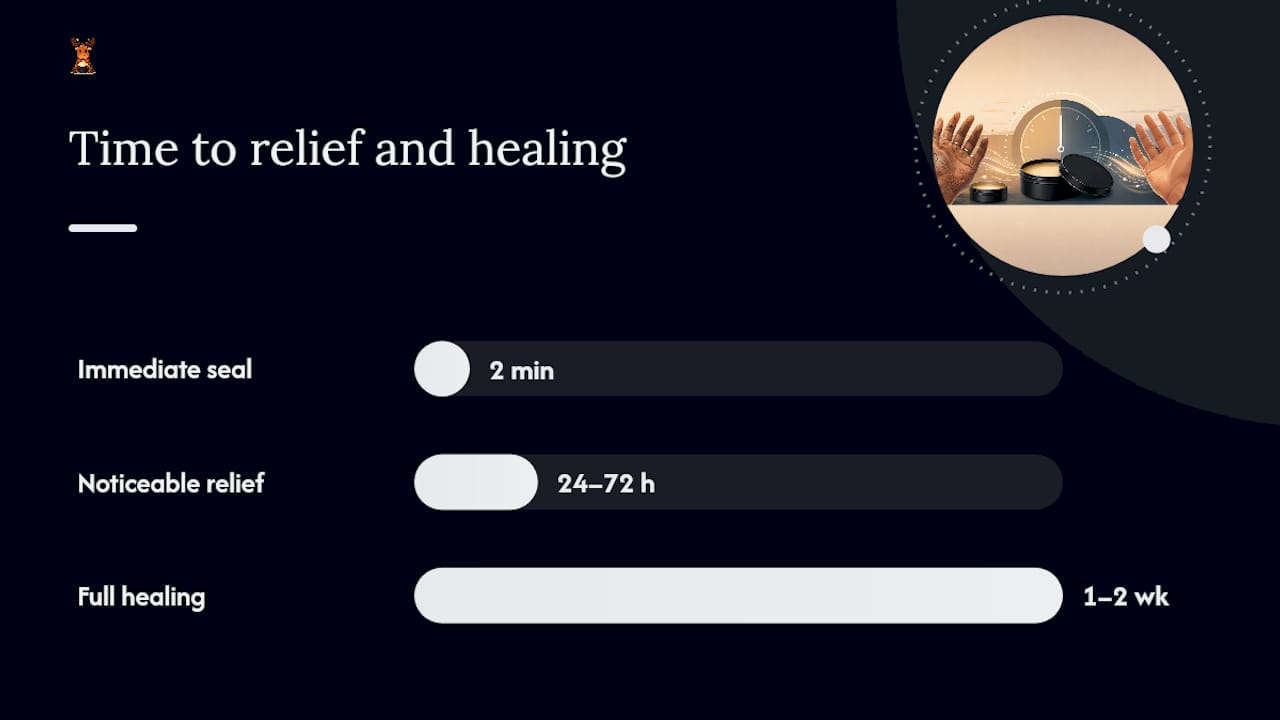
Hydrocolloid patches deserve more attention than they get. They create a moist, protected pocket over the crack that shields it from friction and water exposure, and many people notice less pain and visible improvement within 24 to 72 hours. A basic waterproof bandage works in a pinch, especially mid-shift at a job that has you in and out of water, but hydrocolloid holds up longer against repeated washing.
Watch for signs the crack has moved past simple dryness. Spreading redness, warmth around the wound, pus, a foul smell, or a low fever mean infection may have set in. At that point, an over-the-counter antibiotic ointment under a fresh bandage is reasonable for a day or two, but if things aren’t improving, that’s a job for a clinician, not another balm.
Pro Tip: Keep a small tin of thick balm and a few hydrocolloid patches in your bag or glove box. The two minutes it takes to seal a crack the moment it happens saves you a week of pain later.
Daily Treatment Routine That Repairs the Skin Barrier
Healing cracked hands isn’t about finding one miracle product. It’s about repeating a few simple steps often enough that your skin barrier actually gets time to rebuild between washes.
Think of the day in four windows: morning, right after any wash, midday, and bedtime. Each one calls for a slightly different approach.
Morning
- Wash with lukewarm water and a mild, fragrance-free cleanser.
- Pat dry, leaving skin slightly damp rather than bone dry.
- Apply a rich cream or balm within about 20 seconds. Dermatologists point to this window specifically because damp skin holds onto the moisturizer’s water content far better than dry skin does.
After every subsequent handwash
The 20-second rule applies every time, not just in the morning. If you wash your hands eight times a day, that’s eight small windows to reinforce the barrier instead of stripping it further.
- Keep a travel-size balm at your kitchen sink, bathroom, desk, and car.
- Reapply lightly during the day; you don’t need a heavy layer every time, just enough to replace what the water removed.
- If you use hand sanitizer, look for a formula without high alcohol content on cracked or broken skin, and moisturize immediately after it dries.
Midday maintenance
A lighter lotion or cream works fine here. You’re maintaining, not repairing. Save the heavy, occlusive layer for when you can let it sit undisturbed.
Bedtime
This is your real repair window, since you’re not about to wash dishes or type for the next seven hours.
- Wash hands gently and pat mostly dry.
- Apply a generous layer of a thick balm or cream.
- Consider light cotton gloves over the balm to lock it in overnight.
For wet-work days, whether that’s dishes, cleaning, or gardening, glove strategy matters more than any product. Wear cotton liners under waterproof gloves to absorb sweat, and swap the liners if your hands feel damp inside them for more than a few minutes. Reapply moisturizer the moment gloves come off, since the humid environment inside them can actually pull moisture out of skin over long stretches.
Ingredients That Actually Help Cracked Hands
Not every “moisturizing” product does the same job. Understanding the three basic categories makes label-reading a lot easier.
Humectants pull water into the skin’s outer layer. Glycerin, hyaluronic acid, and urea fall into this group. They work well on intact dry skin, but at higher concentrations, urea and lactic acid can sting or burn when applied directly to an open fissure. Save the humectant-heavy products for skin that isn’t actively cracked.
Emollients and occlusives are the workhorses for actual repair. Combination formulas that pair humectants, emollients, and occlusives together restore lipids, draw in water, and then trap it there, which is a more complete approach than any single ingredient alone. Petrolatum, dimethicone, beeswax, and tallow all fall into the occlusive-emollient category, and they work by slowing water loss through the skin’s surface rather than adding water themselves.
- Beeswax forms a breathable seal that holds moisture without feeling airtight.
- Beef suet tallow has a fatty-acid profile that closely resembles the lipids your own skin already produces, and early research on topical tallow points to hydrating and skin-supportive properties, though the evidence base is still limited.
- Jojoba and castor oil add slip and help a thick balm spread without feeling greasy.
- Vitamin E (tocopherols) supports the formula’s stability and adds a light conditioning feel.
- Fractionated coconut oil is the carrier oil we reach for at Moose’s Tallow, not olive, avocado, almond, or shea butter. It resists oxidation, absorbs cleanly, and keeps a balm shelf-stable far longer than heavier vegetable oils tend to.
What to avoid matters just as much as what to look for. Fragranced products and strong SLS-based cleansers are common triggers for irritation and can slow healing on already-broken skin. Essential oils, however “natural” they sound, carry the same risk on open cracks. High-alcohol sanitizers deserve the same caution.
Pro Tip: If a product stings the moment it touches a crack, that’s not “it’s working.” That’s irritation. Switch to something plainer with fewer active ingredients.
When Cracked Hands Are More Than Dryness
Most cracked hands respond to consistent occlusion and gentler habits within a couple of weeks. When they don’t, something else may be going on, and it’s worth naming the difference between stubborn dryness and a problem that needs a professional.
Watch for these signs:
- Bleeding that won’t stop with direct pressure and a bandage.
- Redness that spreads outward from the crack rather than staying contained.
- Pus, a foul odor, warmth, or fever.
- Pain that keeps increasing rather than easing.
- No real improvement after two to three weeks of consistent moisturizing and protection.
Severe or recurring cracking often points to barrier dysfunction like hand eczema rather than simple weather-related dryness, and that usually needs more than an over-the-counter cream to resolve. A clinician might recommend a prescription topical, a short course of topical or oral antibiotics if infection is confirmed, or patch testing if a contact allergy seems likely.
Certain conditions change the calculus entirely. Diabetes and circulatory problems can slow wound healing enough that a fissure that would close in a week for most people lingers for a month. Immunosuppression raises infection risk from what would otherwise be a minor crack. If any of these apply to you, don’t wait as long to call a clinician as you otherwise might.
Night Repair Protocol: Using Occlusion for Deep Recovery
Nighttime is when repair actually happens, mostly because you’re not exposing your hands to water, friction, or irritants for hours at a stretch. Getting the layering order right makes the difference between a routine that works and one that just sits on the surface.
- Optional: apply a light humectant serum first if your skin tolerates it well and isn’t actively cracked.
- Apply a rich cream or emollient balm over the entire hand, working it into cuticles and fissures specifically.
- Seal with a heavier occlusive layer, either a thicker balm on top or straight petrolatum over any open cracks.
- Slip on cotton gloves.
Wearing gloves over a moisturizer for 30 to 60 minutes, or overnight, measurably increases how much of the product actually penetrates rather than rubbing off on sheets. If overnight gloves feel too warm or you tend to overheat while sleeping, 30 to 60 minutes before bed still delivers most of the benefit.
For fingertip fissures specifically, a hydrocolloid patch under the gloves does more than a plain balm layer alone. It holds a moist environment directly against the split and protects it from the friction of turning over in bed.
Wash the cotton gloves every few days. A damp glove left overnight breeds bacteria fast, and reusing a soiled one against broken skin defeats the purpose.
Expect gradual change, not overnight results. Most people notice visibly softer skin within three to five nights of consistent occlusion, with actual fissures starting to close over one to two weeks if nothing keeps reopening them.
Pro Tip: Set your balm and gloves out on the nightstand before bed. The routine only works if it’s easier than skipping it.
Prevention and Daily Protection Against Recurrence
Treating a crack is one thing. Keeping it from coming back next month is a separate skill, and it mostly comes down to reducing exposure to whatever dried your hands out in the first place.
- Wear waterproof gloves with a cotton liner for dishwashing, cleaning, and any prolonged water contact.
- For gardening, choose a sturdy pair with reinforced fingertips. Soil and grit are just as drying as water, and thin gloves tear fast against thorns and rough bark.
- In cold weather, wear insulated gloves outdoors, and moisturize before you head out, not just after you come back in.
- Swap sweaty liners for dry ones during long tasks. Trapped moisture against skin for hours can be as damaging as no protection at all.
- Run a humidifier indoors during dry months. Indoor humidity below roughly 30 to 40 percent pulls moisture straight out of skin, and a humidifier in a bedroom or main living space helps offset dry furnace air.
- Choose a fragrance-free, lower-alcohol hand sanitizer when soap and water aren’t available, and moisturize right after it dries.
- Look for small habit fixes: turning down water temperature, cutting a wash down from 30 seconds of scrubbing to what’s actually needed, and keeping a balm within arm’s reach so reapplying takes no extra effort.
For readers who want a broader seasonal routine to pair with these habits, our guide on handling winter skin dryness walks through the adjustments that matter most once the furnace and cold air start working against you.
Moose’s Tallow: A Water-Free Hand Cream Built for Barrier Repair
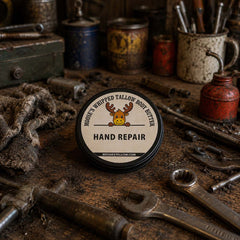
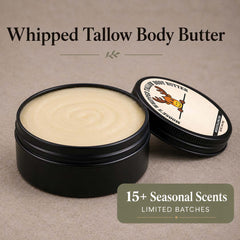
Our Beef Tallow Hand Cream is built on one core idea: skin needs the right ingredients, not a long list of them. It’s water-free, handmade in small batches, and centers on properly rendered local beef suet tallow, whose fatty-acid profile sits close to what your own skin already produces.
The formula rounds out with a short list of intentional additions:
- Fractionated coconut oil as the carrier, chosen for its stability, oxidation resistance, and clean absorption.
- Beeswax for a breathable protective seal.
- Vitamin E (tocopherols) to help stabilize the formula.
- Jojoba and castor oil for slip and smooth application.
For use, apply it to slightly damp skin right after washing, within that same 20 second window we mentioned earlier, or layer it on at night under cotton gloves for deeper occlusion. It’s a cosmetic product meant to support your skin’s own barrier function, not a treatment or cure for any medical condition. Consistency matters more than any single application.
Every batch is handmade, and every order carries a 60-day guarantee. If you want to understand the ingredient philosophy in more depth first, our piece on using tallow for eczema-prone skin covers the reasoning in more detail.
Founder’s Note on Ingredient Minimalism
I started Moose’s Tallow after a health scare made me flip over a lotion bottle and actually read the label. Fifty-two ingredients. Water was first.
That didn’t sit right with me. Skin doesn’t need a long list. It needs the right one.
We build every product around minimal dilution and ingredients chosen on purpose, tallow first, then a short supporting cast that earns its place. No filler, nothing added just to pad a label.
One thing I’d ask you to keep in mind: consistency beats intensity. A good cream applied every day after washing does more than an expensive one used twice a week. And no cream, ours included, replaces a doctor when a crack won’t heal.
— Brian Smith
Ready to Try It? How to Pick the Right Size
If your hands crack every winter or you’re dealing with fissures right now, the Beef Tallow Hand Cream gives you a simple, water-free option built on ingredients you can actually pronounce, without the 50-ingredient label Brian started this company to get away from.
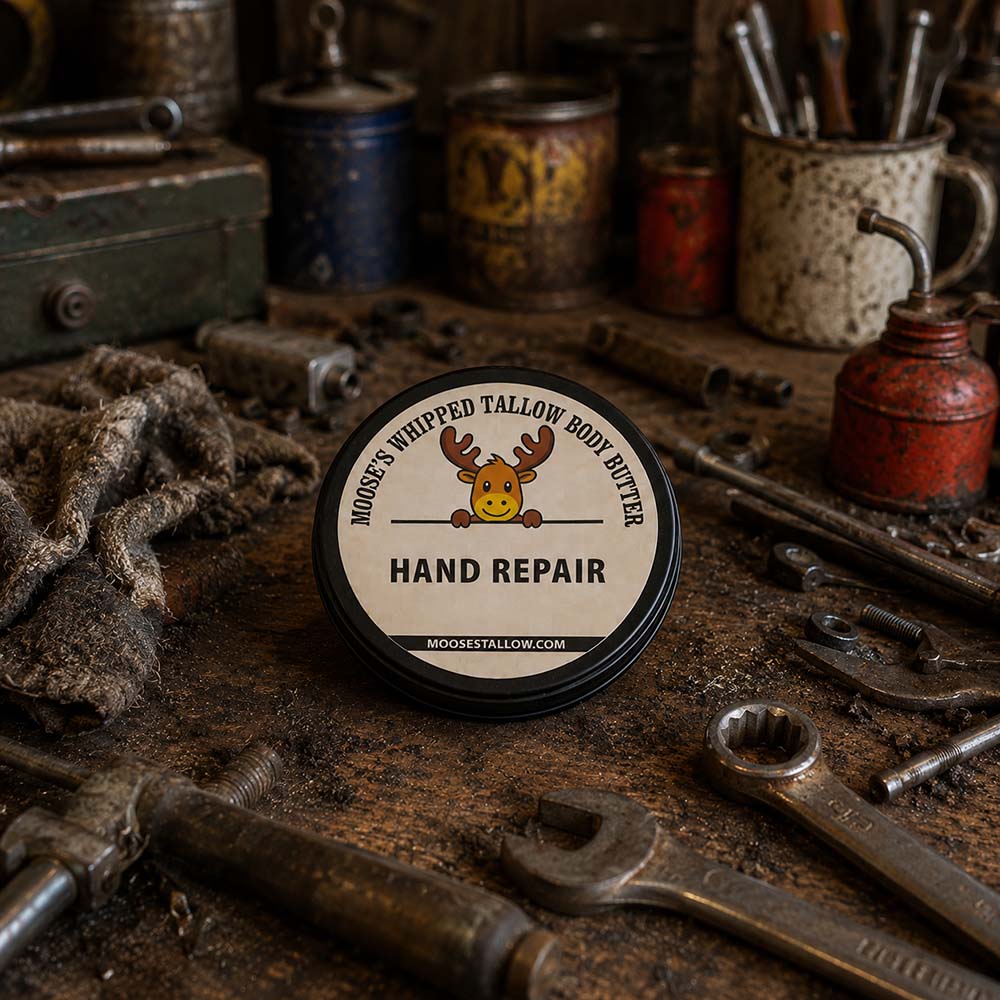
Choosing a size comes down to how you’ll use it. A jar makes sense for your nightstand or bathroom counter, where you’ll reach for it as part of the bedtime occlusion routine described above. A travel tube fits a bag, desk drawer, or car, so you’re never more than a few seconds from that 20-second reapplication window after washing at work or on the road. Plenty of people keep one of each.
If you have known sensitivities or reactive skin, patch-test on a small area of your forearm for a day before applying it broadly to cracked hands. Every order ships with a 60-day guarantee, so you can try it against your own routine without much risk.
Sources
For readers who want to dig further into the clinical side of hand care, a few sources stand out. Ohio State’s Health & Discovery team lays out the core causes and prevention steps for cracked hands in plain language. The American Academy of Dermatology’s patient page covers the 20-second moisturizing rule that anchors the daily routine above, and Harvard Health offers a practical breakdown of occlusive therapy for dry, damaged hands.
For a broader look at barrier-repair philosophy outside the tallow-specific approach, this Korean skincare barrier repair routine guide walks through a different but complementary layering strategy. And for anyone curious about the current research on tallow itself, the scoping review on topical tallow is worth reading in full, evidence is still limited, but early findings are worth watching.
This article is general information, not a substitute for advice from a qualified doctor. Consult a qualified healthcare professional about your own circumstances before acting on anything here.
- Do this now to prevent dry, cracked hands | Ohio State Health & Discovery
- Dermatologists’ tips to relieve dry skin | American Academy of Dermatology (patient page)
- How can I heal my dry hands? - Harvard Health
- Scoping review on tallow and topical skin effects (PMC)
FAQ
What vitamin deficiency causes dry, cracked hands?
Low vitamin A, vitamin D, or B vitamins like niacin have been linked to dry, flaky skin in some people, but most cracked hands come from barrier damage caused by washing, cold air, and irritants rather than a vitamin deficiency alone. If diet-related dryness is a concern, that’s worth raising with a doctor rather than self-diagnosing.
Will Vaseline heal cracked hands?
Plain petrolatum won’t heal a fissure on its own, but it’s one of the most effective occlusives available for sealing moisture into damaged skin while it repairs itself. Applied within the 20-second window after washing and reinforced with gloves overnight, it meaningfully speeds visible improvement.
What do dermatologists recommend for dry hands?
Dermatologists recommend applying a thick, fragrance-free moisturizer within 20 seconds of washing, while skin is still damp, and wearing gloves for wet work to limit repeated irritation. Cotton gloves over cream at bedtime are also a commonly suggested step for stubborn cases.
What causes really dry, cracked hands?
Cracked hands usually come from repeated handwashing, hot water, harsh detergents, and cold, low-humidity air wearing down the skin barrier faster than it can repair. Occupations involving frequent water exposure or glove use raise the risk further, and underlying conditions like eczema can make the skin more vulnerable to begin with.
Can a tallow-based hand cream help with cracked hands?
Beef suet tallow has a fatty-acid profile close to skin’s own natural oils, and early research on topical tallow points to supportive, hydrating properties. Moose’s Tallow’s water-free Beef Tallow Hand Cream is formulated as a cosmetic option to support the barrier repair routines described above, not as a substitute for medical treatment when infection or a chronic skin condition is involved.


0 comentarios