

Yes, a lick-safe paw balm is safe for your dog when it’s pet-specific and used as directed. Choose one with a short, transparent ingredient list, apply a thin layer, and let it absorb before your dog walks off. If you see bleeding, swelling, or discharge on the paw, skip the balm and call your vet.
TL;DR:
- A paw balm with a short, transparent, food-grade ingredient list supports incidental licking without health risks, especially if it includes beef suet tallow, coconut oil, beeswax, vitamin E, and calendula.
- Formulas containing petrolatum, mineral oil, synthetic fragrances, or essential oils can impede skin repair or be toxic, so they should be avoided.
- Applying a thin, thoroughly rubbed-in layer of balm before walks or naps reduces licking and enhances absorption, with timing and application technique being crucial for effectiveness.
- Moderate to severe dryness and cracking require a wax-rich, stay-put balm, while mild dryness responds better to fast-absorbing, oil-based formulations.
- Homemade balms are safest when based solely on food-grade ingredients, with essential oils and cocoa butter excluded, and only used after patch testing to prevent irritation.
What “Lick-Safe” Really Means for Paw Balms
“Lick-safe” is not the same as “edible.” No paw balm is meant to be eaten. The term describes something narrower: a formula low-risk enough for the small, incidental licks dogs do the moment you set their paw down.
That distinction matters more than most labels admit. A natural paw balm built from a handful of recognizable ingredients carries far less risk than one padded with synthetic fillers and unnamed additives. Veterinary sources point out that lick-safe framing describes low-risk incidental exposure, not a green light for regular consumption. The fewer ingredients on the label, the fewer things your dog’s stomach has to process if a lick turns into a habit.
Short, food-grade ingredient lists lower the stakes because you can name every item and reasonably expect it to sit fine in a dog’s stomach in small amounts. That’s the practical test worth applying to any balm before you buy it: could you read the label out loud and feel fine about your dog swallowing a trace of each ingredient?
Here’s what usually separates a low-risk lick from a real problem:
- Occasional, small licks right after application are common and generally low-risk with a well-formulated pet balm.
- Repeated, deliberate ingestion over days is a different story. It can upset digestion or dilute the balm’s effect on the paw itself.
- A thick, greasy layer invites more licking than a thin one that absorbs quickly.
- Unscented, simple formulas tend to get licked less obsessively than anything with a strong smell or flavor.
The realistic goal isn’t zero licking. Dogs lick their paws. It’s picking a balm formulated so that behavior doesn’t become a health concern, and pairing it with the application habits covered later in this guide.
Ingredients to Look for and Ingredients to Avoid
Read the label before the marketing copy. That’s the single best habit for finding a genuinely safe paw balm.
Look for these:
- Beef suet tallow. Its fatty-acid makeup is close to a dog’s own skin oils, so it absorbs cleanly instead of sitting on top as a greasy film.
- Fractionated coconut oil. It’s stable, resists going rancid, and absorbs fast without leaving a heavy residue.
- Beeswax. Provides occlusion and water resistance, which helps a balm stay put through a walk on wet grass or snow.
- Vitamin E (tocopherols). A conditioning ingredient that also helps protect the formula itself from oxidizing.
- Calendula. A gentle, soothing botanical commonly used in pet-safe balms for irritated skin.
- Jojoba and castor oil. Light, absorbent oils that round out texture without adding greasiness.
Avoid or question these:
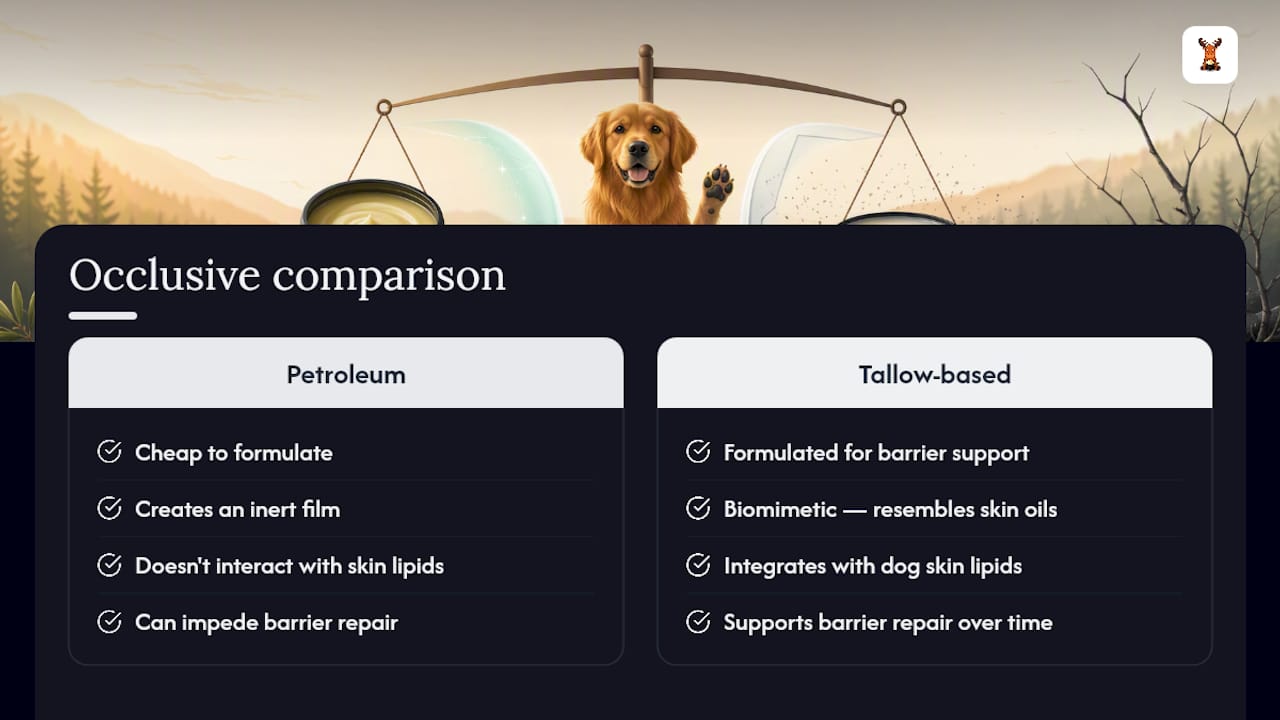
- Petrolatum and mineral oil. Petroleum-based occlusives can impede barrier repair on canine pads and tend to attract dirt and debris rather than let the skin breathe.
- Unnamed “fragrance.” A vague catch-all term that could hide dozens of synthetic compounds you can’t evaluate.
- Tea tree oil and many essential oils. Some are genuinely toxic to dogs in concentrated form, even in small topical amounts.
- Zinc oxide or steroid creams meant for humans. Fine for your hands, not appropriate for a dog’s paw unless a vet specifically prescribes it.
A practical shortlist of natural ingredients commonly recommended for paw balms includes beeswax for occlusion, an emollient for softening, a stable oil for moisture, calendula for soothing, and vitamin E for conditioning. Notice tallow does the same job as shea butter or similar butters, without introducing a plant-derived allergen some dogs react to.
Statistic Callout: Simple, unscented wax-and-oil balms consistently score better on incidental lick safety than complex formulas. Fewer ingredients mean less risk if a dog licks more than expected, and wax content gives the balm the stay-put quality cracked paws actually need.
Ingredients also shape how a balm behaves on the paw itself. A wax-heavy formula stays put longer through mud and snow, but it sits on the surface, which can invite more curious licking. A lighter oil-based formula absorbs fast and leaves less to lick off, but it won’t last as long on a rough winter walk. That trade-off between stay-put time and lick appeal is worth knowing before you buy, not after.
How to Apply Paw Balm So It Actually Works
Application technique matters almost as much as the formula itself. A thin, well-absorbed layer does more for your dog’s paws and invites far less licking than a thick, greasy coat.
- Clean the paw gently first. Wipe away dirt, gravel, or salt residue with a damp cloth so the balm goes onto skin, not debris.
- Check between the pads. Trapped debris can cause more irritation than dry skin alone, so take a quick look before you apply anything.
- Use a pea-sized amount per paw. More balm doesn’t mean more benefit. It usually just means more residue left to lick.
- Rub it in thoroughly. Massage until the balm disappears into the pad rather than sitting as a visible film.
- Distract for a few minutes. Offer a toy, a short walk on a clean surface, or a treat to occupy your dog while the balm finishes absorbing.
- Repeat once or twice daily for paws showing dryness or early cracking, tapering off as the skin improves.
Fast-absorbing, non-greasy formulas shrink the window where licking is even possible. A thin layer paired with brief distraction gives the balm real contact time on the skin instead of ending up on your dog’s tongue within thirty seconds.
Pro Tip: Apply paw balm right before a low-key activity, not right before a nap. A dog lying still with nothing to do will find their paws fast. A dog trotting to the water bowl won’t.
Timing also matters more than owners expect. Evening application, after the day’s walks are done, gives the balm hours of undisturbed contact while your dog settles in for the night. Morning application before a walk protects against hot pavement or rock salt, but expect a shorter absorption window before paws hit the ground.
Which Balm Texture Fits Which Paw Problem
Not every dry paw needs the same fix. Matching texture to severity keeps you from over-treating mild dryness or under-treating a real crack.
- Mild dryness or flaking responds well to a light oil-based balm. Something that absorbs fast, like a jojoba or fractionated-coconut-oil-forward formula, softens the pad without leaving heavy residue behind.
- Visible cracking or rougher pads call for a moderate, waxy balm. The added beeswax content improves stay-put time through walks and weather, which matters more once the skin has actual splits to protect. The trade-off: more wax on the surface means watching licking a bit more closely for the first few applications.
- Thickened, hardened patches (hyperkeratosis) need more consistent care over time rather than one heavy application. A barrier-supportive balm used regularly does more than an occasional thick coating.
- Heavy petroleum-based occlusives often create more risk than benefit here. They can trap moisture unevenly and interfere with the skin’s own repair process, and their sticky texture tends to pick up dirt and grit on every walk, according to veterinary critiques of petroleum use on canine pads.
The general rule: match occlusion to severity, not to habit. A heavier balm isn’t automatically better. For cracked dog paws specifically, a wax-forward formula with real stay-put power earns its place. For everyday maintenance on otherwise healthy pads, a lighter formula does the job without unnecessary buildup.
DIY Paw Balm: Safety Rules and When to Skip It
Making your own paw balm can work, but only within strict limits. The risk isn’t the idea of DIY. It’s the shortcuts that creep into homemade recipes found online.
Ground rules for a safe DIY batch:
- Stick to food-grade ingredients only. Every component should be something a person could reasonably name and trust.
- Keep the recipe short. Five or six ingredients, not fifteen. Complexity adds risk without adding benefit.
- Skip essential oils entirely unless you know them well. Several common ones are genuinely unsafe for dogs, even diluted.
- Never use cocoa butter. It contains theobromine, the same compound that makes chocolate dangerous for dogs.
- Patch-test on a small area first. Wait 24 hours and watch for redness or irritation before applying to all four paws.
DIY recipes can be safe when they use food-grade ingredients and balanced ratios of occlusive to emollient components, but careless recipe choices, especially certain essential oils or cocoa butter, turn a well-meaning project into a real hazard.
Pro Tip: If a DIY recipe calls for an ingredient you can’t confidently explain to a vet, leave it out or start over. That single filter catches most unsafe additions before they reach the mixing bowl.
If you’re not confident sourcing and balancing ingredients yourself, buying a tested, transparent formula removes the guesswork entirely. That’s a reasonable choice, not a shortcut.
When to See a Vet: Red Flags You Shouldn’t Ignore
Topical care handles the everyday stuff: dry pads, minor cracking, seasonal roughness. It does not handle everything.
Call your vet if you notice any of the following:
- Bleeding, even minor, from a cracked pad.
- Discharge or an unusual odor coming from the paw.
- Swelling that’s noticeable compared to the other paws.
- Deep cracks that go beyond the surface layer of the pad.
- A change on only one paw that persists or gets worse, since one-sided symptoms sometimes point to something other than general dryness.
Give topical care a reasonable window to work. Simple dryness usually softens over several days of consistent, thin applications. It won’t disappear overnight, but you should see gradual improvement, not stagnation or worsening.
If nothing changes after a week, or if symptoms get worse at any point, stop waiting and call your vet. Take a photo of the paw every day or two. A simple timeline, three or four photos over a week, gives your vet real information instead of a vague description, and it helps you catch a plateau you might otherwise miss.
Evidence and Expert Perspective on Lick Safety
Veterinary critiques of petroleum-based occlusives aren’t a minor footnote. They point to a real gap between what’s cheap to formulate and what actually supports paw skin over time.
Petroleum occlusives can impede the skin’s own barrier repair process on canine pads. Practitioners tend to prefer biomimetic, barrier-supportive ingredients, formulas that work with the skin’s own chemistry, over inert petroleum for long-term pad health.
That preference for biomimetic ingredients isn’t arbitrary. Skin, dog or human, repairs itself more efficiently when what’s applied to it resembles what it already produces. Petrolatum sits as an inert film. It doesn’t interact with the skin’s lipid layer; it just covers it. Beef suet tallow behaves differently because its fatty-acid profile is close to a dog’s own skin oils, so it integrates rather than just sitting on top.
That’s the reasoning behind Moose’s Tallow’s approach to pet balms. Every formula starts water-free, which matters for a product that has to survive being licked, stepped in mud, and left in a truck console through a heat wave. Water-free formulas resist the bacterial growth and rancidity that water-based lotions are prone to, and they mean nothing is diluted with filler before the active ingredients even get to work.
Fractionated coconut oil earns its place as the carrier of choice for the same practical reason it works in human skincare: stability and reliability stability and shelf life. It resists oxidation far better than many plant oils, absorbs fast, and doesn’t leave the greasy film that makes a dog more likely to lick a balm off before it’s had time to work. Beeswax adds the water resistance and stay-put quality that plain oils can’t provide on their own.
None of this requires a long ingredient list. It requires the right ingredients, chosen for a reason, not stacked in to look impressive on a label.
Why We Build Paw Balms This Way
I started Moose’s Tallow after flipping over a lotion bottle and counting fifty-two ingredients, water listed first. That same instinct carried straight into how we build our pet products. If I wouldn’t want a long, unreadable list on something I put on my own skin, I wasn’t going to put it on my dog’s paws either.
Beef suet tallow is the backbone of our paw balm for the same reason it’s the backbone of everything we make. Its fatty-acid profile mirrors what skin, human or canine, already produces, so it absorbs instead of sitting on the surface like a synthetic film. Fractionated coconut oil rounds it out as our carrier oil of choice because it holds up on the shelf and in a dog park bag without breaking down or turning rancid.
We keep every batch water-free and lightly diluted, which means the label stays short and every single ingredient earns its spot. No filler oils, no vague “fragrance” line, nothing you’d have to look up before feeling comfortable with a stray lick.
We handmake every batch in small runs in Lebanon, Pennsylvania, and back every order with a 30-day guarantee. If a formula doesn’t work for your dog’s paws, that guarantee is there for a reason.
— Brian Smith
Moose’s Tallow Paw Balm and How to Pick It for Your Dog
There’s no shortage of paw balms on shelves right now, but most stretch their ingredient lists with fillers your dog doesn’t need, just to hit a lower price point or a longer shelf claim. Moose’s Tallow takes the opposite approach: fewer ingredients, each one doing real work, so you’re not gambling on what happens if your dog gets a lick in before the balm absorbs.
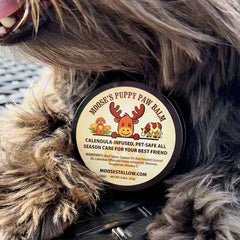
Our Dog Paw Balm & Wax with Calendula contains is built on, beef suet tallow, fractionated coconut oil, beeswax, vitamin E, and calendula. Tallow supports the skin barrier the way it does across our whole lineup. Fractionated coconut oil keeps the formula stable and fast-absorbing. Beeswax gives it the stay-put quality that matters on a muddy trail or a salted sidewalk. Calendula adds a gentle, soothing touch for paws that have taken a beating.
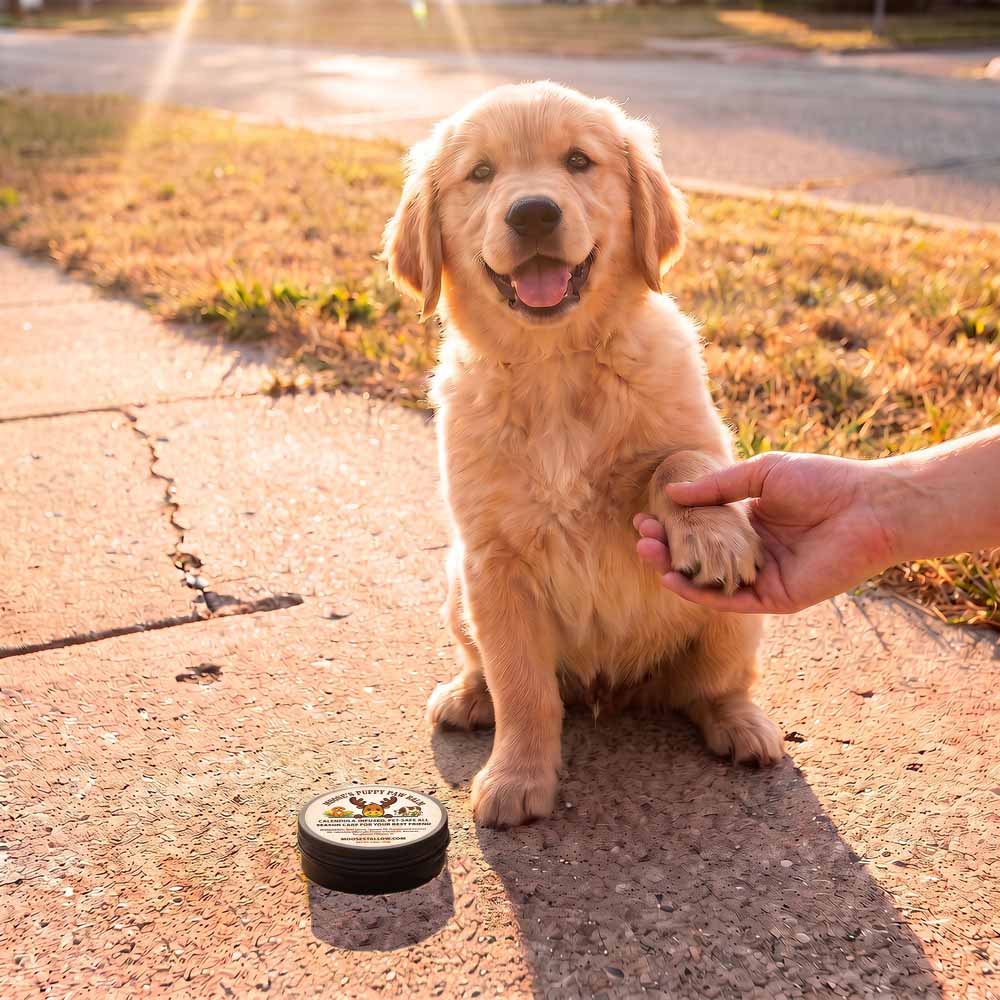
Every ingredient on that label is one you can read, recognize, and feel comfortable with, which is the whole point of choosing a lick-safe formula in the first place. Pick the size that matches how often your dog is outside, more frequent walkers and hikers do well with the larger tin, occasional use covers a smaller one just fine. Every order ships with our 30-day guarantee, so if it’s not the right fit for your dog’s paws, you’re covered.
Sources
- What are the best natural ingredients for paw balms?
- Petroleum occlusives in canine hyperkeratosis
- DIY Guide: Best Dog Paw Balm DIY Recipe Tips
- We compared dog nose balms by lick-safe relief
FAQ
Is Paw Balm Safe for Dogs to Lick?
A pet-specific balm formulated with a short, food-grade ingredient list is generally safe for the occasional incidental lick. It’s not meant to be eaten regularly, and repeated ingestion should be discouraged even with a well-formulated product.
What Is the Best Dog Paw Balm for Licking?
Look for a simple, unscented formula built around ingredients like beef suet tallow, fractionated coconut oil, beeswax, vitamin E, and calendula. Moose’s Tallow’s Dog Paw Balm & Wax uses exactly that combination, chosen so every ingredient is one you’d feel comfortable with if your dog licks it.
Do Vets Recommend Paw Balm?
Many veterinary sources support the use of barrier-supportive paw balms over petroleum-based occlusives, especially for chronic dryness or cracking. The consensus favors simple, biomimetic formulas that work with the skin’s natural repair process rather than inert films that sit on top of it.
What Can I Put on Dogs’ Paws for Licking?
A thin layer of a lick-safe, natural paw balm applied right before a short distraction, like a toy or a treat, works best. Avoid petrolatum, mineral oil, unnamed fragrance, and essential oils, and stick to short ingredient lists you can read and recognize.
How Long Does It Take for Paw Balm to Heal Cracked Pads?
Expect gradual softening over time with consistent, thin applications rather than overnight results. If cracking persists or worsens after a week, or if you see bleeding or swelling, it’s time to call your vet instead of continuing topical care alone.
0 comentarios