

TL;DR:
- Dry and cracked paw pads can cause dogs to limp or lick their paws excessively, indicating discomfort. Paw balm, a moisturizing and healing product made from ingredients like tallow, beeswax, and coconut oil, supports paw health by softening, protecting, and soothing the skin. Regular application before and after walks, with proper technique and safe ingredients, promotes long-term paw health and mobility.
If you’ve noticed your dog limping after a walk or licking their paws more than usual, dry and cracked paw pads could be the cause. Paw balm is a topical product designed specifically to moisturize, protect, and heal dog paw pads. Many pet owners have never heard of it, or they assume it’s just a fancy lotion. It’s not. Understanding what paw balm does and how to use it can make a real difference in your dog’s comfort and mobility.
Key takeaways
| Point | Details |
|---|---|
| Paw balm heals and protects | It moisturizes dry, cracked pads and creates a barrier against rough terrain and extreme temperatures. |
| Ingredients matter enormously | Clean, minimal formulas with tallow, beeswax, and fractionated coconut oil outperform filler-heavy products. |
| Application timing is key | Apply before and after walks, especially in hot summers and cold, salted winters. |
| Safe ingredients allow licking | High-quality paw balms use non-toxic ingredients safe if your dog licks their paws after application. |
| Balm works best in a full routine | Pair paw balm with regular inspection, cleaning, and protective gear in extreme weather for the best results. |
What paw balm is and how it works
Paw balm is a thick, skin-conditioning product made for dog paw pads. It works by delivering moisture deep into the pad tissue, softening hardened skin and reducing the risk of cracks. Think of paw pads like the soles of worn boots. Without care, they dry out, split, and become painful.
One thing pet owners often get wrong is confusing paw balm with paw wax. They are not the same thing. Balms focus on healing and moisturizing, while paw waxes are harder formulas designed for water resistance and short-term surface protection. Waxes guard. Balms heal. Both have their place, but if your dog has dry, rough, or cracked pads, balm is what you need first.
Here is what a good paw balm does for your dog:
- Softens and moisturizes hardened or rough paw pads
- Creates a light protective layer over the pad surface
- Soothes minor cuts, abrasions, and irritation
- Supports the skin barrier so pads stay healthier over time
- Reduces discomfort during and after walks on rough or extreme surfaces
The balm absorbs into the pad and works from within, rather than just sitting on top of the skin. That absorption is what separates a quality balm from a cheap, filler-based product.
What goes into a good paw balm
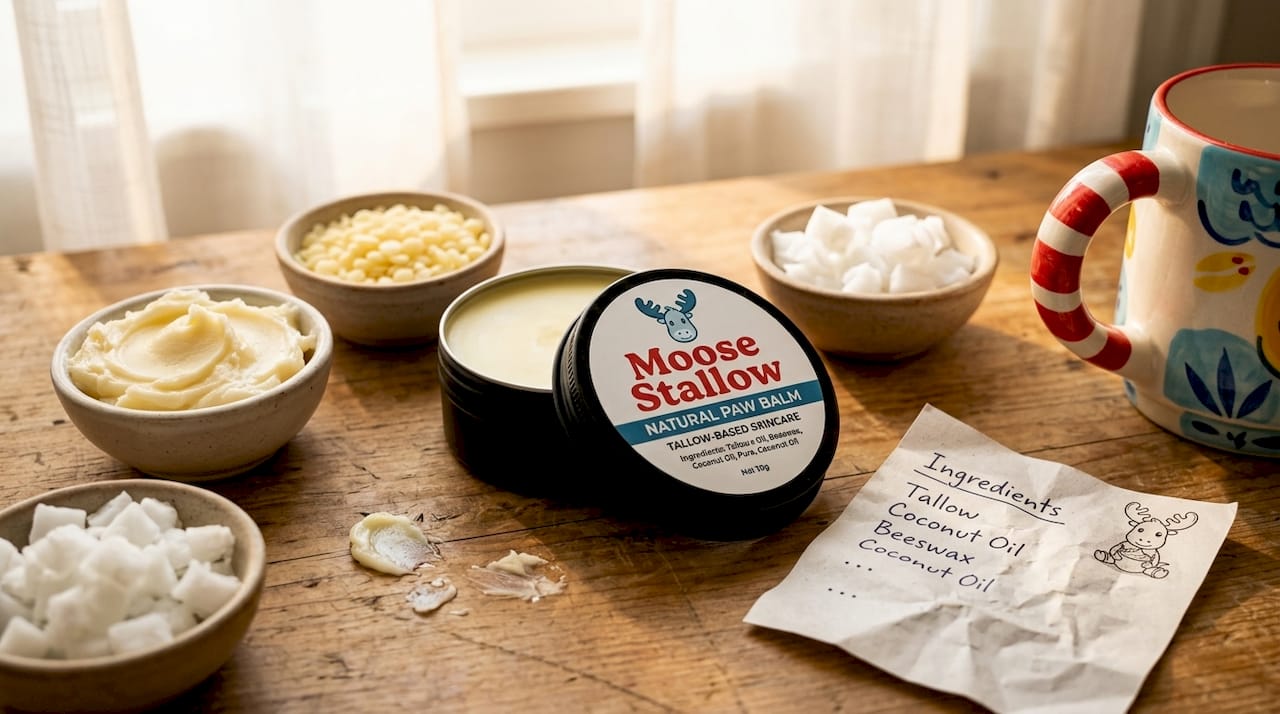
Not all paw balms are created equal. The ingredient list tells you everything. At Moosestallow, tallow is always the star. Beef suet tallow provides a performance-focused base that supports the skin barrier without unnecessary dilution. It is naturally compatible with skin biology, absorbs well, and carries other active ingredients effectively.
Fractionated coconut oil is the preferred carrier oil in quality balms because of its stability, resistance to oxidation, and easy absorption. It also extends shelf life without synthetic preservatives. Beeswax adds structure and a protective film over the pad surface. Vitamin E (tocopherols) acts as an antioxidant that both protects the balm’s integrity and supports skin healing. Jojoba, castor oil, and egg yolk infusions round out a formula built for deep, lasting moisture without harmful effects if your dog decides to lick.
Here is a quick comparison of what each ingredient contributes:
| Ingredient | Primary benefit | Why it matters |
|---|---|---|
| Beef suet tallow | Skin barrier support | Minimal dilution, deeply nourishing base |
| Fractionated coconut oil | Absorption and stability | Oxidation-resistant, long shelf life |
| Beeswax | Surface protection | Creates a light, breathable barrier |
| Tocopherols (Vitamin E) | Antioxidant and healing | Protects balm and supports skin repair |
| Jojoba | Deep moisturizing | Mimics natural skin oils, absorbs easily |
| Castor oil | Conditioning | Softens and smooths rough pad tissue |
| Egg yolk infusion | Nourishment | Supports skin health and reduces irritation |
What you want to avoid is equally clear. Filler ingredients dilute effectiveness and can irritate sensitive paw skin. Oils like vegetable, grapeseed, or almond have poor oxidation stability and serve more as padding than performance. Always read the label and ask yourself whether every ingredient is there for a reason.
Pro Tip: If you can’t identify why an ingredient is in the formula, it probably does not need to be there. A shorter, purposeful ingredient list almost always outperforms a long one full of unknowns.
How to apply paw balm the right way
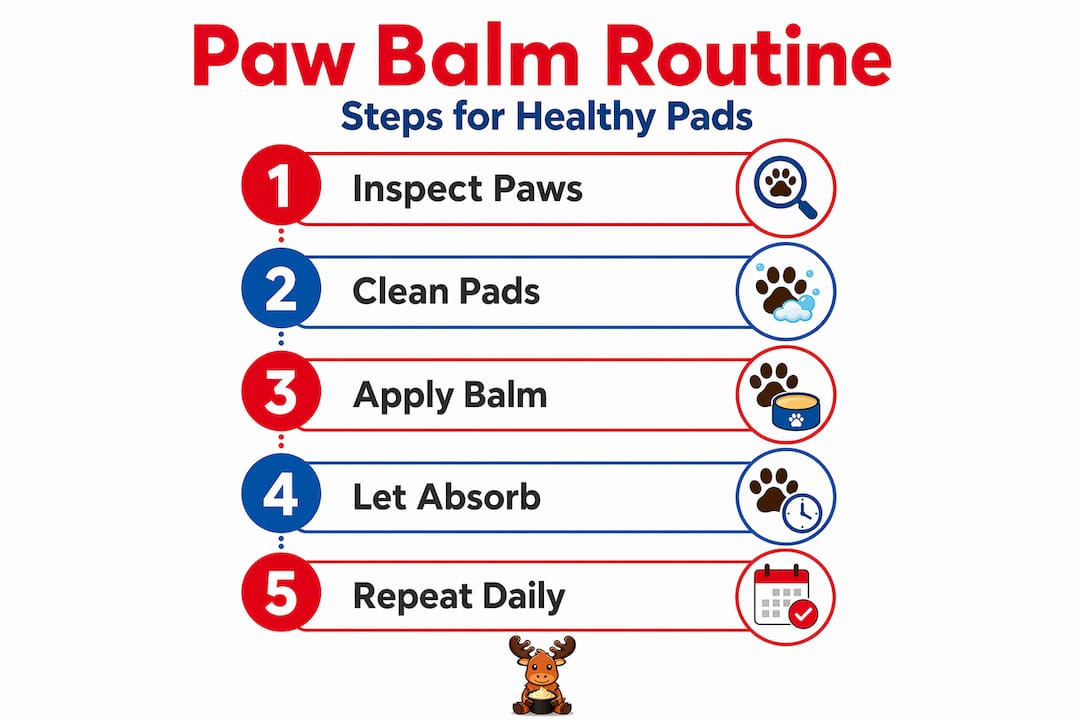
Applying paw balm is straightforward, but timing and technique make a difference. Here is a simple routine that gets real results:
- Clean the paws first. Wipe dirt and debris off your dog’s pads with a damp cloth before applying balm. This helps the balm absorb rather than sit on top of grime.
- Warm the balm in your fingers. Scoop a small amount and rub it between your fingertips for a few seconds. This softens the balm and makes it easier to massage in.
- Massage into each pad. Work the balm into the pads with gentle circular pressure, including between the toes where skin can crack.
- Apply before and after walks. Apply before walks to create a protective layer against hot pavement, snow, or salt. Apply after to restore moisture lost during the outing.
- Distract your dog after application. Distraction after application prevents premature licking. Give your dog a treat, a toy, or take them for a short walk on clean grass.
As for frequency, use the balm as often as needed. If your dog’s pads are severely dry or cracked, multiple applications daily until the pads soften is reasonable. Once paws are healthy, a few times per week as maintenance is usually enough.
Pro Tip: Applying balm right before bedtime works especially well. Your dog is calmer, less likely to lick, and the balm has hours to absorb overnight.
Benefits of regular paw balm use
The difference between a dog with neglected paws and one whose owner applies balm regularly is significant. Here is what consistent use delivers:
- Soft, crack-free pads. Moisturized paws are more stable on slippery surfaces and far less likely to crack or bleed.
- Protection from temperature extremes. Hot pavement in summer and icy, salted roads in winter both damage pad tissue. Balm creates a layer of defense.
- Faster healing. Minor cuts and abrasions on paw pads heal more quickly when the surrounding skin is healthy and well-moisturized.
- Reduced infection risk. Cracks in dry pad skin are entry points for bacteria. Keeping pads intact and soft reduces that risk significantly.
- Better comfort and mobility. A dog with sore, dry paws moves differently. They may hesitate on rough surfaces, limp, or avoid walks. Regular balm use keeps them moving freely.
- Complementary to protective gear. Paw balms enhance but do not replace booties or other protective gear in extreme conditions. Use both when conditions are harsh.
A holistic paw care routine that includes regular inspection, cleaning, and balm application is the strongest foundation for long-term paw health. You can also explore dog grooming essentials as part of a fuller care routine for your dog.
My honest take on paw balm
I’ve seen a lot of paw balms come and go, and the pattern is consistent. Products loaded with fillers feel like they’re doing something but wear off fast and sometimes cause irritation. Tallow-based balms, formulated with intention, actually last. The absorption is different. The results over time are different.
The mistake I see most often is pet owners reaching for a balm only when something is already wrong. Cracked, bleeding pads are painful and take time to heal. Using balm regularly before the damage happens is far more effective than treating it after the fact. Prevention really does win here.
I also believe ingredient transparency is non-negotiable. If a brand can’t tell you exactly why each ingredient is in the formula, that should give you pause. Every ingredient in a well-made paw balm should earn its place. No exceptions. Seeing why handcrafted pet balms built on real ingredients outperform mass-market alternatives changed how I think about what a small, honest formula can do.
— Brian
Paw care the Moosestallow way
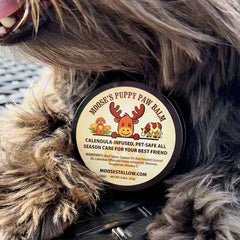
At Moosestallow, we built our paw balm around one principle: every ingredient has to earn its place. Beef suet tallow is the base because nothing else delivers that level of skin barrier support with such minimal dilution. Fractionated coconut oil, beeswax, tocopherols, jojoba, and castor oil all contribute real, specific benefits. Nothing is padding. The formula is safe if your dog licks their paws after application, because we would never include something we would not trust completely.
If you are ready to see what a clean, honest paw balm can do for your dog, browse our full product collection and find the right fit for your pup’s paws.
FAQ
What is paw balm used for?
Paw balm is used to moisturize, soothe, and protect dog paw pads from dryness, cracking, rough terrain, and temperature extremes. It supports everyday paw health and aids in healing minor irritations.
Is paw balm safe for dogs to lick?
High-quality paw balms made with natural ingredients like beeswax, tallow, and fractionated coconut oil are non-toxic and safe in small amounts. Always check the ingredient list and avoid balms with synthetic fillers or artificial fragrances.
How often should I apply paw balm?
Apply paw balm as often as needed. For very dry or cracked pads, multiple applications daily is appropriate. Once paws are healthy, a few times per week for maintenance works well.
What is the difference between paw balm and paw wax?
Paw balms focus on moisturizing and healing, while paw waxes create harder, more water-resistant barriers for environmental protection. Most dogs benefit from balm for daily care and wax for extreme conditions.
What ingredients should I look for in paw balm for dogs?
Look for beef suet tallow, fractionated coconut oil, beeswax, and vitamin E as core ingredients. These are clean, effective, and safe. Avoid products with filler oils or synthetic additives that dilute performance and may irritate sensitive skin.


0 comments