

Tocopherol is vitamin E in its free form. Tocopheryl acetate is vitamin E with an acetate group attached. That small change makes the acetate more stable on the shelf. It also changes how the ingredient behaves once it is on your skin.
Neither one is better for everyone. The right choice depends on the whole formula, not the vitamin E name alone. Below, we explain the difference in plain words. We also show how we think about it when we make water-free tallow balms in Lebanon, PA.
TL;DR
- Tocopherol is the free, direct form of vitamin E. It works as an antioxidant.
- Tocopheryl acetate is an ester. It resists oxidation better, so formulators often pick it for stability.
- Skin conversion of the acetate is not settled. Studies disagree, so avoid absolute claims either way.
- In skincare, vitamin E is a supporting ingredient. The base (tallow, oils, wax) does the moisturizing.
- Read the whole label, not one ingredient. We list vitamin E (tocopherols) in our formulas.
What each name actually means
Vitamin E is a family of related compounds. When a label says “tocopherol,” it usually means alpha-tocopherol or a blend of tocopherols. This is the unesterified form. Nothing is attached to it.
Tocopheryl acetate is the same molecule with an acetate group on it. Official records describe alpha-tocopherol as the active moiety of tocopheryl acetate. That means the two are related. It does not mean they are the same ingredient.

You may also see “vitamin E acetate” on a label. That is another name for tocopheryl acetate. If you want the simplest label, “tocopherol” is the more direct name.
A quick side-by-side
| Tocopherol | Tocopheryl acetate | |
|---|---|---|
| Form | Free vitamin E | Vitamin E ester |
| Main strength | Direct antioxidant | Resists oxidation |
| Main weakness | Breaks down faster itself | May need to convert in skin to act as free vitamin E |
| Common label names | Tocopherol, mixed tocopherols | Tocopheryl acetate, vitamin E acetate |
| Why a formulator picks it | Antioxidant protection for the oils | Ingredient stability |
Is one natural and the other synthetic?
This is the most common claim you will see online. It is too simple. Tocopherols can come from plants. Tocopheryl acetate is made by adding an acetate group to a tocopherol. So the real split is free form versus ester form.
Supplement labels add another layer, with natural and synthetic versions of the same compound. That debate is mostly about what you swallow. It is not a good guide to what sits in a balm.
So do not choose a product because it says “natural vitamin E.” Check the specific name on the ingredient list. Then ask what the rest of the formula looks like.
How they behave on skin
Vitamin E is fat-soluble. It sits well in oils and butters. Reviews describe it as a lipophilic antioxidant with possible cosmetic value for skin. The same review notes that controlled clinical evidence is still limited for many specific uses.
That is why we keep our wording cosmetic. Vitamin E can be part of a good formula. It is not a treatment.
Does the acetate turn into free vitamin E?
Honest answer: it depends. The studies do not agree.
One human skin study found that the acetate was absorbed into skin. It did not find clear conversion to free tocopherol in that study. An animal study using pig skin did report conversion over several hours. Another study, in neonatal rats, found penetration that depended on the formulation.
The lesson is simple. Be wary of anyone who says the acetate always converts. Be equally wary of anyone who says it never does. Skin type, carrier, and formula all matter.
Why formulators choose the acetate anyway
Esters are more resistant to oxidation. A dermatology review describes vitamin E esters as more oxidation-resistant while still able to penetrate skin. For a brand that wants a long shelf life, that matters.
The trade-off is that a stable ingredient may not act as a direct antioxidant right away. A direct antioxidant, on the other hand, gets used up as it works. Each form solves a different problem.
What this means for a water-free tallow balm
A water-free balm is a different world from a lotion. Lotions are mostly water. Water invites microbes, so lotions need preservative systems. A balm built on fats and wax has no water for them to grow in.
We wrote about this in our guide to stable anhydrous skincare with small-batch tallow. Fats still age, though. They can oxidize with air, light, and heat. That is where vitamin E earns its place.
Tocopherols are well known in food and oil work as a way to slow oxidation in fats and oils. In a balm, they play a similar supporting role. They help protect the oils. They are not the moisturizer.

Vitamin E is not the moisturizer
This point gets lost in marketing. A balm feels rich because of its base. In our products, that base is beef suet tallow, fractionated coconut oil, and beeswax. Tallow is always the star.
Vitamin E is a supporting ingredient. A label with vitamin E and a weak base will not keep dry skin comfortable. A label with a strong base and a small amount of vitamin E can.
If you want to see how tallow itself works on skin, read how tallow moisturizes skin.
Packaging and storage matter as much
An antioxidant cannot rescue a product left in a hot car. Light, heat, and open air all push fats toward going off. A tight lid and a cool, dark spot do real work.
We cover this in how to store tallow skincare naturally. Other wax-based, water-free products have the same issue. Solid perfume is one example, and it has its own storage rules for wax-based formulas.
How to read a label like an ingredient detective
You flip the jar over. You count the ingredients. Good. Here is what we would check, in order.
- The first ingredient. In a balm, it should be a fat or butter, not water.
- The base oils. Do you recognize each one? Is each one there for a reason?
- The vitamin E name. Is it tocopherol, mixed tocopherols, or tocopheryl acetate?
- The length of the list. Long lists are not always bad. But every line should earn its spot.
- The claims. Be careful with words like “cures,” “heals,” or “treats.” Those are drug claims, not cosmetic ones.
On that last point, the FDA states that manufacturers are responsible for cosmetic ingredient safety and labeling. It also explains that what a product claims affects whether it counts as a cosmetic or a drug. A clean ingredient story is useful. It does not replace full disclosure.
Which form should you look for?
Here is a plain way to decide.
Choose tocopherol if
- You want the most direct, simple vitamin E name on the label.
- You want an antioxidant that works as itself, with no conversion needed.
- You prefer short lists with recognizable names.
Choose tocopheryl acetate if
- You care most about the ingredient staying stable in the jar.
- Your product sits for a long time before use.
- Your skin tolerates it well and you like the finished product.
Skip the debate if
The finished product feels good, the label is honest, and your skin stays comfortable. A single ingredient name does not prove a product is safer, more natural, or more moisturizing. The base, the packaging, and your own skin tell you more.
Our perspective: why we use vitamin E (tocopherols)
When I started this brand, I had just looked hard at a lotion label. It listed 52 ingredients, and the first was water. I wanted something simpler and real.
So we build every product on properly rendered local beef suet tallow. We keep formulas water-free and lightly diluted. Every ingredient is chosen on purpose. Nothing is filler.
Here is our short list: beef suet tallow, fractionated coconut oil, beeswax, vitamin E (tocopherols), jojoba, castor, and egg yolk infused oil. That is the whole toolbox.
We use vitamin E as a supporting player. It is there to help protect the oils. It is not there to do the moisturizing, and we never sell it as a cure for anything.
We pick fractionated coconut oil as our carrier oil. It is stable. It resists oxidation. It absorbs easily and lasts on the shelf. That is why it sits beside tallow in so many of our formulas.
We do not use olive, emu, avocado, almond, shea butter, grapeseed, or other vegetable oils. Some of them go off faster or dilute what tallow does best. We would rather keep the list short.
Here is the honest part. The research does not name one winner between tocopherol and its acetate. Anyone who says otherwise is selling something. We think you should judge the finished product on how it feels, how it lasts, and how clear the label is.
— Brian Smith
What about sensitive skin, babies, pets, and pregnancy?
Dry, sensitive skin needs a strong base and a short list. Vitamin E can be one small part of that. Our guide to the role of vitamins in skin care for dry, sensitive skin goes deeper.
Some readers ask about specific situations. Here is where we draw the line.
- Pregnancy. Neither tocopherol nor tocopheryl acetate is retinol. A dermatology review treats vitamin E separately from retinoids. Still, safety depends on the full formula. Ask your OB-GYN or midwife about any product you plan to use.
- Babies. Check the whole label and test a small patch first. If your baby has a rash or a skin condition, ask your pediatrician.
- Dogs. Keep products simple, and ask your vet about cracked or bleeding paws.
- Sleep or restless legs. Vitamin E is not a sleep aid or a treatment for restless legs. If sleep problems persist, see a doctor.
For gentle under-eye care without retinol, see our notes on gentle anti-aging solutions without retinol.
See it in a finished formula
If you want to judge a tallow formula by its label, start with ours. Every product is handmade in small batches. Every product starts with local beef suet tallow. Every label is short.
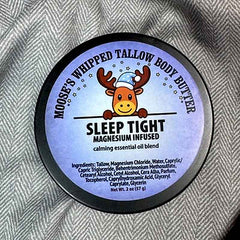
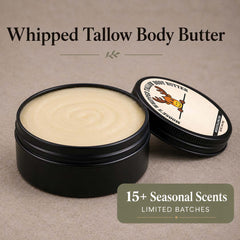
Our Eye Awake tallow eye cream is $30 and is a retinol-free option for under-eye care. Our lip balms start at $9.50, and our whipped body butters start at $10.80. You can browse the full range, with prices, in our online shop.
Before you buy anything, do what you did here. Flip it over. Count the ingredients. Ask why each one is there.
Common mistakes with vitamin E labels
- Treating “vitamin E” as a quality stamp. It tells you one ingredient. It tells you nothing about the base.
- Assuming the acetate is the same as free tocopherol. Related does not mean identical.
- Assuming “natural” means safer. The word has no guarantee attached.
- Expecting vitamin E alone to fix dry skin. A fat-rich, water-free base does more of that work.
- Ignoring storage. Heat and light age any fat, with or without an antioxidant.
If you are tempted to read a lot into one ingredient, step back. Look at the whole jar. Ask what the first ingredient is, how short the list is, and how it feels on your skin after a few days.
FAQ
Is tocopherol or tocopheryl acetate better for skin?
Neither wins in every case. Tocopherol is the direct antioxidant form. Tocopheryl acetate is the more stable ester. Judge the finished product, including its base, packaging, and how your skin responds.
Is tocopherol natural or synthetic?
Tocopherols can be sourced from plants, and tocopheryl acetate is made by attaching an acetate group to tocopherol. So the cleaner split is free form versus ester. Do not rely on the word “natural.” Check the exact ingredient name on the label.
What is tocopheryl acetate, and is it safe?
It is vitamin E with an acetate group attached, also listed as vitamin E acetate. It is a common cosmetic ingredient. Safety depends on the full formula and on your skin. If you have a reaction or a skin condition, ask a dermatologist.
Does vitamin E in skincare treat skin problems?
No. Reviews describe cosmetic and experimental roles, and note limited controlled clinical evidence for many uses. We use vitamin E (tocopherols) to support the oils in our balms. For eczema or other skin disease, see a dermatologist.
Sources
- FDA substance record: alpha-tocopherol acetate
- Vitamin E: critical review of its use in cosmetic and clinical dermatology
- Disposition and metabolism of topically administered alpha-tocopherol acetate
- Permeation and metabolism of alpha-tocopherol and its acetate in micro-Yucatan pig skin
- In vitro and in vivo permeation of vitamin E and vitamin E acetate from cosmetic formulations
- Vitamin E in dermatology (PMC)
- Naturally sourced mixed tocopherols (Cargill)
- Cosmetic Products & Ingredients (FDA)
0 comentarios