

Beef tallow may support the skin barrier in people with dry or eczema-prone skin, but the clinical evidence is limited. Most reports are anecdotal. The Children’s Hospital of Philadelphia cautions that strong clinical trials are lacking and that tallow could worsen eczema in some cases. That honest picture is what this article is built around.
Quick summary before you read on:
- Patch test before applying tallow to any eczema-affected area.
- Consult a dermatologist if your eczema is severe, infected, or involves broken skin.
- Choose properly rendered, grass-fed tallow from a transparent source to reduce contamination risk.
What beef tallow is and why people are using it for eczema
Beef tallow is rendered beef suet fat. It is solid at room temperature and has been used in skincare for centuries. The recent surge in interest comes largely from social media and the clean-beauty movement, where people are looking for simple, recognizable ingredients over long synthetic lists.
The fatty-acid profile is the main reason tallow gets attention for skin. It contains oleic, palmitic, and stearic acids that closely resemble the lipids found naturally in human skin. That similarity is why proponents argue it absorbs well and may support the skin barrier rather than sitting on top of it. Tallow also carries fat-soluble vitamins that play a role in skin-barrier function.
The trend also ties into sustainability conversations. When sourced from regenerative systems, tallow can be framed as an upcycled ingredient, which appeals to ingredient-conscious shoppers.
Key reasons tallow is trending for eczema-prone skin:
- Fatty-acid profile mirrors skin’s own lipids
- Water-free and occlusive, which may reduce moisture loss
- Short, recognizable ingredient lists appeal to label readers
- Heritage ingredient with a long history of topical use
- Growing interest in animal-derived, non-synthetic skincare
Pro Tip: Look for tallow labeled “grass-fed” and “properly rendered.” Grass-fed sourcing tends to produce a cleaner fat with less odor. Proper rendering removes impurities that can cause rancidity or skin reactions. Learn more about rendering quality and odor before you buy.
What the medical evidence actually says
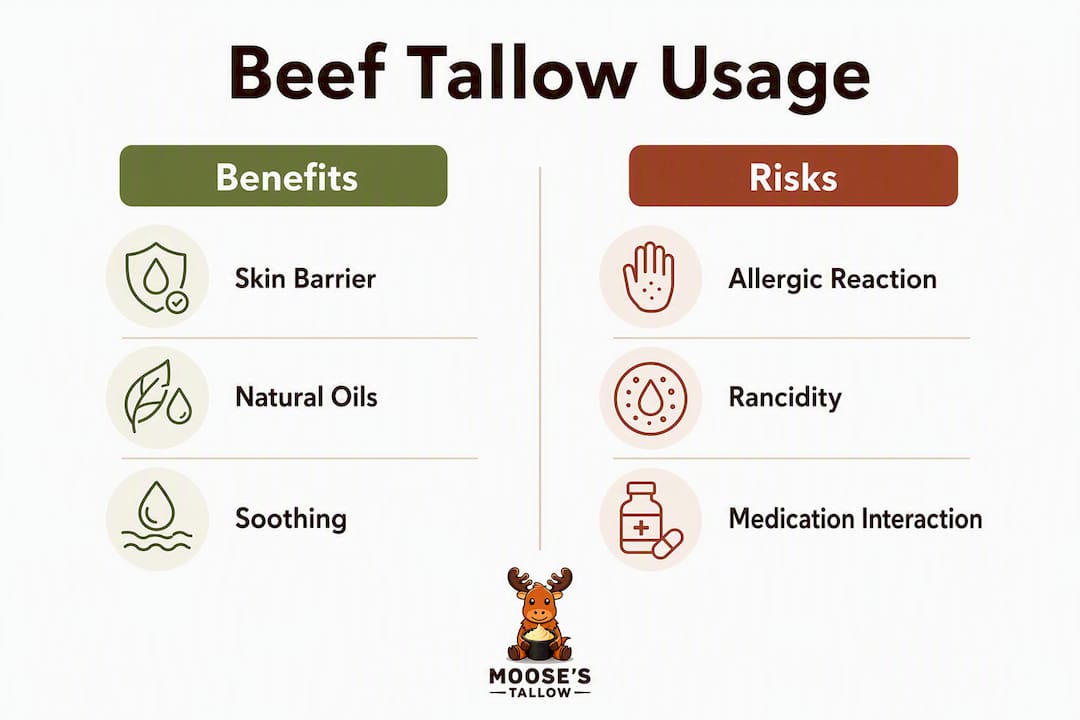
The honest answer: the evidence is thin. A cross-sectional analysis published on PMC found that claims of efficacy for atopic dermatitis were prevalent on social media but largely unsubstantiated by controlled research. There are few peer-reviewed studies investigating tallow as a skincare ingredient for eczema specifically.

Tallow’s fatty-acid composition gives it a plausible mechanism for barrier support. Oleic, palmitic, and stearic acids are all present in the skin’s natural lipid matrix. But plausible biochemistry is not the same as proven clinical benefit. Dermatology sources, including Advanced Dermatology, describe the trend as social-media driven and note a clear research gap.
Established moisturizers with ceramides have far stronger clinical data behind them for eczema management. Tallow has not been tested in large, controlled trials against those standards. That does not mean it cannot help some people. It means you should not replace a proven treatment with tallow based on anecdotal reports alone.
Risks and concerns worth knowing before you try tallow
Tallow is not risk-free, especially for eczema-prone skin. Understanding the downsides helps you make a genuinely informed choice.
Concrete risks to weigh:
- Allergic reaction: Animal-derived fats can trigger sensitivity in some people, particularly those with existing skin conditions.
- Rancidity and contamination: Poorly rendered or improperly stored tallow can harbor bacteria and spoil. Applying rancid fat to compromised skin raises infection risk.
- Increased water loss: Oleic acid, present in tallow, may disrupt the stratum corneum in some people and worsen dryness rather than relieve it.
- Comedogenic potential: Tallow is occlusive. For some skin types, heavy occlusives can clog pores or trap heat in inflamed skin.
- Lack of regulation: Tallow skincare products are not regulated as drugs. Quality varies widely between producers.
- Odor: Improperly rendered tallow has a noticeable beef smell. This is a sign of incomplete rendering and a marker of lower quality.
Pro Tip: Read the ingredient list before buying any tallow product. A short list with named, recognizable ingredients is a good sign. Avoid products with unlisted “fragrance,” preservatives you cannot identify, or no sourcing information at all.
How to try beef tallow safely on eczema-prone skin
You can try tallow cautiously if you follow a clear safety routine. These steps are designed to minimize risk and help you notice any reaction early.
Step-by-step safe-use guide:
- Start with clean, intact skin. Never apply tallow to open, weeping, or infected areas.
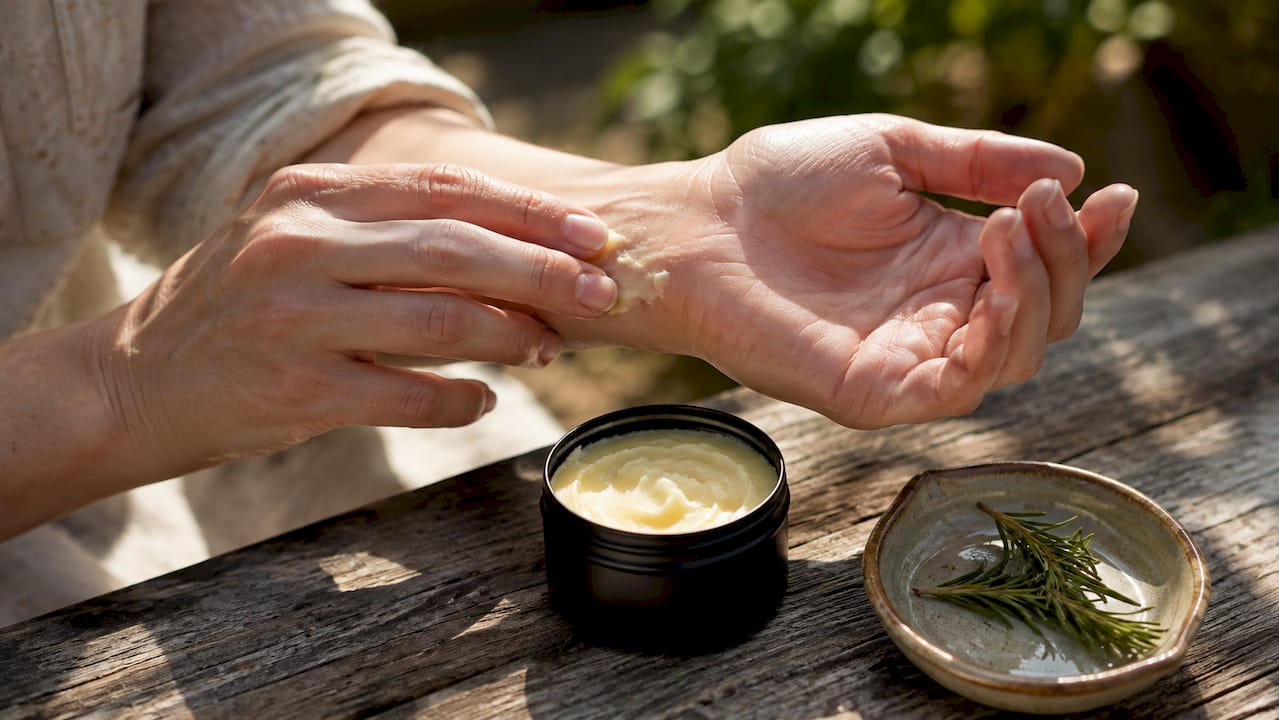
- Do a patch test first. Apply a small amount to the inside of your forearm or behind one ear.
- Wait 24–48 hours. Watch for redness, itching, swelling, or any change in the test area.
- Stop immediately if you see a reaction. Do not proceed to larger areas.
- Apply within 3 minutes of bathing. Pat skin mostly dry, then apply tallow to slightly damp skin. This timing helps lock in moisture before it evaporates.
- Start with once daily. Use a small amount on one affected area before expanding to other areas.
- Scale up slowly over 1–2 weeks. Only increase frequency or coverage if your skin tolerates it well.
Storage checklist:
- Keep tallow in a sealed, airtight container.
- Store in a cool, dark place away from heat and sunlight.
- Smell it before each use. A rancid or “off” odor means discard it.
- Do not double-dip with unwashed hands into the container.
Pro Tip: The 3-minute rule matters more than most people realize. Skin loses moisture rapidly after bathing. Applying an occlusive like tallow within that window seals in hydration rather than just sitting on dry skin. Pair it with a tallow-based moisturizer for best results.
When to avoid tallow and when to see a dermatologist
Skip tallow entirely if your skin is infected, weeping, or has open wounds. Heavy occlusives on broken skin can trap bacteria and worsen infection. This is not a situation for DIY testing.
Red flags that require prompt medical attention:
- Spreading rash beyond the original area
- Fever alongside a skin flare
- Pus, crusting, or increasing pain
- Rapid worsening within hours of application
- No improvement after two weeks of consistent, careful use
Tallow can also interact with prescription topical medications. If you use a corticosteroid, calcineurin inhibitor, or other prescribed topical, check with your dermatologist before layering a heavy occlusive over it. Occlusives can increase absorption of topical drugs, which may amplify both effects and side effects.
Severe or persistent eczema needs a clinician’s assessment. Tallow is not a substitute for that care.
This article is general information, not medical advice. Confirm current treatment options with a qualified dermatologist or healthcare provider.
How Moose’s Tallow approaches tallow skincare
Moose’s Tallow uses properly rendered local beef suet tallow as the foundation of every product. Formulas are water-free, which means the first ingredient is never water and there is no filler diluting the active components.
Core ingredients used in Moose’s Tallow products:
- Beef suet tallow: Locally sourced, grass-fed, properly rendered. The base of every formula.
- Fractionated coconut oil: Preferred carrier oil for its stability, oxidation resistance, easy absorption, and long shelf life.
- Beeswax: Adds structure and a light protective layer.
- Vitamin E (tocopherols): Supports shelf stability and skin-barrier function.
- Jojoba: Lightweight and compatible with skin’s natural oils.
- Castor: Adds slip and helps with application.
- Egg yolk infused oil: Rich in fat-soluble nutrients that complement tallow’s profile.
Everything is handmade in small batches in Lebanon, PA. Minimal dilution means you get more of what matters in every application. The 60-day guarantee means you can try a product and return it if it does not work for you.
Three products suited to dry or eczema-prone skin:
- Beef Tallow Lip Balm: A small-area option for chapped, dry lips. Good starting point for a low-commitment first try.
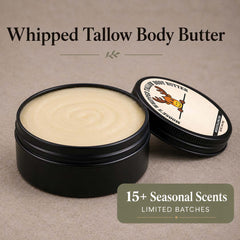
- Whipped Tallow Body Butter: Full-body dryness and barrier support. Lightweight texture despite being water-free.
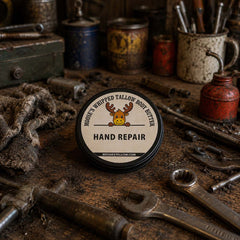
- Beef Tallow Hand Cream: Targeted support for cracked, very dry hands. Absorbs without a greasy residue.
Ingredient lists and sourcing details are published on every product page. No hidden ingredients, no vague “fragrance” entries.
Key Takeaways
Beef tallow may support skin-barrier function in dry or eczema-prone skin, but clinical evidence remains limited and a safety-first approach is non-negotiable.
| Point | Details |
|---|---|
| Evidence is limited | No large clinical trials confirm tallow as an eczema treatment; most support is anecdotal. |
| Patch test first | Apply to a small area and wait 24–48 hours before using tallow on eczema-affected skin. |
| Use the 3-minute rule | Apply tallow to slightly damp skin within 3 minutes of bathing to lock in moisture. |
| Avoid on broken skin | Never apply tallow to infected, weeping, or open skin; see a dermatologist for severe flares. |
| Moose’s Tallow | Water-free, grass-fed tallow products with transparent ingredient lists and a 60-day guarantee. |
Why simple ingredients deserve a harder look
The mainstream skincare conversation has spent decades telling people that more ingredients means better results. Longer formulas, more actives, more preservatives. Flip over most drugstore lotions and the first ingredient is water. That is not a flaw they forgot to fix. It is a cost decision.
What strikes me about the tallow conversation is not the hype. The hype is a problem. Anecdotal reports are not clinical proof, and anyone selling tallow as a guaranteed eczema cure is not being honest with you. But the underlying question, whether skin does better with fewer, more compatible ingredients, is worth taking seriously. Tallow’s fatty-acid profile genuinely resembles the lipids your skin produces. That is not marketing. That is chemistry.
The real issue is quality control. Poorly rendered tallow, improperly stored tallow, tallow with unlisted additives, these are legitimate concerns. The ingredient is not the risk. Careless sourcing and production are the risk. That is why transparency matters more than the ingredient name on the label.
People with eczema deserve honest information. Not a trend. Not a dismissal. A clear look at what the evidence shows, what the risks are, and how to test carefully. That is the only responsible way to talk about this.
Moose’s Tallow products for dry and eczema-prone skin
Dry, sensitive skin does not need a 20-ingredient formula. It needs the right ingredients, properly made. Moose’s Tallow builds every product on grass-fed beef suet tallow with a short, intentional list of supporting ingredients: fractionated coconut oil, beeswax, vitamin E, jojoba, castor, and egg yolk infused oil. Nothing hidden. Nothing added for bulk.
For a low-commitment first try, the Beef Tallow Lip Balm lets you test tallow on a small, manageable area. The Whipped Tallow Body Butter covers full-body dryness without a heavy, greasy feel. For cracked or very dry hands, the Beef Tallow Hand Cream absorbs cleanly and holds up through the day. Every order ships with a 60-day guarantee. Browse the full ingredient lists and sourcing details at moosestallow.com and decide for yourself.
Useful sources and further reading
These sources informed this article and are worth reading directly for clinical context, ingredient analysis, and brand transparency.
- Is beef tallow a good treatment for eczema? | Children’s Hospital of Philadelphia — Pediatric clinical Q&A with cautions about limited evidence and infection risk.
- Beef Tallow‐Based Skincare Claims in Social Media: A Cross‐Sectional Analysis | PMC — Peer-reviewed analysis of social media claims versus actual evidence.
- Is Beef Tallow Good for Skin? | Advanced Dermatology — Dermatologist perspective on the trend and clinical evidence gaps.
- Beef Tallow for Eczema: Grade A Prime or Just Another Bum Steer? | MedPage Today — Medical commentary on the social-media-driven trend and lack of robust trials.
- Skincare ingredients guide: what actually works | Mybestpharmacy.net — Broader ingredient-efficacy context for comparing tallow to other moisturizing options.
- Moose’s Tallow: tallow skincare benefits explained — Brand-published overview of tallow’s nutrient profile and practical application notes.
FAQ
How long does beef tallow take to work on eczema?
There is no established timeline because no large clinical trials exist. Some people report noticing softer, less dry skin within a few days of consistent use; others see no change. Give it at least two weeks of daily, careful application before drawing conclusions.
Why don’t dermatologists recommend beef tallow for eczema?
Dermatologists point to the lack of controlled clinical trials and an unclear side-effect profile. Established moisturizers with ceramides have stronger evidence for eczema management, and tallow’s quality varies widely between products, which makes it harder to evaluate safely.
What is the 3-minute rule for eczema?
Apply your moisturizer or occlusive within 3 minutes of bathing, while skin is still slightly damp. This timing seals in moisture before it evaporates from the skin surface, which is especially helpful for dry or eczema-prone skin.
What are the downsides of using beef tallow on skin?
The main concerns are allergic reaction, rancidity from poor rendering or storage, potential to increase water loss in some people due to oleic acid content, and infection risk if applied to broken or weeping skin. Product quality varies significantly, and there is no regulatory standard for tallow skincare.
Which Moose’s Tallow product is best for a first try?
The Beef Tallow Lip Balm is a low-commitment starting point. It applies to a small area, uses the same properly rendered tallow base as all Moose’s Tallow products, and lets you gauge how your skin responds before committing to full-body use.


0 comments