

TL;DR:
- Many lip balms contain irritating ingredients like menthol, fragrances, and alcohol that worsen dryness.
- True lip healing requires simple, natural occlusives like beeswax, tallow, and shea butter without synthetic additives.
- Consistent use of safe, minimalist balms and avoiding environmental triggers can restore and maintain healthy lips.
If you find yourself reaching for lip balm constantly but still dealing with dry, cracked lips, you’re not alone. Many people assume more balm means better lips, but that’s not always true. Some formulations only coat the surface without actually conditioning the lips underneath. This article looks honestly at why certain lip balms may be making things worse, which ingredients to watch for, and how a simpler, more nourishing approach can finally break the cycle.
Key Takeaways
| Point | Details |
|---|---|
| Irritants matter most | Common balm ingredients like menthol and fragrance often worsen lips by causing irritation or allergies. |
| No lip balm addiction | Research shows frequent use of gentle balm does not create dependency or worsen healthy lips. |
| Natural balms work | Options with beeswax, shea butter, or oils provide safe hydration and can outperform synthetic blends. |
| Simple routines win | Consistent, minimal, and natural lip care routines promote lasting healing and comfort. |
Common ingredients that can make lips worse
Not every lip balm is designed with your skin’s health in mind. Some of the most popular products on the market contain ingredients to avoid that can trigger irritation, inflammation, or even allergic reactions over time.
According to dermatologists, lip balm irritation is more common than most people realize. Ingredients like menthol, camphor, alcohol, fragrances, lanolin, and flavorings are frequent culprits. Research on contact cheilitis (inflammation of the lips from allergens or irritants) found that fragrance mix allergens were responsible for 14.6% of cases, while gallates accounted for 8.2%. That “tingly” or minty sensation some balms produce? It’s often a sign of irritation, not effectiveness.
Here’s a quick comparison to help you read labels more confidently:
| Potentially irritating ingredients | Safer, supportive alternatives |
|---|---|
| Menthol, camphor | Beeswax, tallow |
| Synthetic fragrances | Unscented or essential oil-free formulas |
| Alcohol | Shea butter, plant-based oils |
| Artificial flavorings | Tocopherols (vitamin E) |
| Lanolin (for some) | Egg yolk infused oil |
Watch for these signs that your balm may be working against you:
- Burning or stinging immediately after application
- Increased peeling or flaking after regular use
- Redness or swelling around the lip border
- A persistent urge to reapply every hour or two
- Dryness that gets worse over weeks, not better
Pro Tip: Before committing to a new balm, apply tallow balm or any new product to a small area first and wait 24 hours. Patch testing is a simple step most people skip, and it can save a lot of frustration.
The science: Why lips get drier with some balms
Once you know which ingredients to avoid, it’s worth understanding why lips sometimes worsen with balm use rather than improve.
One of the most persistent myths is that lip balm causes “addiction.” The truth is more straightforward. Lip balms do not cause dependency or chapping on healthy lips. What people often experience as a “need” to reapply is actually a response to an underlying irritation or allergy, not a physical dependency.
“The perception that lip balm worsens lips is usually tied to allergic contact cheilitis or environmental factors, not the act of moisturizing itself. If your lips feel worse after applying a balm, the formula is the likely culprit, not the habit.”
Allergic contact cheilitis works in a frustrating cycle. You apply a balm to soothe irritated lips. The balm contains a low-level allergen. Your lips react, becoming drier and more inflamed. You apply more balm. The cycle repeats, and the real cause stays hidden because the reaction looks identical to ordinary chapping.
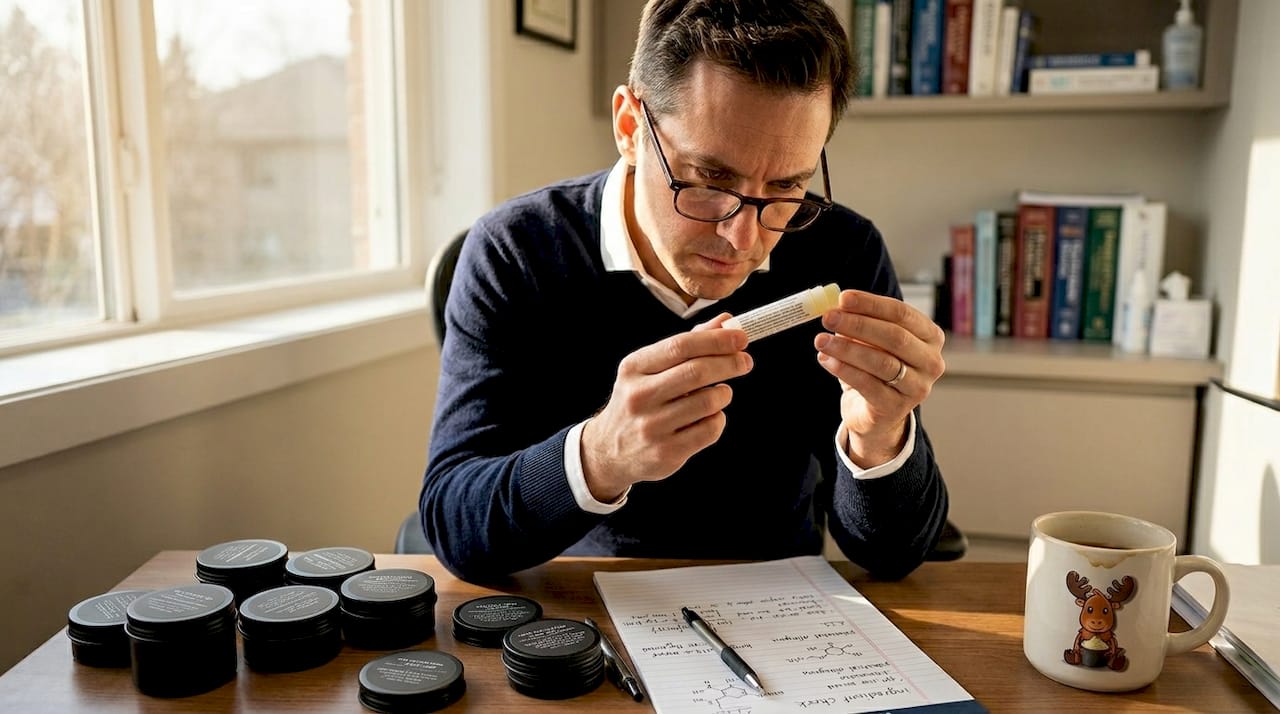
Environmental factors also play a major role. Cold air, wind, low humidity, and the habit of licking your lips all strip moisture far more aggressively than any balm could restore. Understanding why lip balm isn’t working often starts with ruling out these external triggers.
Real causes of persistent dry lips vs. common myths:
- Allergic reaction to balm ingredients (real cause)
- Environmental exposure like wind or dry indoor heat (real cause)
- Habitual lip licking removing natural oils (real cause)
- Dehydration reducing moisture from within (real cause)
- “Lip balm addiction” creating dependency (myth)
- The balm itself stripping natural oils on healthy lips (myth)
Choosing safer and more effective lip balms
Now that the myths and true causes are clearer, the focus shifts to what actually supports healing and lasting comfort.
Dermatologist lip balm advice consistently points to one key principle: lips lack oil glands, which makes them especially vulnerable to dryness. An effective balm needs to act as an occlusive (sealing in moisture) while also delivering real nourishment. Simple occlusives like beeswax, beef tallow, and shea butter do this well without adding unnecessary complexity.
A study on herbal lip balms demonstrated meaningful improvements in hydration and chapping over 28 days, using natural ingredients like beeswax, shea butter, and plant oils. No synthetic fragrances. No flavorings. Just thoughtfully chosen ingredients that support the skin barrier.
| Mainstream balm ingredients | Natural balm ingredients |
|---|---|
| Petroleum-based occlusives | Beeswax, beef tallow |
| Synthetic fragrance | Unscented or naturally derived |
| Artificial color and flavor | Vitamin E (tocopherols) |
| Preservatives and fillers | Egg yolk infused oil |
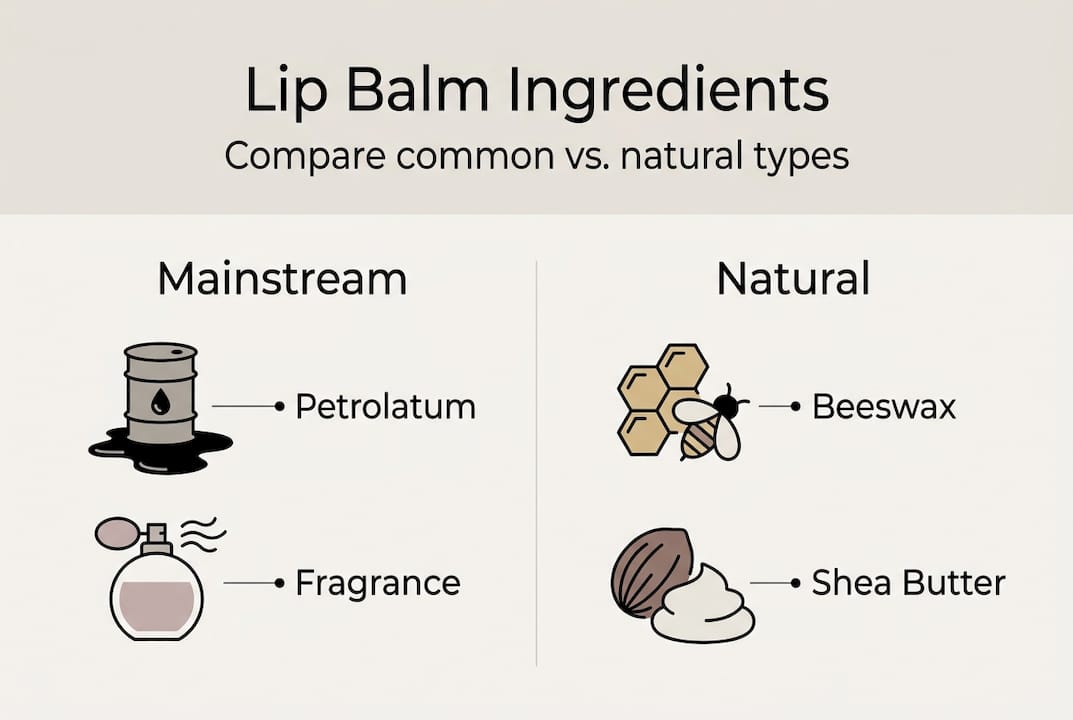
For a closer look at how different base ingredients compare, lanolin vs petroleum is worth reading if you’re still deciding. And if you’re curious about how a tallow-based formula specifically stacks up, tallow vs regular balm covers that comparison in detail.
Qualities of a genuinely effective lip balm:
- Fragrance-free and free of artificial flavorings
- Contains proven occlusives (beeswax, tallow, shea butter)
- Includes nourishing additions like tocopherols or plant oils
- Made without unnecessary fillers or synthetic dyes
- Hypoallergenic and tested for sensitive skin
Pro Tip: Even “natural” ingredients can cause reactions in some people. If you have known sensitivities, always choose safe skincare with a short, transparent ingredient list and do your patch test. Internal hydration matters too. Drink enough water daily, because no balm can compensate for dehydration.
Smart routines for healthier, naturally soft lips
After choosing a better balm, consistent daily habits make a real difference in how quickly your lips recover and stay soft.
Here’s a simple, evidence-based lip care routine that works:
- Cleanse gently each morning with a soft damp cloth to remove flaking without traumatic scrubbing.
- Apply your chosen fragrance-free, irritant-free balm immediately to lock in moisture.
- Reapply after meals, before going outside, and before bed, focusing on consistency over frequency.
- Stay hydrated throughout the day, aiming for steady fluid intake rather than catching up at night.
- Avoid licking your lips. Saliva evaporates quickly and takes natural oils with it.
Signs your new balm is actually working:
- Lips feel softer within the first few days without a burning sensation
- You’re reaching for the balm less frequently over time
- Peeling and flaking gradually decrease over one to two weeks
- No new redness, swelling, or stinging after application
Signs the balm may still be a problem:
- Symptoms haven’t improved after two weeks of consistent use
- You notice redness or peeling specifically where you applied the balm
- The urge to reapply increases rather than decreases
We recommend keeping a simple two-week log. Note how your lips look and feel each morning. If improvement isn’t visible by week two, it’s time to switch products and consider seeing a dermatologist for patch testing. When choosing a tallow moisturizer or any natural balm, simplicity is usually your best signal of quality.
The real reason most lip balms fail: A natural perspective
From where we stand, the lip care industry has a transparency problem. Brands profit from products that feel exciting — tingly, scented, brightly flavored — but these sensory cues often come at the cost of real skin health. More ingredients rarely mean more healing. They usually mean more chances for a reaction.
The natural skincare benefits of a short, honest ingredient list aren’t just marketing. They reflect a basic truth about how skin works: it doesn’t need complexity. It needs the right building blocks, consistently applied. Tallow, beeswax, egg yolk infused oil, and tocopherols are ingredients your skin can actually recognize and use. That’s where real conditioning happens.
Healthier lips start with minimalism, honest labels, and trusting what your skin tells you.
Heal your lips naturally with our best balms
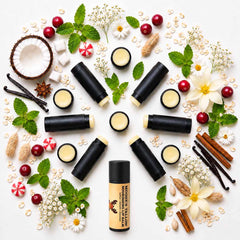
If you’ve spent too long stuck in the cycle of dry, irritated lips despite regular balm use, it might simply be time to try a different approach. Our healing tallow lip balm is formulated without synthetic fragrances, artificial flavorings, or unnecessary fillers. Tallow, beeswax, egg yolk infused oil, and tocopherols work together to genuinely condition and protect the lip barrier. Waterless and crafted in small batches, every ingredient earns its place. Browse our all natural skincare products and find something your lips will actually thank you for.
Frequently asked questions
Can using lip balm too often damage your lips?
No, frequent use does not harm healthy lips as long as the balm is free of irritants and allergens. Lip balms do not cause dependency or chapping on their own.
Which ingredients should I avoid to prevent lip irritation?
Avoid menthol, camphor, synthetic fragrances, flavorings, alcohol, and lanolin to lower your risk of irritation. Certain lip balm ingredients are well-documented triggers for cheilitis, and fragrance mix allergens alone account for nearly 15% of cases.
Do natural lip balms work better for sensitive lips?
Yes, natural herbal balms with beeswax, plant oils, and shea butter have shown measurable improvement in hydration and chapping without the common irritants found in conventional products.
How can I tell if my lip balm is causing an allergic reaction?
Look for increased dryness, redness, burning, peeling, or swelling after use and stop applying immediately if these appear. Cheilitis cases are frequently linked to low-level allergens in everyday balm formulas that go undetected for weeks.


0 comments