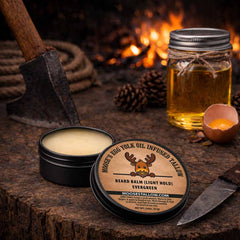
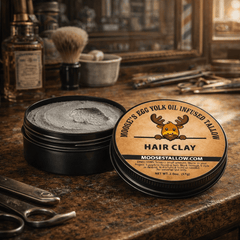
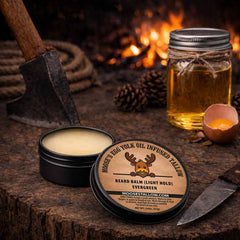
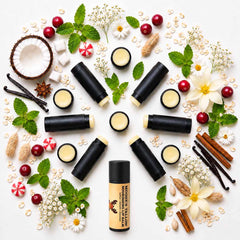


What are the benefits of egg yolk oil? It is rich in fats and nutrients that condition skin and hair. It helps soften hair and support a healthy-looking beard. It adds shine and helps hair feel less dry. We infuse it into our Egg Yolk Oil Infused Beard & Hair Balm.
Most men chasing a fuller beard or healthier hair end up staring at a shelf full of synthetic serums and chemical conditioners. What if the most effective ingredient was something your great-grandfather probably had in his kitchen? Egg yolk oil is a traditional remedy that’s quietly making a comeback in natural grooming circles, and for good reason. It carries a unique mix of proteins, healthy fats, and fat-soluble vitamins that synthetic products rarely replicate. This article breaks down what egg yolk oil actually does, where the science holds up, and how to use it well.
Do eggs help beard growth?
Eggs will not force a beard to grow, but they support it. Egg yolks are rich in biotin, protein, and healthy fats, which your body uses to build hair. Eating eggs, and using egg yolk oil on the skin, both feed healthier facial hair.
Other foods that support beard growth include nuts, fatty fish, leafy greens, and sweet potatoes. A balanced diet does more for a beard than any single ingredient.
Table of Contents
- What is egg yolk oil and how is it made?
- How egg yolk oil benefits hair and beards
- Egg yolk oil vs. other natural oils for grooming
- How to use egg yolk oil safely and effectively
- What the science really says: Evidence and caveats
- The bottom line: Traditional wisdom and modern science
- Find natural grooming solutions that fit your style
- Frequently asked questions
Key Takeaways
| Point | Details |
|---|---|
| Nature-powered conditioning | Egg yolk oil deeply conditions beards and hair, adding softness and shine naturally. |
| Growth claims are limited | Scientific evidence for new beard or hair growth is minimal, and mostly based on animal studies. |
| Safe use tips matter | Always patch test and avoid if allergic or you have an oily scalp to prevent irritation. |
| Personalize your regimen | Experiment weekly and combine with other natural oils to find what fits your grooming needs best. |
What is egg yolk oil and how is it made?
To understand its effectiveness, you first need to know what egg yolk oil actually is and what’s inside it.
Egg yolk oil is extracted from the yolk only, not the white. The white is mostly water and protein, while the yolk holds the nutritional gold: lipids, fat-soluble vitamins, and bioactive compounds. Egg yolk oil contains proteins like phosvitin and lipids such as lecithin and cholesterol, all of which interact with hair in meaningful ways.
Traditional production involves slowly heating egg yolks until the oil separates and rises. Modern methods use cold-press or solvent extraction to preserve more of the delicate compounds. Either way, what you end up with is a rich, amber-colored oil that feels nothing like cracking an egg into a pan.
Here’s what makes egg yolk oil stand out for grooming:
- Proteins coat and condition individual hair strands, reducing friction and breakage
- Lecithin acts as an emulsifier that helps the oil absorb evenly into hair and skin
- Cholesterol supports the lipid layer that protects each hair shaft
- Fat-soluble vitamins (A, D, E, and K) nourish the follicle environment
- Fatty acids soften and add flexibility to coarse beard hair
When you use a product like our beard and hair balm, these components are already carefully blended in. You can also explore more about egg yolk oil facts to see exactly why we chose it as a key ingredient.
How egg yolk oil benefits hair and beards
Now that you know what’s in egg yolk oil, let’s break down how those components actually benefit your beard and hair.
Egg yolk oil proteins form protective films on hair strands, while lipids restore the hydrophobic (water-repelling) layer. This reduces friction and breakage while improving shine. For beard hair, which tends to be coarser and drier than scalp hair, that kind of surface conditioning is genuinely useful.
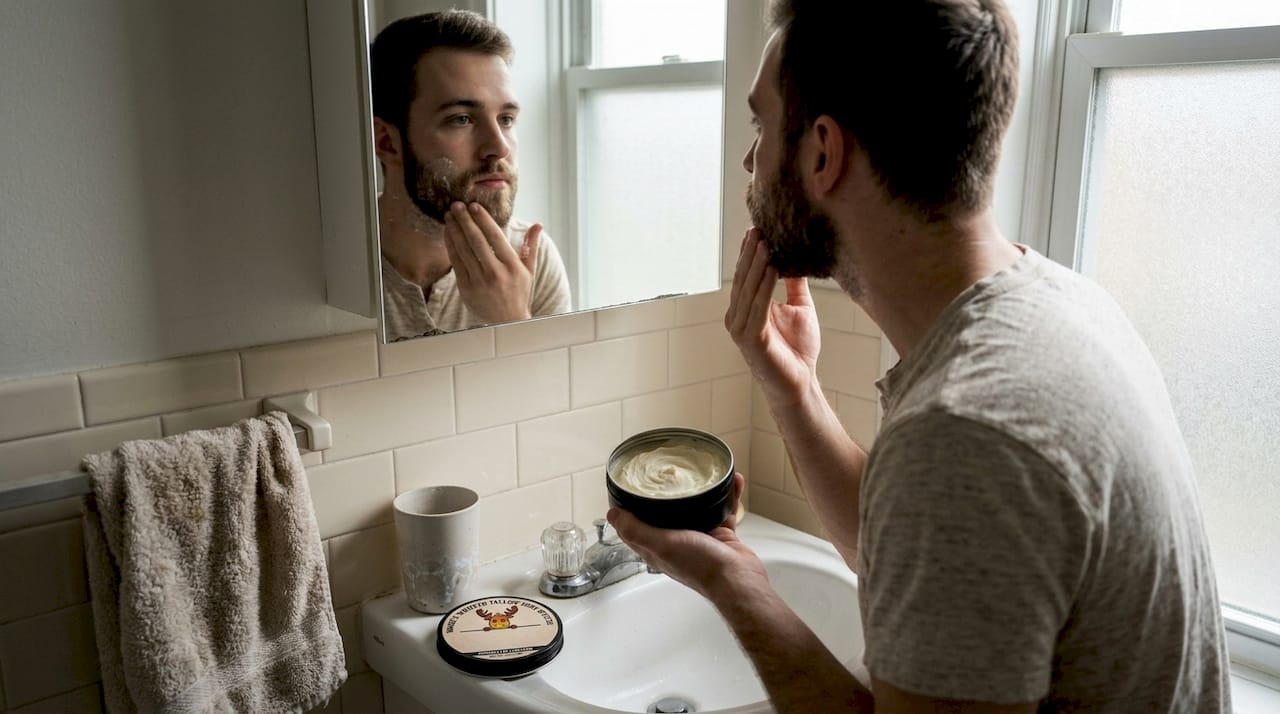
Beyond conditioning, there’s some interesting early research on growth. Water-soluble peptides from egg yolk stimulate VEGF (a protein that supports blood vessel growth) and promote hair growth in lab and animal models. Additionally, cholesterol in egg yolk can promote hair follicle stem cell activity in animal studies. These findings are promising, though not yet confirmed in direct human beard trials.
| Benefit | Mechanism | Strength of evidence |
|---|---|---|
| Conditioning and softness | Proteins and lipids coat hair shaft | Strong (lab and human use) |
| Shine improvement | Lipid layer restoration | Strong (lab studies) |
| Reduced breakage | Protective film formation | Moderate |
| Follicle stimulation | VEGF peptides, cholesterol | Early (animal and in vitro) |
“Egg yolk oil’s combination of proteins and lipids makes it one of the few natural ingredients that conditions from the outside while potentially supporting the follicle environment from within.”
Pro Tip: For best results, look for products that combine egg yolk oil with tallow. Tallow’s fatty acid profile closely mirrors your skin’s natural sebum, which helps the egg yolk oil’s active compounds absorb more effectively. Our egg yolk oil dropper pairs well with tallow-based balms for exactly this reason. You can also read more about egg yolk oil skin benefits to see how it works beyond just hair.
Egg yolk oil vs. other natural oils for grooming
To give you clarity, let’s see how egg yolk oil stacks up against its natural competition in everyday grooming.
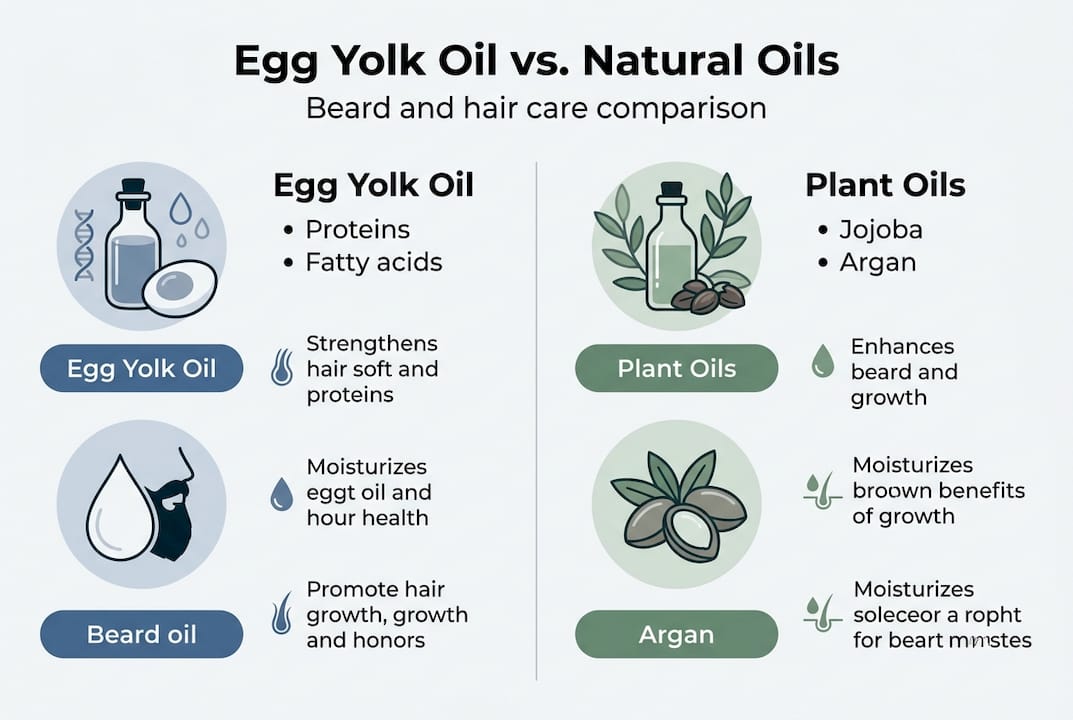
Most plant-based oils, think argan, jojoba, and coconut, work primarily as emollients. They soften hair and lock in moisture, but they don’t carry the protein or cholesterol content that egg yolk oil does. Egg yolk oil is richer in specific proteins and cholesterol, while plant oils excel mainly at moisturizing. That’s a meaningful difference when you want more than just surface softness.
| Oil | Key components | Best for | Limitations |
|---|---|---|---|
| Egg yolk oil | Proteins, cholesterol, lecithin | Conditioning, potential follicle support | Allergy risk, odor if unrefined |
| Argan oil | Vitamin E, fatty acids | Shine, frizz control | No protein benefit |
| Jojoba oil | Wax esters, mimics sebum | Scalp balance, lightweight moisture | Minimal conditioning depth |
| Coconut oil | Lauric acid | Deep moisture, penetrates shaft | Can cause buildup on fine hair |
| Tallow | Saturated fats, fat-soluble vitamins | Barrier repair, deep nourishment | Heavier feel |
Tallow and egg yolk oil are a natural pairing because both mimic the skin’s own biology. Tallow mirrors your skin’s sebum, while egg yolk oil adds the peptide and cholesterol layer that plant oils simply can’t offer. That’s why we combine them in our formulas. If you want to understand the broader comparison, check out our breakdown of tallow vs plant oils or get guidance on choosing natural moisturizer options.
- Egg yolk oil works best as a treatment oil, not a daily styler
- Plant oils are better for lightweight daily moisture
- Tallow and egg yolk oil together cover both barrier repair and conditioning depth
How to use egg yolk oil safely and effectively
Let’s move from theory to action with a straightforward way to try egg yolk oil and avoid rookie mistakes.
- Patch test first. Apply a small amount to your inner wrist or behind your ear. Wait 24 hours. If you have an egg allergy, skip this ingredient entirely.
- Start with clean, towel-dried hair. Wash your beard or hair, gently pat it dry, and apply while it’s still slightly damp. Damp hair absorbs oil more evenly.
- Use a few drops only. Less is more. Work the oil from roots to ends, focusing on dry or coarse sections of your beard.
- Leave it on for 30 to 60 minutes. This gives the proteins and lipids time to penetrate the hair shaft. You can leave it longer if your hair is very dry.
- Rinse thoroughly. Use a gentle shampoo or cleanser to remove residue. Leftover oil can attract dust and feel heavy.
- Repeat one to two times weekly. Egg yolk oil mostly conditions and moisturizes but isn’t ideal for oily scalps or daily use.
Most results are temporary and anecdotal, so set realistic expectations. You’ll likely notice softer, shinier beard hair after the first use. Consistent use over weeks tends to improve manageability noticeably. For a ready-to-use option, our egg yolk oil balm takes the guesswork out of formulation.
Pro Tip: If you’re using a raw egg yolk oil at home, refrigerate it and use it within a few weeks. Rancid oil does more harm than good.
What the science really says: Evidence and caveats
Before you invest hope or money, it’s important to set expectations based on real science.
No direct studies prove egg yolk oil boosts beard growth. The benefits we see are inferred from scalp hair studies and the shared biology between scalp and beard follicles. That’s a reasonable inference, but it’s not the same as proof.
Here’s an honest summary of what the research actually supports:
- Surface conditioning: Well-supported by lab studies. Proteins and lipids genuinely improve hair texture and reduce breakage.
- Follicle stimulation: Promising in animal and in vitro models, but not confirmed in men’s beard studies.
- Hair loss prevention: No strong evidence. Most improvement is temporary and due to surface conditioning, not follicle repair.
- Genetics and hormones: These are the primary drivers of beard density and growth rate. Beard growth is shaped primarily by genetics and hormones, especially DHT (dihydrotestosterone). No topical oil changes that equation.
The honest takeaway: Egg yolk oil is a genuinely useful conditioning ingredient with intriguing early evidence for follicle support. It’s not a beard growth miracle. Men with patchy beards caused by genetics won’t see dramatic change. But men looking to improve the texture, softness, and health of existing beard hair will likely notice a real difference.
The bottom line: Traditional wisdom and modern science
Having weighed the research and tradition, here’s an honest perspective you seldom hear.
Egg yolk oil doesn’t need to be a miracle cure to be worth using. Centuries of home remedy use built around this ingredient weren’t wrong. They just weren’t solving the same problem most men think they are. The real value of egg yolk oil is in the ritual and the conditioning, not in regrowing a beard that genetics decided otherwise.
We believe in ingredients that earn their place. Egg yolk oil earns its place by genuinely improving how your beard looks and feels, day to day. When it’s paired with tallow in a thoughtfully crafted formula, you get something that works with your skin’s biology rather than against it. That’s the kind of grooming we stand behind. Explore more about egg yolk oil insights if you want to go deeper on the ingredient itself.
Find natural grooming solutions that fit your style
If you’re ready to try egg yolk oil for yourself, making the right product choice is half the battle. We’ve done the formulation work so you don’t have to. Our egg yolk oil balm combines egg yolk oil with tallow in a waterless, concentrated formula built for beard and hair conditioning. No fillers, no synthetic conditioners. Just carefully chosen ingredients that actually serve a purpose. Browse our full range of all-natural grooming products and find the right fit for your routine.
Frequently asked questions
Does egg yolk oil actually help beard growth?
No direct studies show beard growth from egg yolk oil. It supports beard health and conditioning through hydration and shine, but proven growth effects in men haven’t been established yet.
Is egg yolk oil safe to use on sensitive skin or oily scalps?
Egg yolk oil is generally safe for most men, but avoid use if you have an egg allergy and be cautious with oily scalps since it can add unwanted heaviness. Always patch test first.
How often should I use egg yolk oil on my beard and hair?
Using egg yolk oil one to two times weekly gives most men solid conditioning benefits without causing residue buildup or weighing the hair down.
Can egg yolk oil prevent hair loss?
There’s no strong evidence it prevents hair loss. Egg yolk oil acts mainly as a conditioning agent, addressing surface texture rather than the genetic or hormonal causes behind most hair loss in men.
Are eggs good for beard growth?
Yes, in a supporting role. Eggs give your body biotin, protein, and fats that hair is built from. They will not create new follicles, but they help the beard you have grow in stronger.


0 comments