

Lard is rendered pork fat. Tallow is rendered beef or mutton fat. Lard is softer and milder. Tallow is firmer and more stable. For skin, we choose beef suet tallow, and below we explain why.
Most pages on this topic are about frying and pie crust. This one is about your skin. We make water-free skincare from beef suet tallow in Lebanon, PA. So we have strong opinions, and we will tell you where they come from.
TL;DR
- Lard is pork fat. Tallow is beef fat. Both are rendered, but they behave differently.
- Lard is softer and melts at a lower temperature. Tallow is firmer and holds up better on the shelf.
- For skin, we build on grass-fed, locally rendered beef suet tallow. We keep the formulas water-free.
- Tallow is not a cure for anything. It is a simple, cosmetic moisturizer base.
- Compared with emu oil and petroleum jelly, tallow sits in between: a skin-like fat, without a long label.
What lard and tallow actually are
Both are animal fats. Both are made by rendering. That means slowly heating raw fat until it melts, then straining out the solids.
The difference is the animal.
- Lard comes from pigs.
- Tallow comes from cattle, and sometimes sheep. The USDA’s agricultural thesaurus defines it as fat rendered from the adipose tissue of cattle and sheep.
The best tallow for skin starts with beef suet. Suet is the hard fat around the kidneys and loins. It is clean, dense and mild when it is rendered with care.
You will also see “Crisco” in search results. That is a plant-based shortening. It is not lard and it is not tallow.
How lard and tallow differ side by side
The two fats look alike in a jar. They feel different in your hand.
| Lard (pork) | Tallow (beef suet) | |
|---|---|---|
| Texture at room temperature | Soft, easy to spread | Firm, waxy, dense |
| Melting point | Lower | Higher |
| Shelf stability | Less stable | More stable |
| Scent when well rendered | Mild | Mild, slightly savory |
| Common use | Baking, pastry | Frying, candles, soap, skincare |
| Our pick for skin | No | Yes |
The texture gap comes down to fat chemistry. Lard has a lower share of saturated fatty acids. That is why lard is softer and melts at a lower temperature. The same source notes it keeps less well in cold storage than beef tallow.
This matters for a balm. A softer fat gives a looser, oilier product. A firmer fat gives a balm with body.

Is lard good for skin?
People do use lard on skin. Old home remedies often called for it. It is a fat, so it feels rich and can soften dry patches.
We still do not use it. Here is why.
- Stability. A softer fat is less stable. Skincare has to sit in a bathroom, a gym bag or a glove box.
- Feel. Lard tends to spread thin and feel slick. Many people find that greasier than they want.
- Our focus. We chose one fat and learned it well. We render and formulate around beef suet tallow.
We are not saying lard will harm you. We are saying we have never needed it. Our tallow does the job we want.
Why we chose beef suet tallow
Tallow’s fatty-acid makeup is close to the oils your skin already makes. That is why it absorbs cleanly. It also supports the skin barrier, which is the outer layer that keeps moisture in.
That is our reasoning, and we keep our claims cosmetic. Tallow is a moisturizing base. It does not treat, cure or heal a condition.
Here is what we look for in a tallow.
- Beef suet. The dense fat gives a firm, clean balm.
- Grass-fed and local. We know where our fat comes from.
- Careful rendering. Good rendering means a mild scent. We wrote about it in does beef tallow smell.
- Small batches. We make everything by hand in Lebanon, PA.
We also stay honest about limits. Some dermatologists point out that tallow has no standard processing. Quality can vary from jar to jar. That is a fair point, and it is why sourcing and rendering matter so much to us.
Tallow vs emu oil
Emu oil is another animal fat that people ask about. It comes from a bird, not from cattle.
We do not use emu oil. We do not recommend it as a swap for tallow. We stay with ingredients we know and can source with confidence.
Here is how we think about the choice.
- Sourcing. Beef suet can come from a local farm. We can name where ours comes from.
- Simplicity. One familiar fat keeps the label short.
- Feel. Tallow gives a balm real body. It sits on the skin and then absorbs.
If you read labels, ask the same questions of any animal fat. Where did it come from? How was it made? What else is in the jar?
Tallow vs petroleum jelly
This is a different kind of comparison. Petroleum jelly is a mineral product. Tallow is an animal fat.
Petroleum jelly is a classic. The American Academy of Dermatology lists several ways to use it on dry skin, including lips and eyelids. We respect that. It is a plain, inexpensive option.
So why do our customers choose tallow?
- Origin. Some people prefer a fat from a farm to a product from a refinery.
- Feel. Many people find a whipped tallow butter more skin-like and less sticky. This is a preference, not a rule.
- Ingredients. We pair tallow with fractionated coconut oil, beeswax and vitamin E. Each has a job.
Neither one is magic. Both are occlusive, meaning they sit on top and slow water loss. That is the real work of any good moisturizer.
The part that matters more than the fat
Here is something we tell everyone. How you apply a moisturizer counts as much as what is in it.
The AAD advises applying moisturizer to damp skin right after bathing. In its guide to picking a moisturizer, it explains that this helps keep water in the skin.
So try this routine.
- Wash with lukewarm water. Skip very hot showers.
- Pat your skin so it stays a little damp.
- Apply a small amount of balm or butter.
- Add more only to the rough spots.
Tallow is dense. A little goes a long way. Warm it between your fingers first.
What experts say, and where we agree
We read what dermatologists write about tallow. We think you should too.
Tufts School of Medicine notes that beef tallow contains small amounts of vitamins A, D, E and K. It also says claims that tallow can replace retinol are not backed by clinical evidence. We agree. We do not sell tallow as a retinol swap or an anti-aging fix.
Children’s Hospital of Philadelphia says tallow is rich in fatty acids that could in theory support the skin barrier. It also says the evidence for eczema is limited. That is honest, and we keep our language in line with it.
What does that mean for you?
- Treat tallow as a moisturizer, not a medicine.
- If you have eczema or a skin condition, ask your dermatologist first.
- If you have a reaction, stop using the product.
- Patch test any new balm on a small area.
We would rather you trust us because we are straight with you.
Our perspective
I started this company after a health scare. I looked at my lotion label. It listed 52 ingredients. The first one was water.
That bothered me. I wanted something simpler and real.
So we build every product around properly rendered local beef suet tallow. We keep formulas water-free. We dilute them lightly. Tallow is always the star.
Then we add only what earns a place.
- Fractionated coconut oil. Our preferred carrier oil. It is stable, resists oxidation, absorbs easily and lasts on the shelf.
- Beeswax. It gives body and a protective feel.
- Vitamin E (tocopherols). It helps protect the oils in the jar.
- Jojoba and castor. We use them where a formula calls for them.
- Egg yolk infused oil. A traditional ingredient that fits our ancestral approach.
We do not use olive, emu, avocado, almond, shea butter or grapeseed. We do not use other vegetable oils as filler. Every ingredient has a reason.
So when people ask us, lard or tallow, our answer is plain. For skin, we choose beef suet tallow. It is firmer, more stable, and it fits how we make things.
— Brian Smith
How to choose a tallow product
Not every jar is equal. Here is a short checklist you can use on any label, ours included.
- Is water listed? Water-free formulas need fewer preservatives.
- How short is the list? Short and recognizable is a good sign.
- Is the source named? Look for the animal, the feed and the region.
- What is the carrier oil? Stable oils last longer on the shelf.
- Does it smell clean? A strong off smell can point to poor rendering.
- Are the claims honest? Be wary of anything that promises to heal or cure.
If you want the basics first, read our guide to beef tallow for skin. For a broader look, see what beef tallow is. If acne is your worry, read why tallow is a moisturizer, not an acne fix.
Where to start with Moose’s Tallow
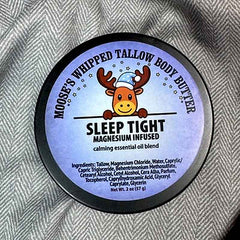
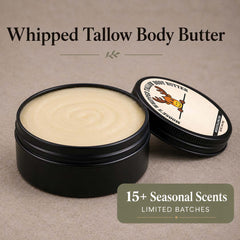
If you want to try tallow, start simple. Our Naked (Fragrance-Free) Whipped Tallow Body Butter is a good first jar. Whipped Body Butters start at $10.80.
Other favorites include:
- Lip balm, from $9.50.
- Tallow beard balm with egg yolk oil, from $20.
- Hand Repair Cream, $20.
- Dog Paw Balm, $20.
You can see the whole range in our full collection. Prices run from about $9 to $34. We make each batch by hand and ship across the US.
FAQ
Which is better for skin, lard or tallow?
We prefer tallow. It is firmer and more stable, so it makes a better balm. Lard is softer and spreads thinner. Both are fats, and neither is a medical treatment.
Is tallow the same as lard?
No. Lard is rendered pork fat. Tallow is rendered beef or mutton fat. They differ in softness, melting point and how well they keep. Plant shortenings are a third, separate thing.
Is tallow better than petroleum jelly?
It depends on what you want. Petroleum jelly is a simple, well-known option for dry skin. Tallow is an animal fat with a skin-like feel, and it pairs well with other natural ingredients. Many people simply prefer how it feels.
Can I use tallow instead of retinol?
No. Experts say tallow has no clinical backing as a retinol replacement. We offer it as a gentle moisturizer, including for under the eyes. If you want retinol results, talk with your dermatologist.
Sources
- Tallow, NAL Agricultural Thesaurus (USDA)
- Amount of Fat and Cholesterol in Meat, University of Minnesota Extension
- Beef tallow as skin care? Experts explain what’s truth and myth, GW School of Medicine
- 5 ways to use petroleum jelly for skin care, American Academy of Dermatology
- How to pick the right moisturizer for your skin, American Academy of Dermatology
- What’s the Deal With Beef Tallow? Tufts School of Medicine
- Is beef tallow a good treatment for eczema? Children’s Hospital of Philadelphia
0 comments