

TL;DR:
- Real comfort in skincare depends on understanding and respecting your skin’s natural biology with minimal, effective ingredients.
- Protecting the skin barrier through gentle cleansing, consistent moisturizing, and sensory harmony supports healthy, resilient skin for all, especially sensitive and baby skin.
Defining comfort in skincare is something most of us get wrong at the start. We assume more products mean better results. We think daily washing keeps skin clean and healthy. We reach for anything with a long ingredient list, believing complexity signals quality. The truth is nearly the opposite. Real comfort comes from understanding your skin’s biology, using fewer and better-chosen ingredients, and respecting the barrier your skin has already built. This is especially true for sensitive skin and for babies, whose delicate skin needs protection, not intervention.
Understanding skin barrier health and why it matters
To build real comfort, we first need to understand what the skin barrier is and why it matters. Your skin barrier is not a single layer. It is a multi-layered system that regulates hydration, blocks pathogens, manages immune responses, and signals when something is wrong. When it functions well, your skin feels soft, calm, and resilient. When it breaks down, you get tightness, redness, flaking, and sensitivity.
Comfort in skincare is best defined clinically as routine choices that support skin barrier homeostasis, reducing sensations like tightness and irritation. That is a clinical way of saying: your skincare routine should work with your skin, not against it.
The most common ways people damage their barrier without realizing it:
- Washing too often strips natural oils the skin needs to stay supple
- Using alkaline or sulfate-heavy soaps disrupts the skin’s slightly acidic pH (ideally between 4.5 and 5.5)
- Applying fragranced or alcohol-based products introduces irritants that inflame the barrier over time
- Skipping moisturizer after cleansing leaves the barrier exposed before it can recover
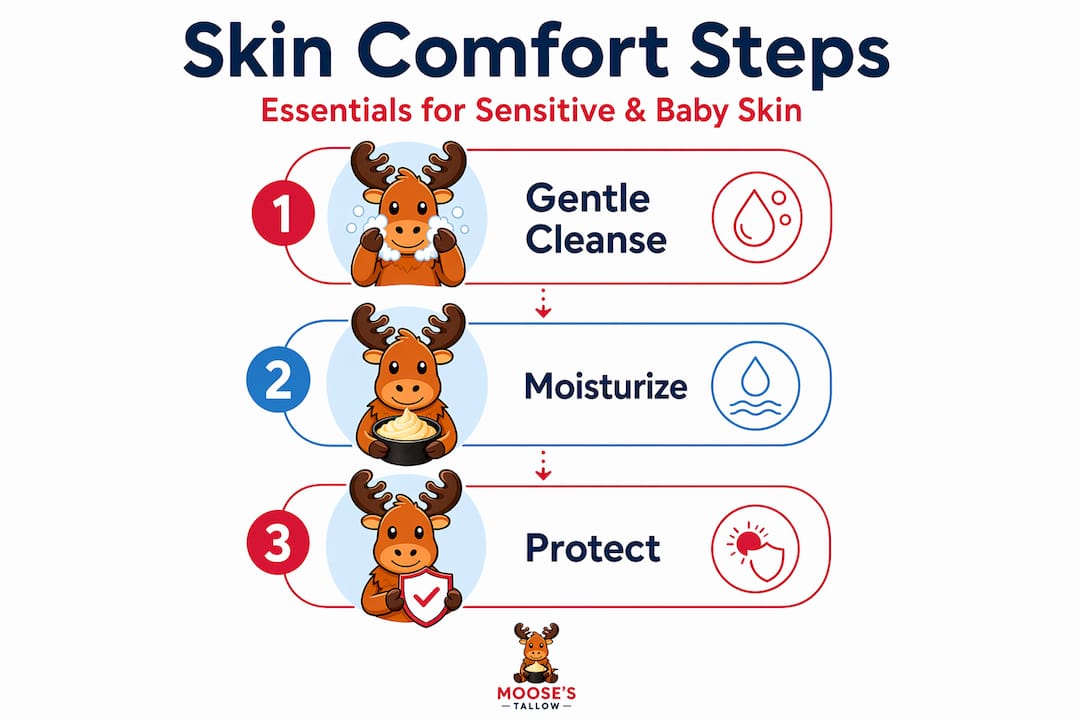
The essentials for barrier health are actually simple: gentle cleansing, consistent moisturization, and physical protection from environmental stressors. Understanding ingredient simplicity in skincare is a big part of this. Fewer ingredients means fewer opportunities for irritation.
Pro Tip: After cleansing, apply your moisturizer within 60 seconds. The skin absorbs humectants and emollients far more effectively on slightly damp skin, which supports faster barrier recovery.
Minimalist skincare for babies: How to protect delicate skin with comfort
After understanding adult barrier basics, let’s look at how caring for newborn skin takes minimalism even further. A newborn’s skin is not a smaller version of adult skin. It is structurally thinner, has a higher surface-to-body ratio, and its barrier is still actively maturing during the first weeks of life.
Here is what the research tells us about newborn skin care:
- Limit bathing to 2 to 3 times per week. Limited bathing with gentle handling preserves the natural oils and microbiome that protect a newborn’s skin.
- Use lukewarm water only. Hot water accelerates moisture loss in skin that is already prone to dryness.
- Choose a pH-balanced syndet cleanser. Neonatal skin care guidelines recommend pH 5.5 to 6 syndet (synthetic detergent) cleansers, which are far gentler than traditional bar soap.
- Pat dry, never rub. Friction during drying or diaper changes is one of the most overlooked causes of skin irritation in babies.
- Apply a gentle emollient after bathing. Early and consistent emollient use supports barrier maturation and keeps the skin comfortable as it develops.
These steps are not complicated. That is the point. Comfort for newborn skin means doing less, not more, and choosing the right tools for the moments when you do intervene. We have put together a deeper look at family-friendly natural moisturizers if you want guidance on what to apply after bath time.
Pro Tip: Skip the baby powder. It provides no barrier benefit and poses an inhalation risk. A thin layer of a clean, simple emollient after patting dry is safer and more effective.
Choosing natural moisturizers and emollients to enhance skin comfort
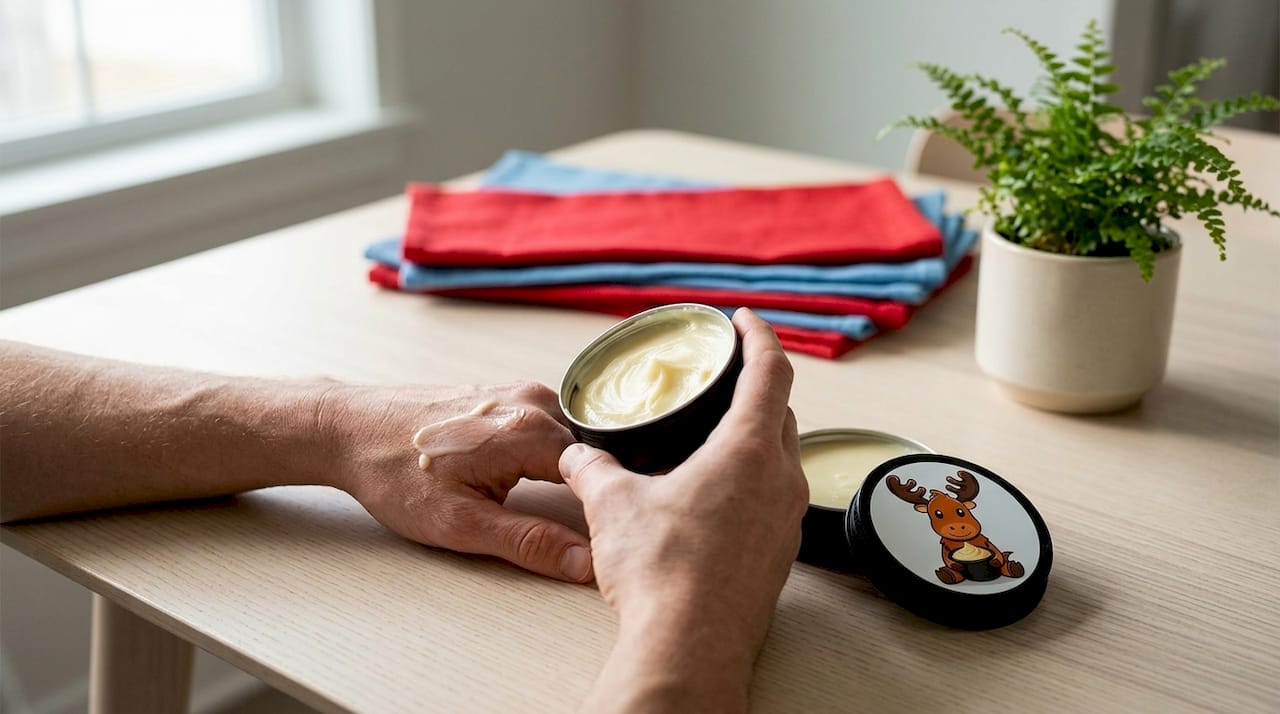
Complementing gentle cleansing, the right natural moisturizers are what sustain comfort day to day. A well-formulated moisturizer works through three mechanisms: emollients smooth and soften the skin surface, humectants draw water into the skin, and occlusives form a protective layer that slows water loss. Top moisturizers combine all three to enhance hydration and minimize barrier disruption.
Here is how common natural moisturizing ingredients compare:
| Ingredient | Type | Barrier support | Best for |
|---|---|---|---|
| Beef tallow | Emollient + occlusive | Strong | Dry, sensitive, mature skin |
| Beeswax | Occlusive | Moderate | Lip and hand protection |
| Jojoba oil | Emollient | Moderate | All skin types |
| Fractionated coconut oil | Emollient | Moderate | Lightweight daily hydration |
| Shea butter | Emollient + occlusive | Moderate to strong | Dry and sensitive skin |
Tallow stands out because its fatty acid profile closely mirrors what human skin already produces. It absorbs without sitting heavy on the surface and supports barrier repair in a way that most plant oils simply cannot replicate. You can read more about this in our detailed breakdown of tallow vs plant oils for skin hydration.
What to look for in a natural moisturizer for sensitive or baby skin:
- No added fragrance (even natural fragrance can sensitize skin)
- No unnecessary preservatives or synthetic fillers that add nothing to performance
- Simple, recognizable ingredients that each serve a clear function
Pro Tip: If you want a deeper treatment option, look into a senior moisturizing facial, which pairs professional emollient application with gentle massage techniques that support circulation and barrier recovery. These same principles translate well to anyone with compromised or very dry skin.
Exploring natural moisturizers for sensitive skin can help you narrow down what works best for your skin type or your child’s.
How sensory perception shapes comfort in skincare routines
Beyond ingredients, the way a product feels and evokes emotion profoundly affects skin comfort and user satisfaction. This is an area that does not get nearly enough attention in mainstream skincare conversations.
Touch is a primary sense for evaluating skincare comfort. It integrates with vision, scent, and sound to create an emotional and embodied experience that builds trust in a product over time. This is not just marketing psychology. It reflects actual neurocutaneous pathways, connections between emotional states and skin function, that influence how quickly your barrier recovers.
What this means practically:
- Texture matters. A product that feels greasy, gritty, or difficult to spread signals “wrong fit” before it even has time to work.
- Scent signals safety. Familiar, gentle scents build a sense of calm that genuinely supports skin recovery through reduced cortisol and stress response.
- Ease of application builds consistency. If a product is pleasant to use, you use it regularly. Consistency is the actual driver of results.
“The sensory truth of skincare lies beyond what we see. Touch and multisensory integration create the emotional foundation from which comfort and trust are built.”
This is why we think carefully about every sensory quality in our formulas. At Moose’s Tallow, warmth and familiarity are intentional, not incidental. Read more about how honest ingredient choices contribute to this experience.
Avoiding common pitfalls: What disrupts comfort in sensitive and baby skincare?
Understanding what harms comfort is as important as knowing what helps it, especially with delicate skin. Many of the most damaging habits are things we assume are healthy.
Here are the most common mistakes, ranked from most to least frequent:
- Daily bathing with soap. Over-cleansing and vigorous friction are major causes of barrier damage in both neonatal and sensitive skin. Every unnecessary wash strips protective oils.
- Using alkaline soaps. Most traditional bar soaps have a pH above 9. The skin barrier functions best near pH 5. The mismatch is significant.
- Rubbing skin dry with a rough towel. Mechanical friction on already-compromised skin causes micro-tears and inflammation.
- Applying heavily fragranced products. Fragrance is one of the top sensitizing ingredients in personal care, even when listed as “natural.”
- Changing products too frequently. Introducing new ingredients before the skin has time to respond and stabilize prevents you from ever knowing what is actually working.
Pro Tip: Keep a simple log when introducing new products, especially for babies. Note date, product used, and any skin changes. Two weeks of consistent use gives you genuinely useful data before making decisions about whether to continue.
A focused look at gentle skincare routines can help you build habits that protect rather than disrupt.
Why simplicity and sensory harmony should lead your comfort skincare routine
Here is my honest take, shaped by years of formulating and listening to what families actually need: the skincare industry has a financial incentive to make things complicated. More steps, more products, more problems to solve. But real comfort, the kind that holds up through changing seasons, sensitive phases, and new babies, comes from the opposite direction.
The fastest way to sabotage comfort is aggressive routines and over-cleansing. The research is clear on this. And yet most product marketing pushes harder, more often, and with more ingredients.
I believe skincare ingredient simplicity is not a limitation. It is the point. When every ingredient has a clear job, you can actually read the label and understand what you are putting on your skin or your child’s skin. That transparency builds trust that no marketing claim can manufacture.
Sensory harmony matters too, in a way that science increasingly supports. When a product feels right, smells right, and applies easily, you use it consistently. Consistency is the mechanism through which any skincare routine actually produces results. One well-chosen product used daily beats a ten-step routine used sporadically every time.
The most important practice most people skip? Listening to their skin. Not every trending ingredient belongs in your routine. Not every new formula is an improvement. Skin tells you what it needs through dryness, sensitivity, and texture changes. Responding to those signals, with restraint and intention, is what effective natural moisturizers are actually designed to support.
Explore Moose’s Tallow natural products for comforting skincare
Everything we make at Moose’s Tallow starts with one ingredient: properly rendered local beef suet tallow. It is the star because it earns that place. Rich in the fatty acids your skin already recognizes, it moisturizes deeply, supports barrier repair, and absorbs without heaviness. Every other ingredient we add, beeswax, jojoba, fractionated coconut oil, vitamins, serves a real function. Nothing is there for appearance or bulk.
Our products are made for families, for sensitive skin, for anyone who wants skincare they can actually trust. If you are ready to simplify and let your skin breathe, our Beef Tallow Zinc Sun Balm is a great starting point. It protects and nourishes in one step. Browse our full range at Moose’s Tallow to find what fits your skin and your family.
Frequently asked questions
What does ‘comfort’ in skincare actually mean?
Comfort in skincare means supporting skin barrier homeostasis to reduce tightness and irritation, achieved through gentle cleansers, appropriate moisturizers, and protective daily routines.
How often should I bathe my newborn to keep their skin comfortable?
Limited bathing, 2 to 3 times per week with gentle, pH-balanced cleansers, preserves newborn skin comfort and barrier integrity while spot-cleaning soiled areas between baths.
Which ingredients should I avoid for sensitive or baby skincare comfort?
Neonatal skin care guidelines advise avoiding fragrances, dyes, and preservatives with high sensitizing potential. Alkaline soaps are also a concern, since they disrupt the skin’s natural pH.
Why is sensory experience important in choosing skincare products?
Touch and multisensory cues shape how effective skincare feels and build the emotional trust that encourages consistent use, which is what actually drives skin health outcomes over time.
Recommended
- Natural Skincare Explained: Benefits for Sensitive Skin – Moose’s Tallow
- Natural moisturizers: safer, family-friendly skincare explained – Moose’s Tallow
- Natural moisturizers for sensitive skin: What actually works – Moose’s Tallow
- Benefits of Tallow for Babies: 30% Better Hydration & Protection – Moose’s Tallow


0 comments