

TL;DR:
- No todos los productos etiquetados como “naturales” son seguros o eficaces para protegerte de los insectos, y la evidencia científica varía mucho. Los repelentes de origen vegetal, como el aceite de eucalipto limón (OLE/PMD), ofrecen una protección moderada y de menor duración, y están registrados por la EPA, mientras que otros como la citronela requieren reaplicación frecuente. El uso seguro depende de una formulación adecuada, de las plagas específicas que quieras evitar y de una aplicación apropiada para los miembros de la familia y las mascotas.
No todo lo que se etiqueta como “natural” es seguro o eficaz de forma automática. Es una verdad difícil que vale la pena decir en voz alta, sobre todo cuando se trata de repelentes de insectos para tu piel, tus hijos y tus mascotas. El mercado está lleno de productos que prometen protección de origen vegetal, pero la ciencia que los respalda varía muchísimo. Algunos dan resultados reales. Otros son poco más que agua con un aroma agradable. Esta guía te ayuda a ver con claridad, apoyándose en la investigación actual y en un conocimiento honesto de los ingredientes, para que tomes decisiones inteligentes y seguras para toda tu familia, incluidos los miembros de cuatro patas.
Puntos clave
| Punto | Detalles |
|---|---|
| OLE/PMD es la mejor opción natural | Al elegir un repelente de insectos natural para la piel, el aceite de eucalipto limón (PMD) registrado por la EPA es el más eficaz demostrado. |
| Revisa los límites de edad y uso | El OLE/PMD no es para niños menores de 3 años, y ningún repelente para humanos está confirmado como seguro para mascotas. |
| Lo “natural” puede requerir uso frecuente | La mayoría de los repelentes naturales ofrecen menos protección y pueden necesitar reaplicación regular para mejores resultados. |
| Consulta al veterinario los productos para tus mascotas | Consulta a tu veterinario sobre cualquier repelente de insectos “natural” para mascotas antes de usarlo. |
Entender los repelentes de insectos naturales: ¿qué funciona de verdad?
Cuando la gente dice “repelente natural”, suele referirse a algo de origen vegetal, libre de químicos sintéticos como el DEET o la picaridina. Pero entender qué hace que el cuidado de la piel sea natural va más allá de la simple lista de ingredientes. El término “natural” no tiene una definición legal estricta en el mundo de los repelentes, lo que significa que se aplica de forma laxa y a menudo engañosa.
Los repelentes de origen vegetal suelen funcionar de dos maneras: enmascarando los olores humanos que atraen a los insectos, o creando una barrera sensorial que los insectos encuentran desagradable. Las opciones comunes incluyen:
- Aceite de eucalipto limón (OLE) o PMD: la opción natural probada con mayor rigor
- Citronela: muy usada, pero la protección se desvanece rápido
- Hierba limón: aroma agradable, duración limitada
- Menta: eficaz contra algunos insectos, necesita reaplicación frecuente
- Cedro de Virginia: repele ciertas plagas, sobre todo pulgas y garrapatas
- Tomillo rojo y clavo: compuestos activos potentes, pero pueden irritar la piel si no se diluyen bien
- Geranio: propiedades repelentes suaves, se usa a menudo en mezclas
La revisión científica de los repelentes naturales confirma que el OLE/PMD está registrado por la EPA como un repelente de origen vegetal con eficacia demostrada contra mosquitos y garrapatas durante varias horas. Cualquier otro aceite esencial de esta lista ofrece algún beneficio, pero ninguno ha obtenido el mismo nivel de reconocimiento regulatorio para aplicarse en la piel.
El mejor repelente natural es el que ha sido probado, registrado y usado correctamente. Una lista de ingredientes preciosa no significa nada si el producto no mantiene realmente a los insectos alejados.
La mayoría de los aerosoles de aceites esenciales pierden su efecto en 30 a 60 minutos en condiciones reales, sobre todo con calor o humedad. Esa es una limitación importante cuando sales a caminar, a trabajar en el jardín o a acampar con tu familia.
Comparar la eficacia: ¿qué tan bien funciona lo “natural”?
Con las bases de lo que significa de verdad “natural”, veamos cómo se desempeñan estas opciones frente a los repelentes sintéticos más comunes.
| Repelente | Tipo | Duración | Registrado por la EPA | Seguro para niños (general) |
|---|---|---|---|---|
| DEET | Sintético | Hasta 12 horas | Sí | A partir de 2 meses |
| Picaridina | Sintético | 8 a 14 horas | Sí | A partir de 2 meses |
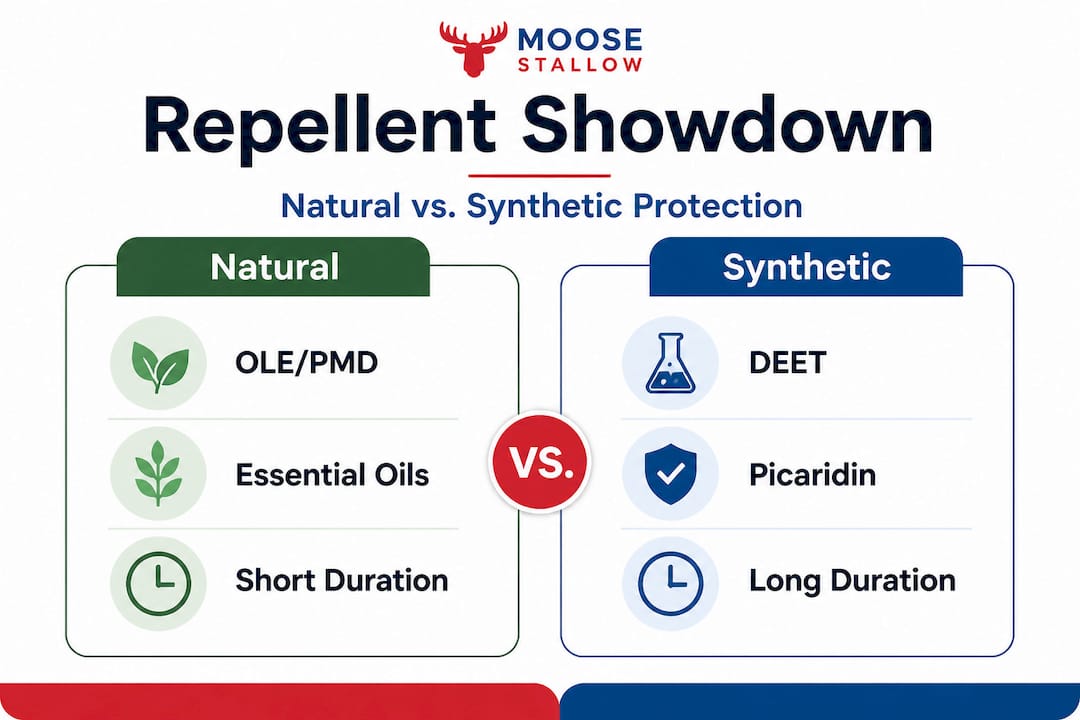
| OLE/PMD | De origen vegetal | 3 a 6 horas | Sí | Solo a partir de 3 años |
| Citronela | De origen vegetal | 30 a 60 min | Limitado | Varía |
| Menta | De origen vegetal | 30 a 60 min | No | No para bebés |
| Cedro | De origen vegetal | 30 a 60 min | No | Varía |
Según las pruebas de Consumer Reports, el OLE/PMD ofrece de 3 a 6 horas de protección en pruebas controladas, mucho menos que el DEET (hasta 12 horas) o la picaridina (8 a 14 horas), pero supera de forma constante a otros aceites esenciales en comparaciones directas.
Así puedes pensar en la elección de un repelente según tu situación:
- Actividades cortas al aire libre (menos de 2 horas): una mezcla de aceites esenciales bien formulada puede ofrecer protección adecuada
- Tiempo moderado al aire libre (2 a 4 horas): el OLE/PMD es tu mejor apuesta natural
- Exposición prolongada o zonas de alto riesgo de garrapatas: considera las opciones recomendadas por los CDC, incluidas la picaridina o el DEET
- Uso diario en piel sensible: busca repelentes de origen vegetal para la piel formulados con bases que nutren la piel
Algo que marca una diferencia real es el sistema de aplicación. Los aerosoles se evaporan rápido. Una base de bálsamo o crema, sobre todo una hecha con sebo de res alimentada con pasto y cera de abeja, mantiene los ingredientes activos en la piel por más tiempo. El sebo es especialmente compatible con la biología de la piel humana porque su perfil de ácidos grasos se parece mucho a nuestro propio sebo. Se absorbe sin quedarse encima de la piel y, de hecho, ayuda a llevar los compuestos botánicos activos a donde deben llegar. La cera de abeja añade una capa transpirable y resistente al agua que frena la evaporación y amplía la ventana de protección. Eso no es una afirmación de marketing; es química básica de la piel.
Consejo: si usas un repelente a base de aceites esenciales, reaplícalo cada 60 a 90 minutos durante la actividad al aire libre. El sudor, el agua y el calor reducen la eficacia más rápido de lo que crees.
También vale la pena saber qué plagas quieres evitar en realidad. Una buena mezcla repelente debería cubrir mosquitos, garrapatas, moscas que pican, avispas y avispas amarillas, arañas, pulgas, coloradillas y hormigas. No todos los aceites repelen cada plaga por igual, por eso una mezcla bien equilibrada importa más que cualquier ingrediente por sí solo. Revisa los ingredientes que debes evitar en el cuidado de la piel si quieres saber qué evitar en las fórmulas convencionales.
Uso seguro para las familias: adultos, niños y bebés
Después de entender la eficacia, es fundamental centrarse en cómo usar estos productos de forma segura para cada miembro de la familia.

La guía de la EPA sobre repelentes es clara: los repelentes registrados por la EPA, incluidos el OLE, la picaridina, el IR3535 y el DEET, son seguros para la piel cuando se usan según las indicaciones. Sin embargo, el OLE/PMD no se recomienda específicamente para niños menores de 3 años. Esta es una distinción importante que muchas etiquetas de productos “naturales” pasan por alto.
Aquí tienes un desglose práctico para las familias:
- Bebés menores de 2 meses: evita todos los repelentes; usa barreras físicas como mosquiteros y mangas largas
- Bebés de 2 meses en adelante: los productos de baja concentración de DEET o picaridina, usados con moderación, se consideran seguros en general
- Niños menores de 3 años: no uses OLE/PMD; opta por picaridina o fórmulas con poco DEET
- Niños de 3 años en adelante: el OLE/PMD es una opción; aplícalo siempre primero en la ropa o las manos, nunca directamente en la cara
- Adultos: toda la gama de opciones disponible; elige según la duración que necesites y la sensibilidad de tu piel
Lee siempre las etiquetas con cuidado. Que sea apropiado para la edad importa más que si un producto lleva la etiqueta “natural”. Un producto puede ser 100% de origen vegetal y aun así no ser apropiado para un niño pequeño.
Combinar cualquier repelente con protección física es una práctica inteligente. Las mangas largas, los pantalones y los sombreros reducen la piel expuesta. La ropa tratada con permetrina añade otra capa para los entornos con muchas garrapatas. Y para los bebés en carriola, una cubierta de malla sobre el cochecito es una de las opciones más seguras que existen.
Consejo: aplica el repelente después del protector solar, no antes. El protector solar debe ir primero y absorberse por completo antes de que añadas cualquier capa de repelente. Además, revisa los ingredientes del protector solar que debes evitar si estás armando una rutina de verano limpia.
Para quienes tienen piel naturalmente sensible, un bálsamo a base de sebo puede ser más suave que los aerosoles a base de alcohol o agua, que pueden resecar e irritar la piel con el uso repetido.
La perspectiva de las mascotas: repelentes de insectos naturales para los amigos peludos
Con la seguridad de la piel para los humanos cubierta, pasemos al cuidado de las mascotas y separemos los hechos de la publicidad para nuestros compañeros de cuatro patas.
Aquí las cosas se vuelven confusas rápido. No existe una guía de repelentes para la piel aprobada por la EPA específicamente para mascotas. Los repelentes para humanos nunca deben aplicarse a los animales, a menos que la etiqueta indique de forma explícita que es seguro para uso animal. El DEET, en particular, es tóxico para perros y gatos.
| Tipo de producto | Se comercializa como seguro para mascotas | Eficacia verificada | Recomendado por el veterinario |
|---|---|---|---|
| Aerosoles de aceites esenciales (cedro, menta) | A menudo sí | No | Consulta al veterinario |
| Productos con DEET para humanos | No | N/A | Nunca usar |
| Aerosoles comerciales contra pulgas/garrapatas para mascotas | Sí | Varía según el producto | A veces |
| Productos a base de permetrina | Solo perros | Sí | Con precaución |
Los aerosoles comerciales de aceites esenciales con cedro y menta se comercializan como seguros para perros y gatos, pero su eficacia sigue sin verificarse por ninguna autoridad regulatoria. Eso no quiere decir que sean inútiles, pero sí que estás confiando a ciegas.
- Nunca uses repelentes para humanos en las mascotas
- Evita por completo el aceite de árbol de té cerca de los gatos; es muy tóxico para ellos
- Consulta siempre a tu veterinario antes de aplicar cualquier repelente a un perro o gato
- Vigila las señales de irritación en la piel o los cambios de comportamiento después de aplicar cualquier producto nuevo
Para saber más sobre cómo mantener sana la piel de tu mascota, nuestros consejos de cuidado de la piel seguros para mascotas ofrecen orientación práctica basada en la misma filosofía de poner los ingredientes primero que aplicamos al cuidado de la piel humana.
Por qué lo “natural” no siempre es más seguro: una mirada honesta a la evidencia
Esta es la verdad honesta: “natural” es tanto un término de marketing como una descripción. La hiedra venenosa es natural. El arsénico también. La palabra por sí sola no te dice nada sobre seguridad o eficacia.
Los datos de Consumer Reports muestran de forma constante que el DEET y la picaridina superan a las opciones naturales en duración y fiabilidad. El OLE/PMD es la única excepción de origen vegetal que se defiende bien, pero aun así requiere reaplicación más frecuente. Muchas mezclas de aceites esenciales que se venden como repelentes tienen poca o ninguna evidencia revisada por pares que respalde sus afirmaciones.
Dicho esto, no creo que la respuesta sea abandonar por completo las opciones naturales. El camino más inteligente es elegir un cuidado de la piel natural y seguro con base en la evidencia, no en las etiquetas. El OLE/PMD ofrece un verdadero punto medio: de origen vegetal, registrado por la EPA y con eficacia real para actividades cortas al aire libre. Una mezcla de aceites esenciales bien formulada en una base de sebo y cera de abeja, con aceites como eucalipto limón, citronela, hierba limón, cedro de Virginia, menta, tomillo rojo, clavo y geranio en proporciones cuidadosamente equilibradas, puede ofrecer protección real para el uso diario.
La clave está en la formulación. Los aceites aplicados de forma aislada suelen quedarse cortos. Pero cuando se combinan con cuidado, cada uno aportando su acción repelente específica contra distintas plagas, el resultado es más que la suma de sus partes. La protección inteligente significa combinar estrategias: productos probados, ropa adecuada y una lectura honesta de lo que dice realmente la etiqueta.
Explora una protección segura de origen natural
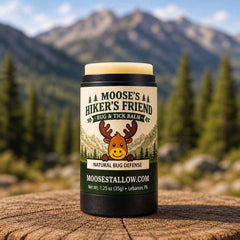
Cuando estés listo para poner la investigación en práctica, aquí es donde encontrar soluciones de cuidado de la piel naturales y confiables. Nuestro repelente de insectos natural Hiker’s Friend se basa exactamente en los principios de los que hemos hablado aquí: sebo de res alimentada con pasto como base compatible con la piel, cera de abeja para una mayor duración y una mezcla cuidadosamente equilibrada de aceites esenciales de eucalipto limón, citronela, hierba limón, cedro de Virginia, menta, tomillo rojo, clavo y geranio. Sin rellenos. Sin químicos sintéticos. Solo ingredientes honestos en proporciones que de verdad funcionan. Está diseñado para las familias que quieren protección real sin ceder en lo que se ponen en la piel. Explora nuestra colección completa en Moose’s Tallow y encuentra la opción ideal para tu rutina al aire libre.
Preguntas frecuentes
¿El aceite de eucalipto limón (OLE) es realmente tan eficaz como el DEET?
El OLE es el repelente natural de origen vegetal más eficaz, pero ofrece una protección más corta, de unas 3 a 6 horas, frente a las hasta 12 horas del DEET. Es una buena opción para actividades moderadas al aire libre, pero tendrás que reaplicarlo más seguido.
¿Es seguro usar aerosoles de aceites esenciales contra insectos en bebés o niños pequeños?
El OLE/PMD no se recomienda para niños menores de 3 años, y la mayoría de las mezclas de aceites esenciales no registradas carecen de datos de seguridad para bebés. Consulta siempre a un pediatra antes de aplicar cualquier repelente a un niño pequeño.
¿Puedo usar mi repelente de insectos natural en mi perro?
Ningún repelente para la piel humana está verificado como seguro para mascotas, y algunos ingredientes como el DEET son activamente tóxicos para los animales. Existen aerosoles comerciales de aceites esenciales para mascotas, pero carecen de verificación regulatoria, así que habla primero con tu veterinario.
¿Los repelentes naturales duran tanto como los convencionales?
La mayoría de los repelentes naturales necesitan reaplicación cada 30 a 90 minutos, mientras que el DEET y la picaridina pueden durar de 8 a 14 horas. El OLE/PMD es la excepción entre las opciones naturales, ya que ofrece hasta 6 horas de protección significativa.
Recomendado
- Repelente de insectos natural para la piel | Bálsamo de sebo Hiker’s Friend de Moose’s – Moose’s Tallow
- Principales ingredientes del protector solar que debes evitar para una piel más segura – Moose’s Tallow
- 6 ingredientes que debes evitar en el cuidado de la piel para una piel más sana – Moose’s Tallow
- Protector solar mineral vs químico: ¿cuál es mejor para ti? – Moose’s Tallow
- Consejos esenciales de protección para una piel sana y resistente – SMPL SKIN South Africa


0 comentarios