

TL;DR:
- Homemade tallow lotion offers a simple, safe, and effective alternative to store-bought options loaded with synthetic ingredients, especially for sensitive skin, babies, and pets. Its basic ingredients include grass-fed tallow, optional carrier oils, vitamin E, and arrowroot powder, with careful preparation ensuring nutrient preservation. Applying and storing the lotion properly maximize benefits while minimizing risks like clogging or spoilage, making it a versatile natural skincare choice for the whole family.
Finding a moisturizer gentle enough for a newborn’s skin, safe enough to use during pregnancy, and soothing enough for a sensitive pet can feel impossible. Most store-bought options are loaded with synthetic fragrances, preservatives, and fillers that you can’t even pronounce, let alone trust. That’s exactly why so many families are turning to homemade tallow lotion. It’s a short ingredient list, a straightforward process, and the results speak for themselves. This guide walks you through everything you need to know: the materials, the steps, troubleshooting, and how to use it safely for your whole family.
Key Takeaways
| Point | Details |
|---|---|
| Choose quality ingredients | Always use grass-fed, unscented tallow for safest results, especially for babies and pets. |
| Follow precise steps | Careful melting, cooling, and whipping avoid grainy or greasy textures. |
| Patch test first | Test on a small skin area before full use to ensure no reaction occurs. |
| Store lotion properly | Keep tallow lotion in a cool, dark place using glass jars for up to a year. |
| Know the limitations | While many love homemade tallow lotion, evidence for all benefits is still limited. |
What you’ll need to make tallow lotion
After you understand why tallow lotion is worth making, the next step is gathering everything before you start. Being prepared makes the process smooth and safe.
Understanding the tallow lotion basics helps you see why these specific ingredients matter. Tallow is always the star here. Every other ingredient supports it.
Core ingredients
| Ingredient | Purpose | Notes |
|---|---|---|
| Grass-fed beef tallow | Primary moisturizer | Best source of skin-compatible fats |
| Jojoba or rosehip oil | Texture and extra nourishment | Optional but beneficial |
| Vitamin E oil | Antioxidant, extends shelf life | A few drops go a long way |
| Arrowroot powder | Reduces greasiness | Highly recommended for daily use |
| Essential oils | Fragrance and some skin benefits | Omit entirely for babies and pets |
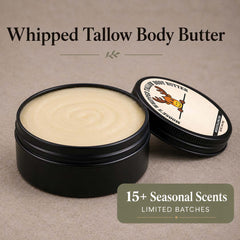
The DIY tallow body butter method is a common starting point that most homemade recipes follow, and it confirms that these ingredients are all you need for a clean, effective lotion.
When making lotion for babies, pregnant women, or pets, pure and unscented is the safest path. Baby-safe tallow balm recipes confirm that when ingredients are food-grade and free from essential oils, the lotion is considered safe for babies, nursing mothers, and even pets.
Tools you’ll need
- Double boiler or heat-safe bowl set over a pot of water
- Digital kitchen thermometer for monitoring melting temperature
- Stand mixer or hand mixer for whipping
- Glass jars with lids for storage
- Silicone spatula for scraping down the bowl
Pro Tip: Grass-fed tallow is worth the extra effort to source. It contains higher levels of conjugated linoleic acid and fat-soluble vitamins than conventional tallow, which translates to noticeably better results on dry or irritated skin.
Step-by-step instructions for making tallow lotion
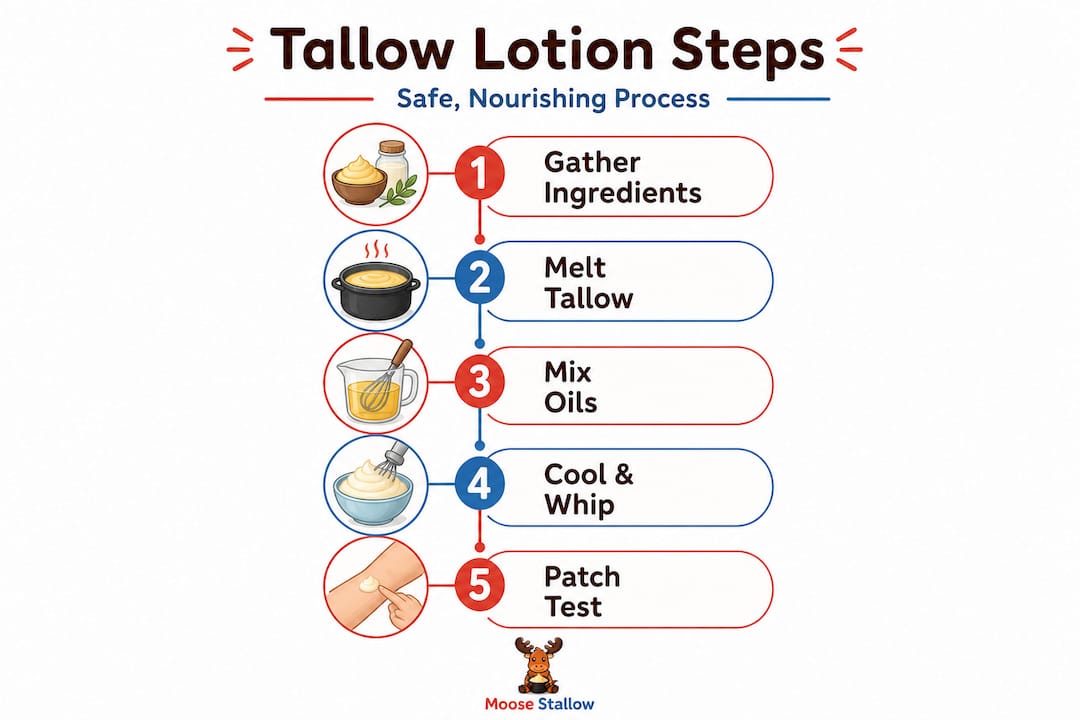
With all your ingredients and tools ready, follow these steps for a perfect whipped tallow lotion.
-
Melt the tallow slowly. Place your tallow in the double boiler over low heat. You want it fully melted but not bubbling. Keep the temperature under 150°F to preserve the nutrients.
-
Add your carrier oils. Once the tallow is melted, stir in your jojoba oil, rosehip oil, or whichever optional oil you’ve chosen. A ratio of about 80% tallow to 20% carrier oil works well for most skin types.
-
Add vitamin E oil. Stir in a few drops of vitamin E at this stage. It blends best when the mixture is still warm and liquid.
-
Cool the mixture. Pour it into a mixing bowl and let it cool at room temperature until it becomes semi-solid. This typically takes one to two hours. You can also refrigerate it to speed things up, but don’t let it harden completely.
-
Whip it. Once it’s opaque and cool but still soft, use a hand mixer or stand mixer on medium speed. Whip for three to five minutes until light and fluffy.
-
Add arrowroot and optional essential oils. Fold in arrowroot powder now if you’re using it. If your lotion is for adults only and you want a subtle fragrance, add essential oils at this stage. For anything going on a baby or pet, skip the oils entirely.
-
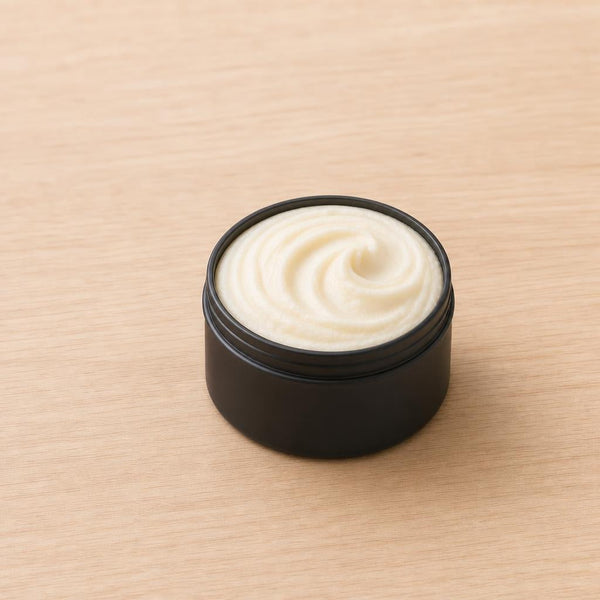
Transfer to jars. Spoon the finished lotion into clean, dry glass jars. Seal the lids and label with the date.
The DIY tallow body butter steps note that overheating during the melting stage is one of the most common reasons tallow loses its beneficial nutrients, so keeping the heat low is genuinely important.
For long-term freshness, good storing tallow skincare practices start the moment the lotion goes into its jar.
A note on recipe versions: A basic recipe uses only tallow and vitamin E. An enhanced version adds carrier oils, arrowroot, and optional botanicals. For first-time makers, start basic. You can always adjust the next batch.
| Recipe type | Ingredients | Best for |
|---|---|---|
| Basic | Tallow, vitamin E | Babies, sensitive skin, pets |
| Enhanced | Tallow, oils, arrowroot, optional EOs | Adults, daily use, specific skin concerns |
Pro Tip: If your lotion turns grainy after cooling, you likely cooled it too fast or at the wrong temperature. Remelt the batch gently, let it cool more slowly at room temperature, and whip again. It usually fixes the problem completely.
Troubleshooting and safety: Common mistakes to avoid
Even with the best instructions, sometimes issues arise. Here’s how to keep your lotion safe and effective.
Common texture and quality problems
- Grainy or gritty texture: This happens when tallow cools too quickly or unevenly. The solution is to remelt and re-whip. The tallow lotion troubleshooting process confirms that precise chilling temperature is one of the biggest factors in achieving a smooth result.
- Too greasy: Add arrowroot powder to absorb excess oil and give it a softer, drier finish.
- Separated or oily pooling: This usually means the mixture wasn’t cool enough before whipping, or the oils weren’t fully incorporated. Remelt, mix more thoroughly, and try again.
Safety concerns worth taking seriously
- Pore clogging: Tallow may clog pores or cause breakouts in people with oily or acne-prone skin types. If that’s you or someone in your household, do a patch test first and watch closely for a week.
- Contamination risk: Improperly rendered or non-food-grade tallow can carry contaminants. Always use a clean, trusted source. This matters especially when using it on babies or pets.
- No regulatory oversight: Homemade skincare is not regulated, which means the quality and purity of your lotion is entirely in your hands. That’s actually a reason to keep your ingredient list short and sourcing careful.
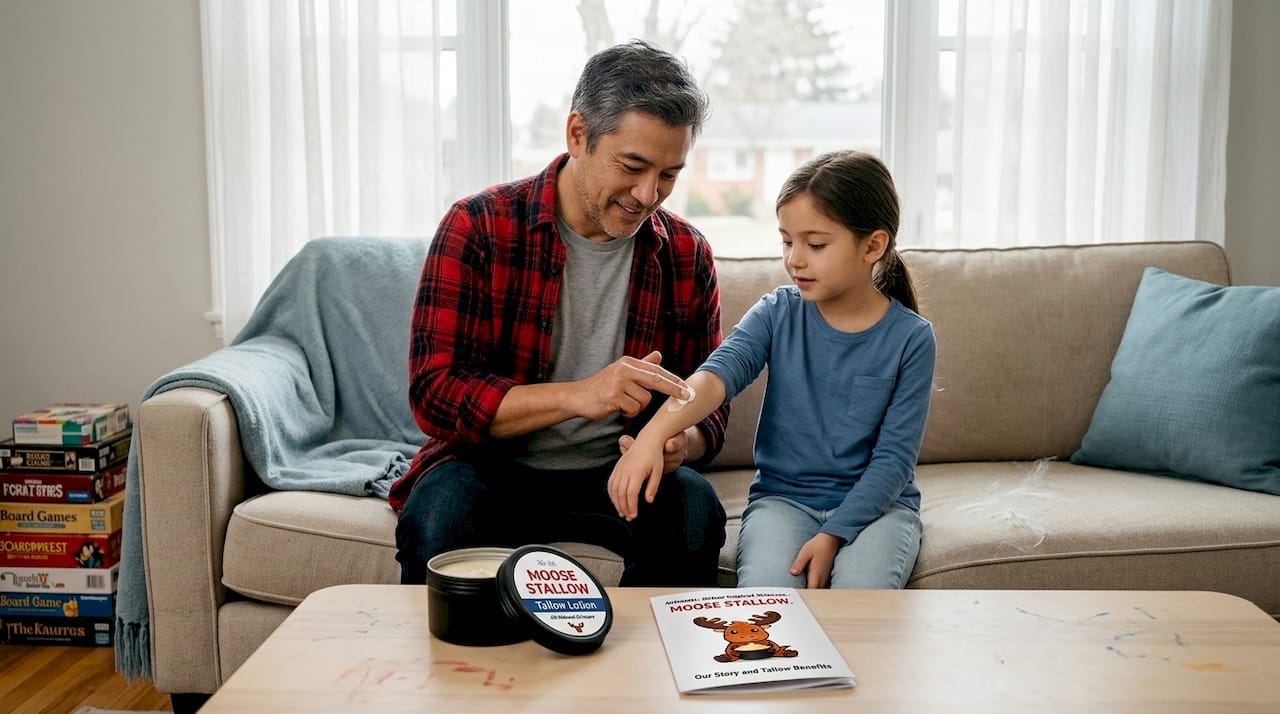
Pro Tip: Before applying any new batch to a child or pet, do a small patch test on a less sensitive area of skin. Wait 24 hours and look for redness, swelling, or irritation. This simple step can save a lot of stress.
For those dealing with specific skin issues, eczema relief with tallow is worth reading before you apply anything to broken or inflamed skin.
How to apply and store your tallow lotion for best results
Now that your lotion is ready and you know what to watch for, let’s cover how to apply and keep it fresh for your whole family.
Application tips by user
- Adults: Apply a small amount to clean, slightly damp skin right after a shower. The moisture helps the tallow absorb more effectively.
- Babies: Use an unscented, basic version only. Apply a thin layer to dry patches, diaper areas, or anywhere irritation appears. Baby-safe formulas made with food-grade ingredients are even safe if a baby mouths their hands after application.
- Pets: Apply a tiny amount to cracked paw pads or dry nose areas, using the most basic, fragrance-free version. Less is more.
Storage guidelines
- Keep jars in a cool, dry place away from direct sunlight
- Room temperature storage gives a shelf life of approximately 6 to 12 months
- Use a clean, dry spoon or spatula to scoop out product (no wet fingers in the jar)
- If it smells off, looks discolored, or has any visible mold, discard it
A 2024 research review noted moisturizing and antimicrobial properties in tallow but also acknowledged significant research gaps. The honest takeaway is that the anecdotal benefits, especially for dry and eczema-prone skin, are real for many people, but clinical research is still catching up.
For more practical guidance, the information on soothing dry skin and the dry skin benefits of tallow are both worth bookmarking.
What most guides miss about family-safe tallow skincare
Most DIY tallow guides focus entirely on the recipe. They tell you what to mix and how to whip it. What they don’t talk about is the mindset that actually makes tallow skincare work for a family over the long term.
The biggest thing I see overlooked is this: “natural” does not automatically mean “safe for everyone.” Essential oils are natural. So is poison ivy. The word natural is a starting point, not a guarantee. When you’re applying something to a baby’s skin or a pet’s paw, the standard should be simple, pure, and tested on a small area first. Full stop.
There’s also real value in slowing down the adoption process. Start with a tiny batch. Use it on yourself for two weeks before offering it to your kids or your dog. Observe how your own skin responds. That patience isn’t unnecessary caution; it’s smart practice.
The families who get the most out of tallow skincare are the ones who keep it minimal. The fewer ingredients, the easier it is to identify what’s working and what isn’t. If you add five oils and two botanicals and your toddler breaks out, you have no idea which ingredient caused it. Keep the ingredient list short, especially at the start.
For tips on getting the most hydration out of your tallow routine, maximizing tallow hydration is a helpful next read.
Ready-made tallow creams for ultimate convenience
If DIY isn’t your style, here’s a safe shortcut for your family’s natural lotion needs.
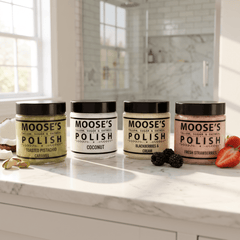
Not everyone has the time or confidence to make tallow lotion from scratch, and that’s completely fine. At Moose’s Tallow, we make that decision easy. Every product starts with carefully rendered grass-fed beef tallow, kept simple and intentional with ingredients that actually earn their place. Our tallow zinc sun balm is a great example of family-safe, effective skincare that works without unnecessary additives. Whether you’re protecting sensitive skin outdoors or just looking for a trustworthy daily moisturizer, you can browse our full line of all-natural tallow products and find the right fit for your family’s needs. No guesswork. No complicated labels.
Frequently asked questions
Is homemade tallow lotion safe for newborns and pets?
When unscented and made with food-grade, pure ingredients, tallow lotion is generally considered safe for both newborns and pets. Always do a patch test first and avoid any recipe that includes essential oils for these users.
Why is grass-fed tallow preferred in lotion recipes?
Grass-fed tallow contains higher quality fats and nutrients, making it more beneficial and closer in composition to the skin’s natural oils. The quality difference shows up in both texture and how well the finished lotion absorbs.
Can tallow lotion cause breakouts or clog pores?
Tallow lotion may clog pores and trigger breakouts, especially in oily or acne-prone skin types. Patch testing before full use is strongly recommended for anyone with reactive skin.
How long does homemade tallow lotion last?
Stored in a glass jar at room temperature, homemade tallow lotion typically lasts 6 to 12 months. Always use clean, dry utensils to avoid introducing moisture or bacteria into the jar.
Does tallow lotion have proven benefits for eczema or dry skin?
There are encouraging anecdotal reports and a 2024 review noting moisturizing properties, but more clinical research is still needed. Many families find it genuinely helpful for dry and eczema-prone skin, even without formal clinical proof.


0 comments