


To patch test skincare, put a quarter-sized amount of the product on healthy skin. Use the inner forearm or elbow fold. Repeat twice a day for 7 to 10 days. Watch for redness, itching, swelling or burning. Stop at the first sign of a reaction. That is the method the American Academy of Dermatology (AAD) describes.
The rest of this guide shows how to do it well. It also covers what counts as a reaction, how to tell irritation from a rough start, and when a home test is not enough.
TL;DR
- Test one new product at a time on calm, unbroken skin. The inner forearm works well.
- Use a quarter-sized amount. Apply it twice a day for 7 to 10 days.
- Redness, itching, swelling, burning, scaling or blisters mean stop. Wash the product off.
- A short ingredient list does not make a product safe for everyone. “Natural” is not a guarantee either.
- Babies, pets, eyelids, lips and pregnancy call for extra care. Ask a clinician or vet first.
Why patch testing matters, even with clean products
I started this brand after reading a lotion label. It listed 52 ingredients, and water came first. I wanted something simpler. But simple is not the same as risk-free.
The FDA says anyone can develop a reaction to a cosmetic. It also says terms like natural, hypoallergenic and fragrance-free are not universal safety guarantees. Your skin decides, not the front of the jar.
That is why we tell every customer the same thing. Test first. This goes for our products and for anyone else’s.
A short list helps in one way. If you react, you have fewer suspects. It does not remove the chance of a reaction.
What a patch test can and cannot tell you
A home patch test is a screening step. It is not proof that a product is safe for you forever.
The AAD notes that testing a few small areas can help predict a negative reaction. The test only works if it runs long enough. Some reactions show up days later, not minutes later.
Here is what a home test can do:
- Show whether a product bothers your skin in the way you will actually use it.
- Catch delayed redness or itching before it spreads across your face or body.
- Give you a clear stop point, so you are not guessing later.
Here is what it cannot do:
- Predict a reaction that only appears after months of use.
- Make a strong active ingredient right for your skin.
- Replace a medical allergy test.
The AAD says ingredients such as retinol and glycolic acid may irritate sensitive skin for a while. A patch test screens your exposure. It does not make an active suitable for everyone.
How to patch test skincare, step by step
Follow these steps for a leave-on product like a body butter, balm or cream.
1. Pick one product and one start date
Test one new product at a time. If you test three at once, you will not know which one caused trouble.
Write the start date on your phone or a sticky note. Pick a week when you are not changing anything else in your routine.
2. Choose the right spot
Pick healthy, quiet skin. The inner forearm and the fold of the elbow are common choices. Pick a place you will not scrub or rinse by accident.
Behind the ear and the side of the neck also show up in many guides. The inner arm is easier to watch and easier to cover.
Do not test on skin that is any of these:
- Broken or scraped
- Sunburned
- Already red or inflamed
- Dealing with a rash
The AAD says a reaction on skin like that is harder to read. It may also feel worse.
3. Use a real amount
Apply about a quarter-sized amount over a small area. Use the thickness you would use day to day. A tiny dab may not show how your skin will respond.
Wash your hands first. Keep the jar closed and clean between uses.
For a wash-off product, such as a cleanser, leave it on as long as the label says. The AAD suggests about five minutes if the label is vague.
4. Mark it or photograph it
Take a quick photo in the same light each day. Photos beat memory. They also help if you later talk to a dermatologist.
Some people draw a small dot with a pen at each corner. That keeps you from drifting to a new spot.
5. Repeat twice a day
Apply the product to the same spot morning and night. Keep going for 7 to 10 days. The AAD public guidance uses that window. Its repeat open application test handout describes a week of repeats.

Look at the spot each time before you reapply. Check for color, bumps, dryness, itching or any warmth.
6. Decide at the end
If the skin stays calm for the full window, the product passed your home test. You can move to the face or the larger area.
If you see any change, stop. See the next section.
The quick version some guides give
Some guides tell you to check at 15 to 30 minutes, then at 24, 48 and 72 hours. That catches fast reactions. It can miss slow ones.
The longer routine is more thorough. If you are short on time, use the quick check first. Then keep going with the twice-daily plan before you commit.
What a reaction looks like, and what to do
The AAD lists signs to watch for. They include red, itchy, swollen, burning, scaly, blistered or peeling skin.
The FDA adds rash, flaking, facial swelling, and eye or mouth irritation. In rare cases, a cosmetic can cause a severe allergic reaction.
If the test spot reacts:
- Gently wash the product off with water.
- Stop using it.
- For mild discomfort, the AAD says a cool compress may help.
- See a dermatologist if the reaction is severe or does not settle.
Get emergency care right away if you have trouble breathing, trouble swallowing, faintness or widespread swelling. The FDA lists these as emergency signs. Do not wait to see if they pass.
Irritation, allergy and “purging”: how to read what you see
People often ask whether a breakout is purging or irritation. Here is the honest answer. A patch test on one small spot is not the place to guess.
The FDA separates a true allergy from ordinary irritation. Both can make skin feel bad. Repeated or severe symptoms deserve a professional look. Do not keep experimenting on yourself.
A practical way to think about it:
| What you notice | What it may point to | What to do |
|---|---|---|
| Redness, burning or stinging soon after applying | Irritation | Wash off, stop, and let skin calm down |
| Itchy bumps or rash that show up a day or more later | Possible delayed allergy | Stop and see a dermatologist if it persists |
| Small breakouts after starting a strong active | Sometimes called purging | Ask a dermatologist before you push through |
| Nothing on the test spot after 7 to 10 days | Passed the home test | Move on slowly |
The word purging is used for breakouts that follow strong actives. Our products are not built around those. They are water-free balms made on tallow, with a few plain oils and waxes.
If you break out in a new place after a tallow product, treat it as a signal. Stop and ask a professional. Do not assume it is “just detoxing.”
Hidden triggers are hard to find. Even tattoo ink can be a puzzle. A guide on tattoo ink allergy symptoms shows how reactions get traced back to a cause.
Reading the label before you test
A patch test works best with a label in hand. Read the full ingredient list. Then test the finished product, not just one ingredient.
The FDA also points out that some fragrance ingredients may be grouped under the single word “fragrance.” If a name is unclear, ask the maker.
We publish our full lists. Here is what our products are built on:
- Beef suet tallow, properly rendered and local. Tallow is always the star.
- Fractionated coconut oil, our preferred carrier oil. It is stable and resists oxidation. It absorbs easily and lasts on the shelf.
- Beeswax for body and hold.
- Vitamin E (tocopherols) to protect the oils.
- Jojoba and castor in select formulas.
- Egg yolk infused oil in select formulas.
We do not use olive, emu, avocado, almond, shea butter, grapeseed or other vegetable oils. Every ingredient is there on purpose. Nothing is filler.
If you know you react to any item above, such as beeswax or coconut, check the label before you buy. Tell us if you are unsure.
Patch testing a tallow product
Tallow balms are water-free. They are also lightly diluted. They feel rich, so use a thin layer on your test spot and let it sink in.
We wrote a longer guide on how to apply tallow skincare once your test passes. If your skin is reactive, our 48 hour patch test for rosacea-prone skin goes through the same idea in more detail.
Our tallow product checklist can help you judge any tallow product you are weighing. It covers what to look for on a label.
A simple week-long example
Say you bought a fragrance-free body butter.
- Day 1: Apply a quarter-sized amount to your inner forearm. Take a photo.
- Days 2 to 4: Apply morning and night. Check the spot before each use.
- Days 5 to 7: Keep going. Note any itch, warmth or color change.
- Days 8 to 10: If the skin is calm, you can use the butter on a larger area.
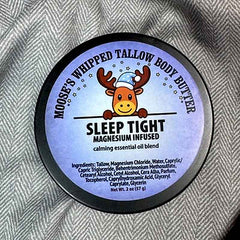
If you want to avoid scent as a variable, start with a fragrance-free option. Our Naked fragrance-free whipped tallow body butter has no added scent. Fragrance-free still does not mean reaction-proof, so test it like any other product.
Places and people that need extra care
A forearm test is fine for most adult skin. Some situations need more caution. The FDA advises extra care for babies, pregnancy, pets, eyelids, lips, and products with essential oils or actives.
Babies
Baby skin is thin. Test a small area on the thigh or arm. Keep it away from the face at first. Ask your pediatrician if your child has eczema or a history of rashes.
Our guide to using tallow baby balm walks through the steps for parents. Our Baby Bum Butter starts at 18.40 USD. Test it on a small spot before you use it on a whole diaper area.
Under the eyes and eyelids
Eyelid skin is delicate. Do not use the eyelid as your test spot. Test on the inner arm first. Then ask your doctor before using any product near the eyes, especially if you are pregnant.
Our Eye Awake is 30 USD. It is a tallow-based under-eye cream. If you plan to use it, run the arm test first.
Lips
Lip products stay on and get swallowed in small amounts. Test a lip balm on your arm first. Then try a small amount on the lip, and watch for a few days.
Pets
Dogs lick their paws. A skin test on you tells you nothing about your dog. Test a small amount of paw balm on one paw. Watch your dog closely. Ask your veterinarian if your dog has allergies or broken skin.
Our Dog Paw Balm is 20 USD. We make it simple, with lick-safe intent. Still, check with your vet first.
Pregnancy
If you are pregnant, check with your clinician about any new product. This is true for anything near the eyes or on large areas of skin. A home test is a screen, not medical advice.
Deodorant, hands and beards
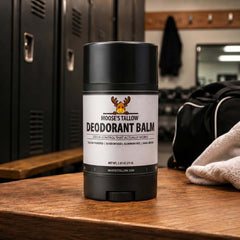
Underarm skin is thin and gets shaved and rubbed. Test deodorant on the inner arm. Then try the underarm on a day you have not shaved. Our Deodorant starts at 20 USD.
Hands and beards are easy to test. Use a small spot on the back of the hand or along the jaw. Our Hand Repair Cream is 20 USD. Our Tallow Beard Balm starts at 20 USD.
Patch test or medical patch test?
These are two different things.
A home test checks one product on your skin. A medical patch test is done by a dermatologist. It places selected allergens under patches. The patches commonly stay on for 48 hours. Your provider then checks for reactions.
The AAD says a follow-up reading can come 4 to 7 days after the patches come off. The FDA notes it may take two to three office visits.
See a board-certified dermatologist for medical testing if:
- Your skin keeps itching or breaking out and you cannot find the cause.
- You react to more than one product.
- A home test gives you a reaction you cannot explain.
Patch testing can find the trigger. Guessing at home often cannot.
What we do and what we say
We handmake every batch in Lebanon, PA. We keep formulas water-free and lightly diluted. We choose each ingredient on purpose.
We believe in honest claims. So we will never tell you our products are right for every skin. No honest maker can.
What we can do is keep the label short and readable. That makes your test easier. If you react, you can see what was in the jar. You can show it to your doctor.
Test first. Go slowly. Stop when your skin tells you to. We would rather lose a sale than see you struggle with a rash.
— Brian Smith
Ready to try something simple?
If you read labels and want short ingredient lists, start with a small product. Our whipped body butters start at 10.80 USD. Lip balms start at 9.50 USD.
Buy one, run your 7 to 10 day test, and then decide. You can browse the whole line at moosestallow.com.
Common mistakes that spoil a patch test
Most failed tests come from the same few slips. Avoid these.
- Testing too many things. If you add two products and change your soap, you learn nothing.
- Stopping too soon. A quick dab and a one-hour check can miss a delayed reaction.
- Using too little. A speck is not your normal amount.
- Testing on bad skin. A sunburn or scrape muddies the result.
- Washing the spot. A shower can rub the product off. Choose a spot that stays dry, or reapply.
- Trusting the front label. Words like natural and hypoallergenic are not a guarantee, as the FDA notes.
One more point. A passed test does not end your care. If your skin changes later, stop and look again. Skin can change with the seasons, with stress and with hormones.
FAQ
Where should I patch test a skincare product?
Use healthy skin on the inner forearm or the fold of the elbow. Pick a spot you will not scrub or rinse. Some people use behind the ear. Avoid broken, sunburned or inflamed skin.
How long should I patch test skincare?
The AAD says apply twice a day for 7 to 10 days. A faster check at 15 to 30 minutes, then 24, 48 and 72 hours catches quicker reactions. The longer test is better for delayed ones.
Do all dermatologists do patch testing?
Not all of them. The AAD says some dermatologists offer medical patch testing in their office. If yours does not, you will be sent to one who does. Ask when you book.
Is a short ingredient list safe for sensitive skin?
Not automatically. A short list makes it easier to see what you used. It does not remove allergy or irritation risk. Follow the label, patch test, and contact the maker if a name is unclear.
What should I do if my test spot reacts?
Wash the product off gently and stop using it. A cool compress may ease mild discomfort. See a dermatologist if the reaction is severe or does not settle. Call emergency services for trouble breathing or swallowing.
Sources
- AAD: How to test skin care products
- AAD: Patch testing can find what’s causing your rash
- FDA: Allergens in Cosmetics
0 comentarios